
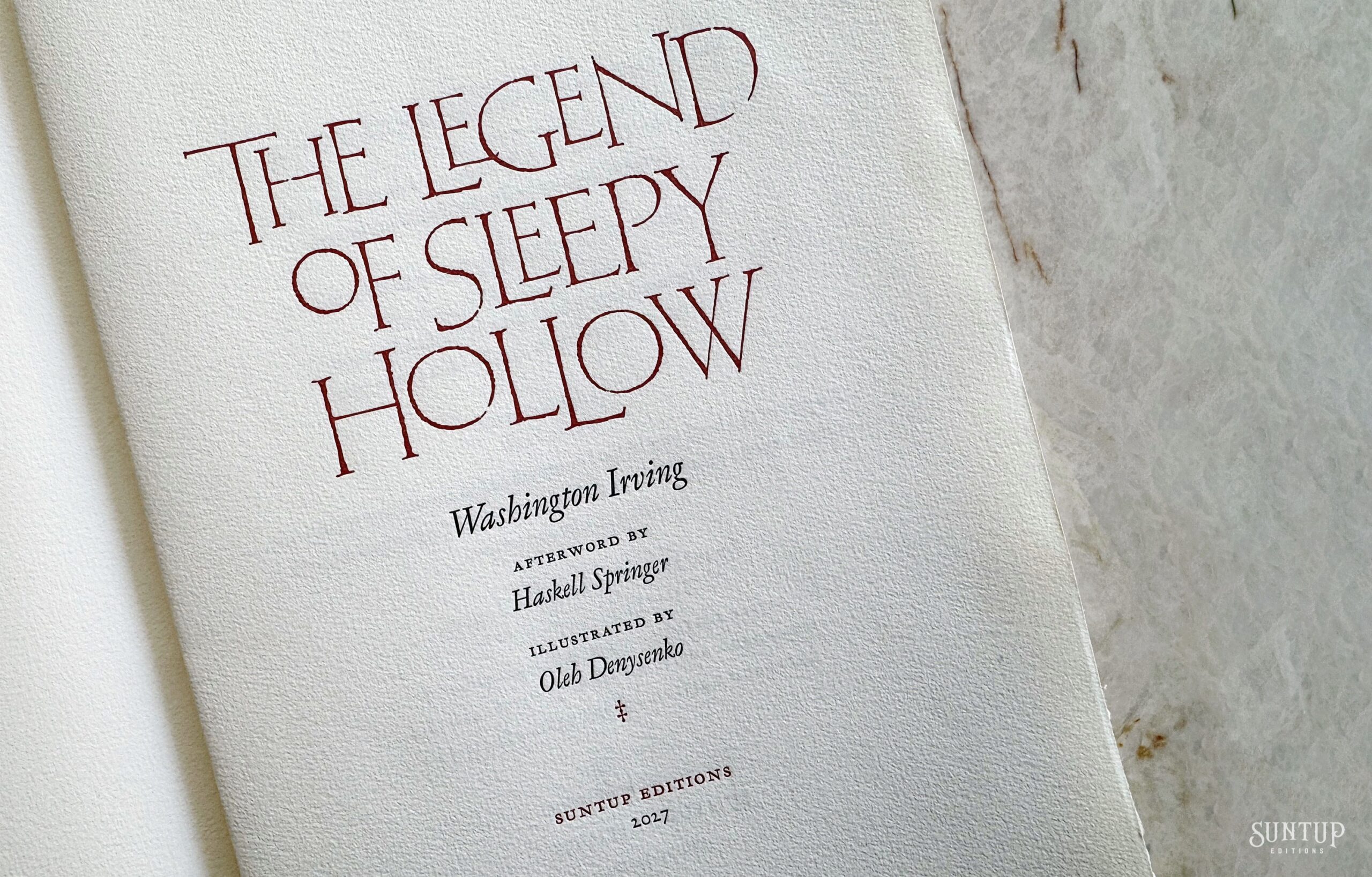
The Legend of Sleepy Hollow Washington Irving
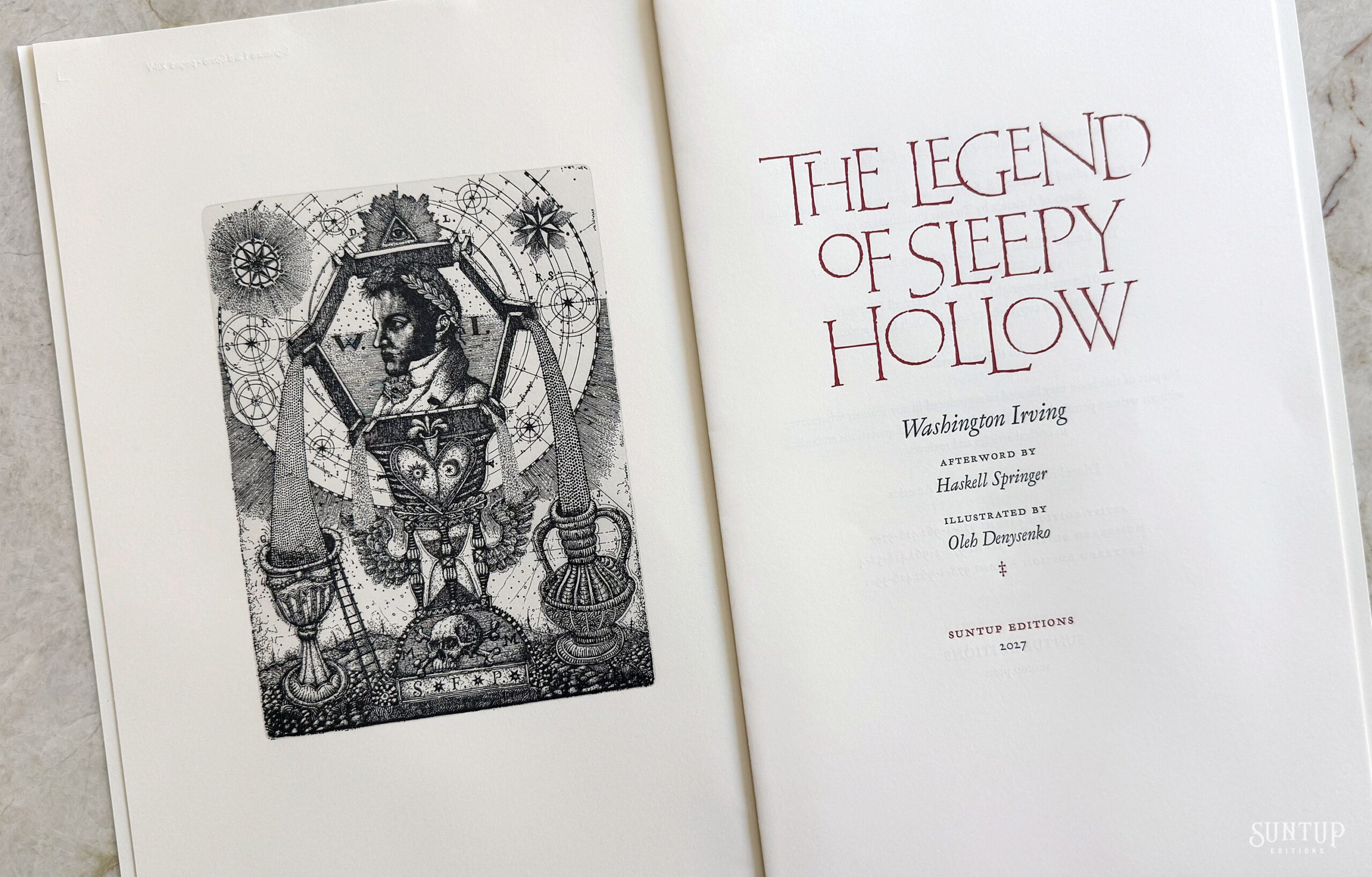
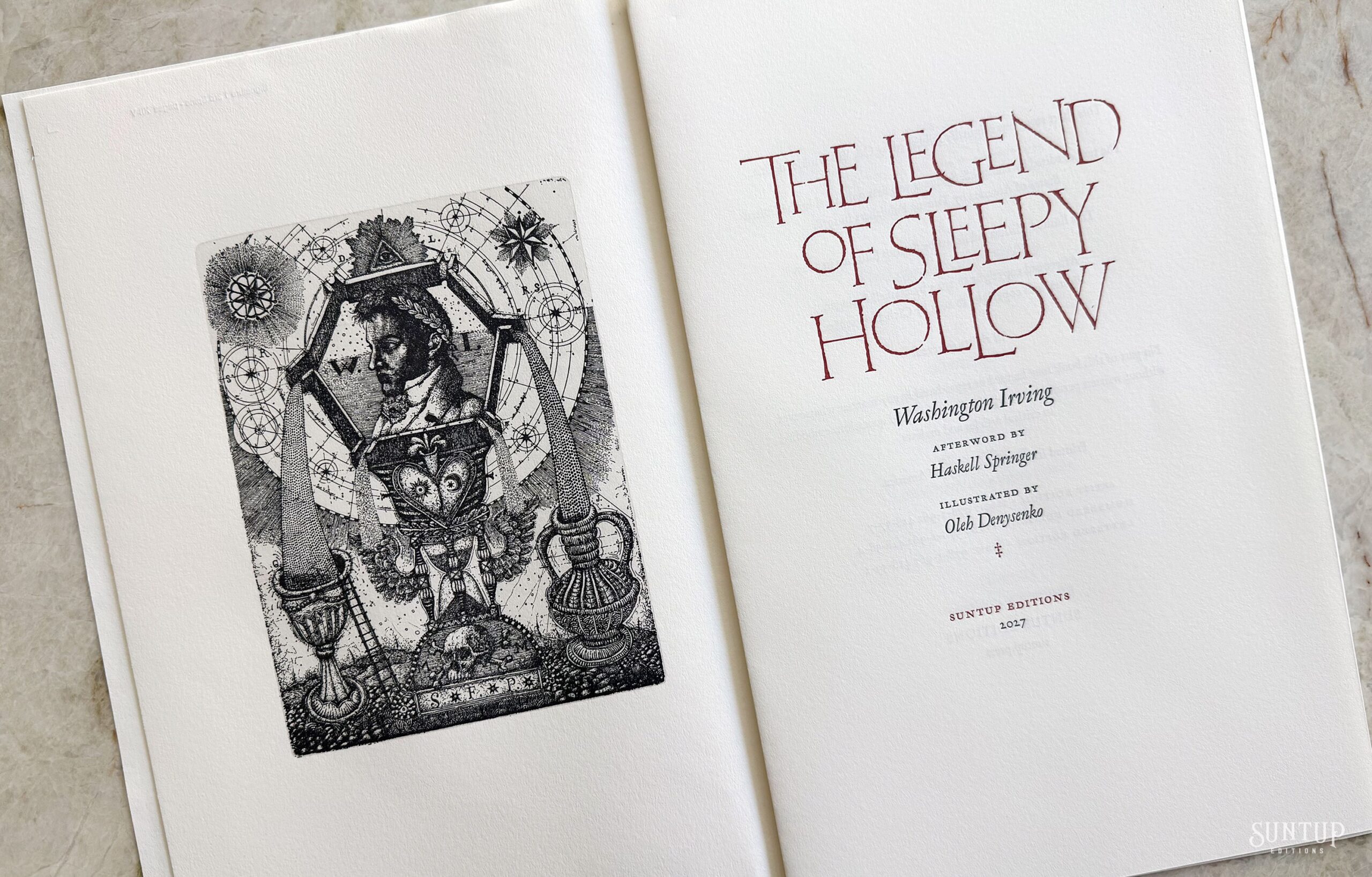
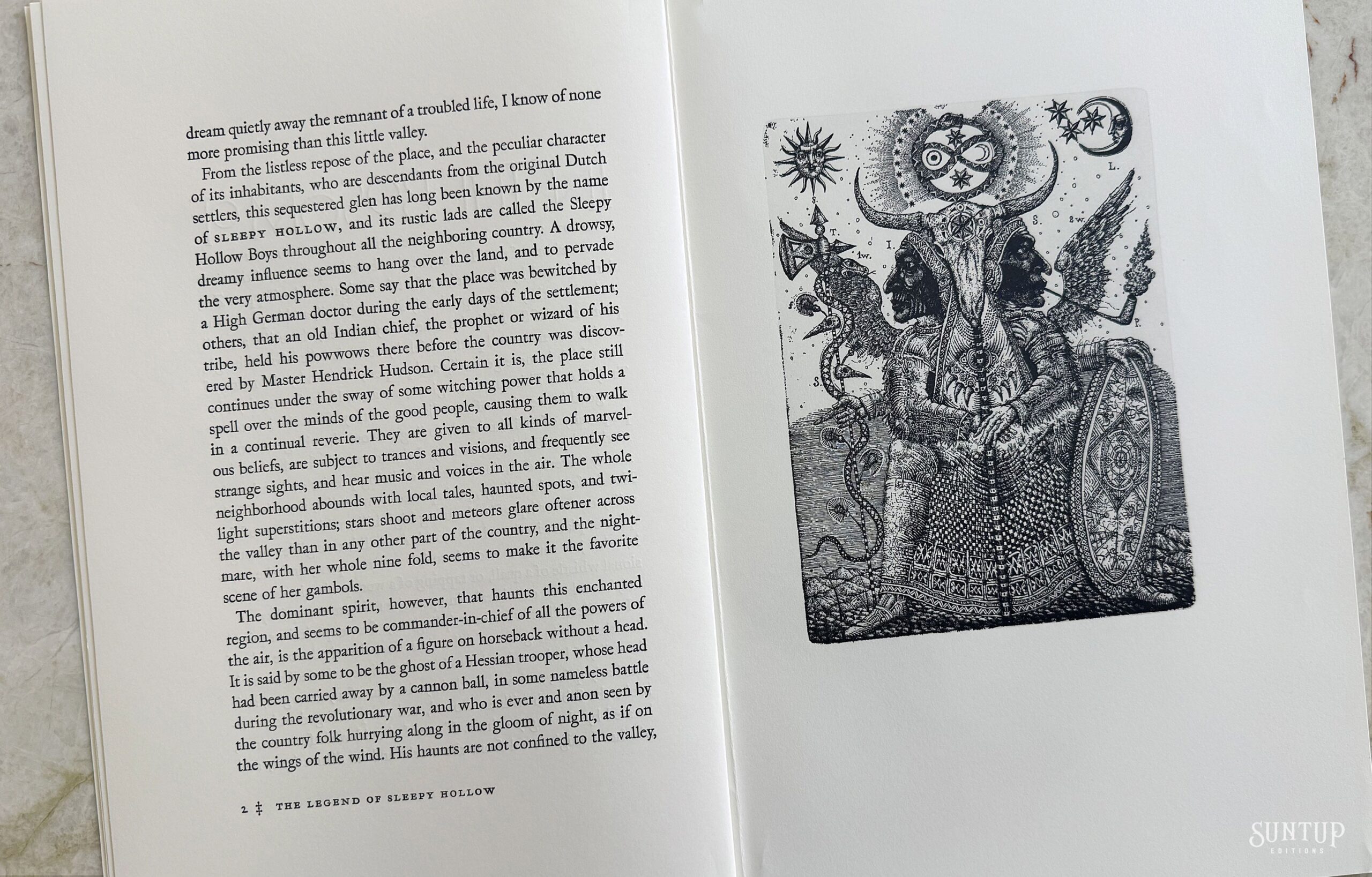
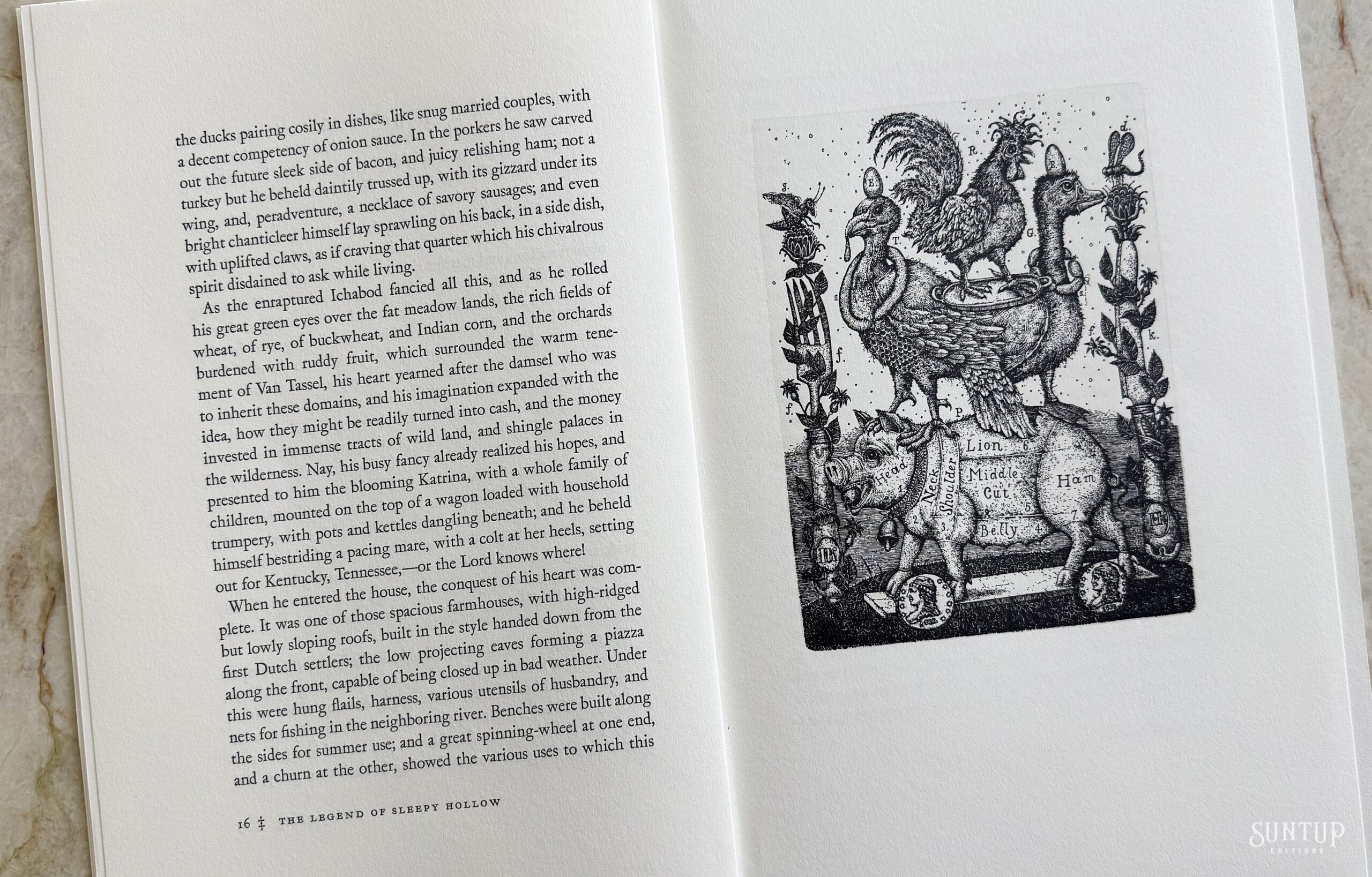
Engravings by Oleh Denysenko
Afterword by Haskell Springer
Haunting and atmospheric, The Legend of Sleepy Hollow by Washington Irving is the classic work of American literature that has captivated generations of readers and introduced one of folklore’s most iconic figures, the Headless Horseman.
In the secluded village of Sleepy Hollow, nestled along the Hudson River, schoolmaster Ichabod Crane finds himself taken by the beautiful Katrina Van Tassel, the daughter of a wealthy local farmer. But his pursuit of her affection puts him at odds with the formidable Brom Bones, a mischievous rival determined to win Katrina for himself.
A deeply superstitious man, Ichabod is fascinated by the ghost stories and local legends that haunt the valley, particularly the tale of a headless Hessian soldier said to roam the countryside at night in search of his missing head. When Ichabod encounters a mysterious horseman on a dark autumn night, his journey home becomes a terrifying ride that leaves behind a mystery that may never be solved.
First published in 1820 as part of Irving’s collection The Sketch Book of Geoffrey Crayon, Gent., The Legend of Sleepy Hollow helped establish Irving as one of the first American authors to achieve international literary recognition. Blending elements of Gothic horror, folklore, romance and satire, the story has inspired countless adaptations for stage, film and television, including Disney’s animated adaptation in 1949 and Tim Burton’s 1999 film Sleepy Hollow. More than two centuries after its original publication, Irving’s tale remains one of the most widely read and influential works of American short fiction.
About The Edition
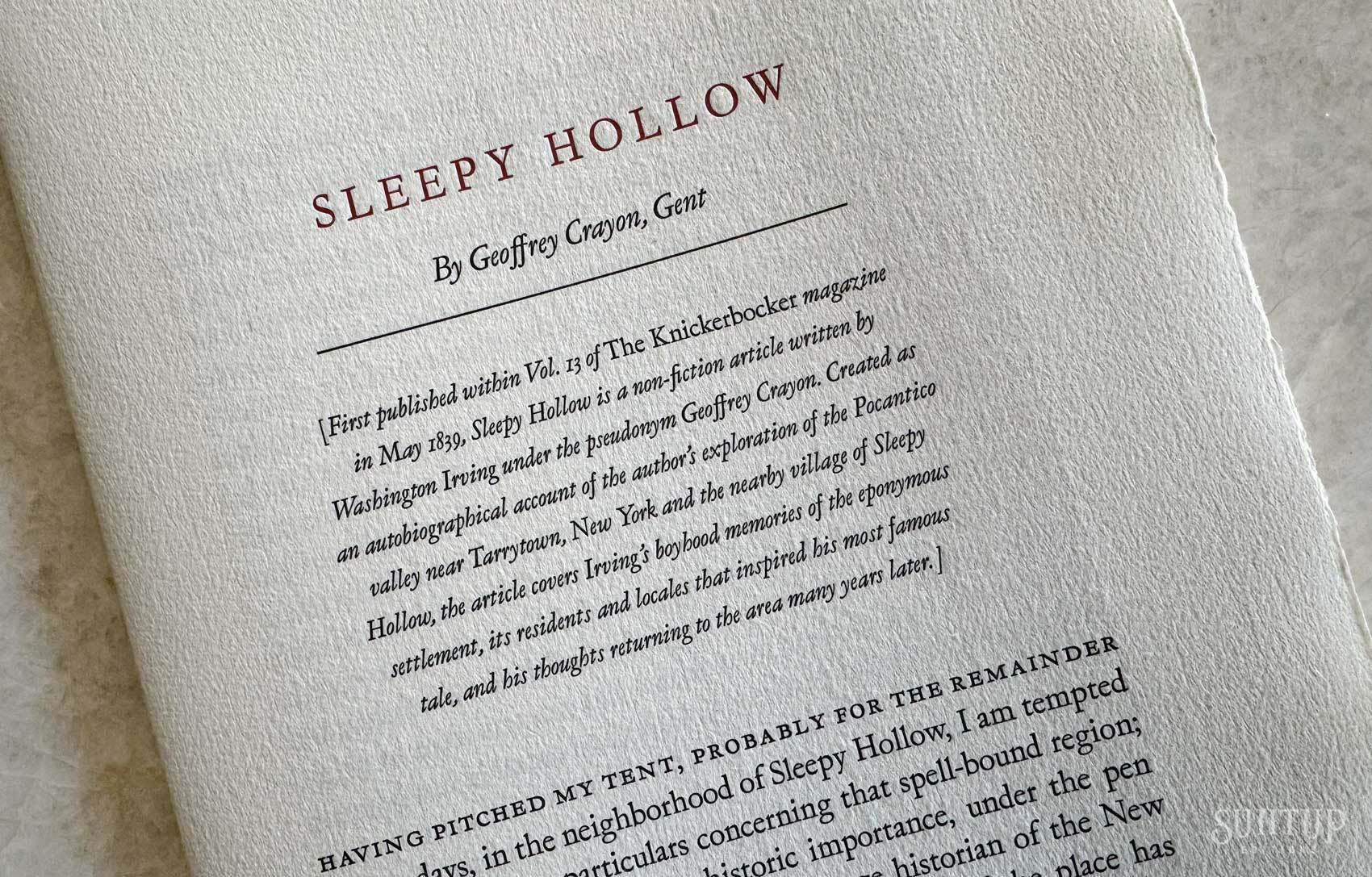
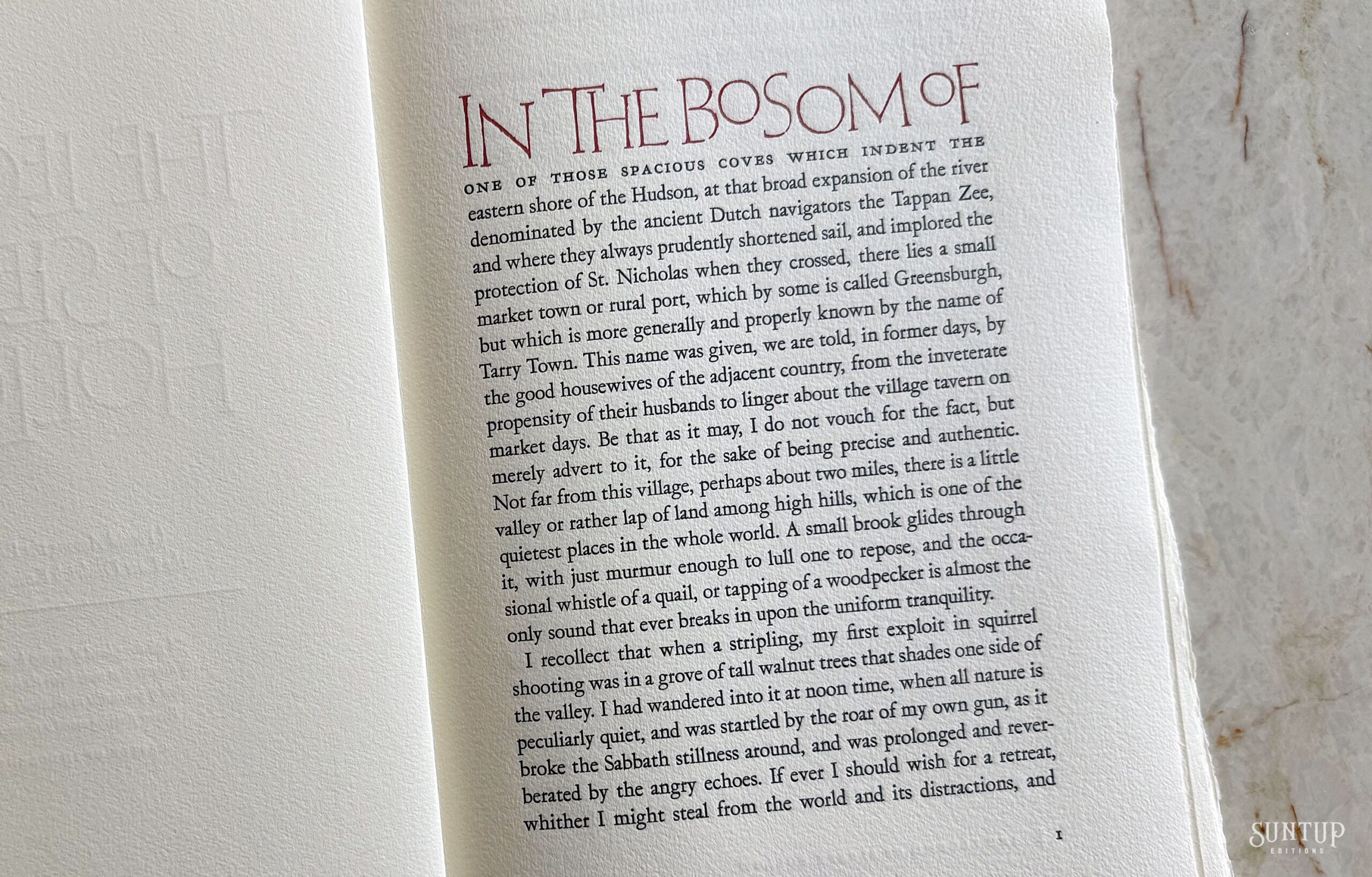
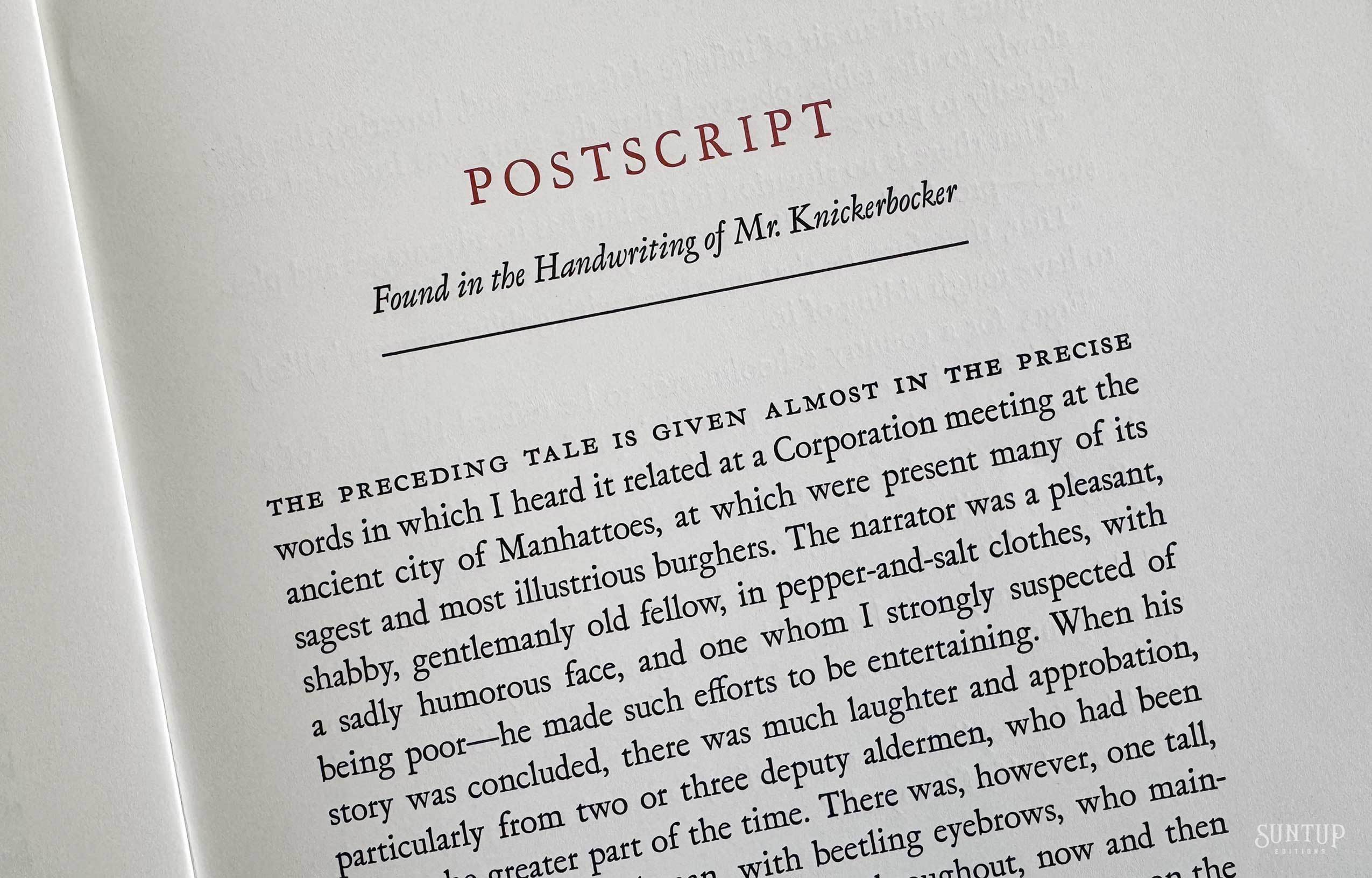
Our edition of The Legend of Sleepy Hollow by Washington Irving is presented in four states: Artist, Numbered, Lettered, and Roman Numeral. The edition measures 7½ x 11 inches and features eight copperplate etchings by award-winning printmaker Oleh Denysenko, as well as a new afterword by Haskell Springer. Also included are the original postscript and Irving’s 1839 essay “Sleepy Hollow,” written in The Knickerbocker under the pseudonym Geoffrey Crayon. In the Lettered and Roman states the etchings are original prints, hand-pulled by the artist and tipped in; while in the Artist and Numbered they are reproduced and printed letterpress with the text.
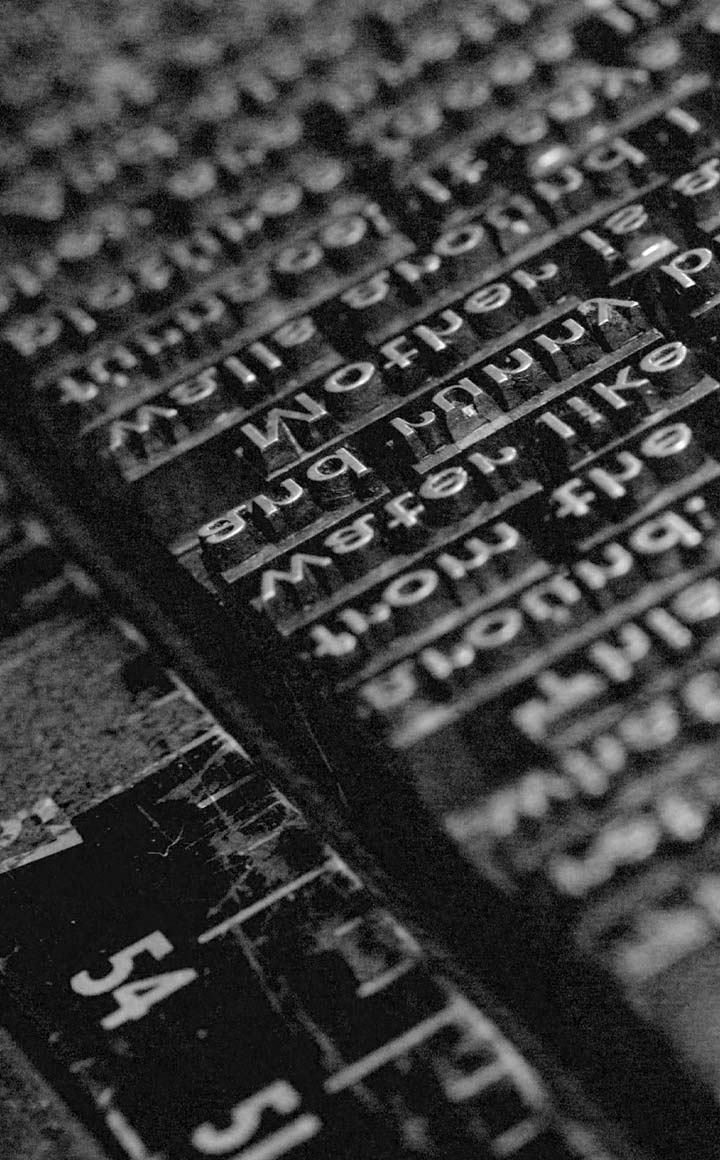
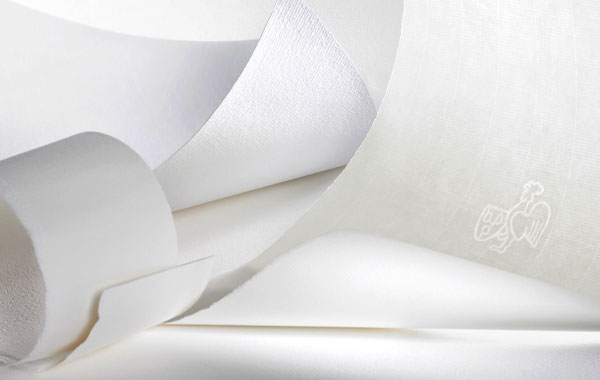
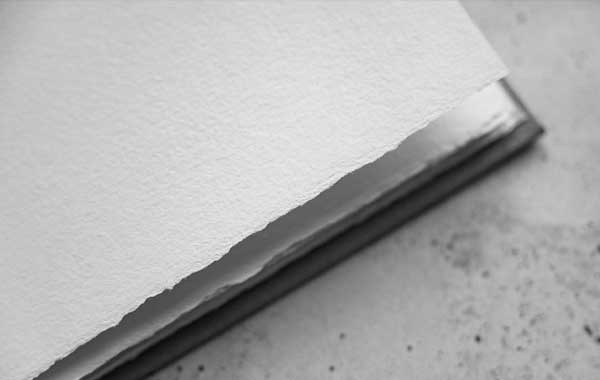
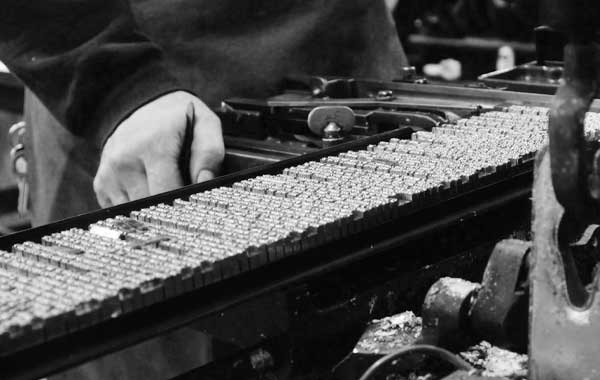
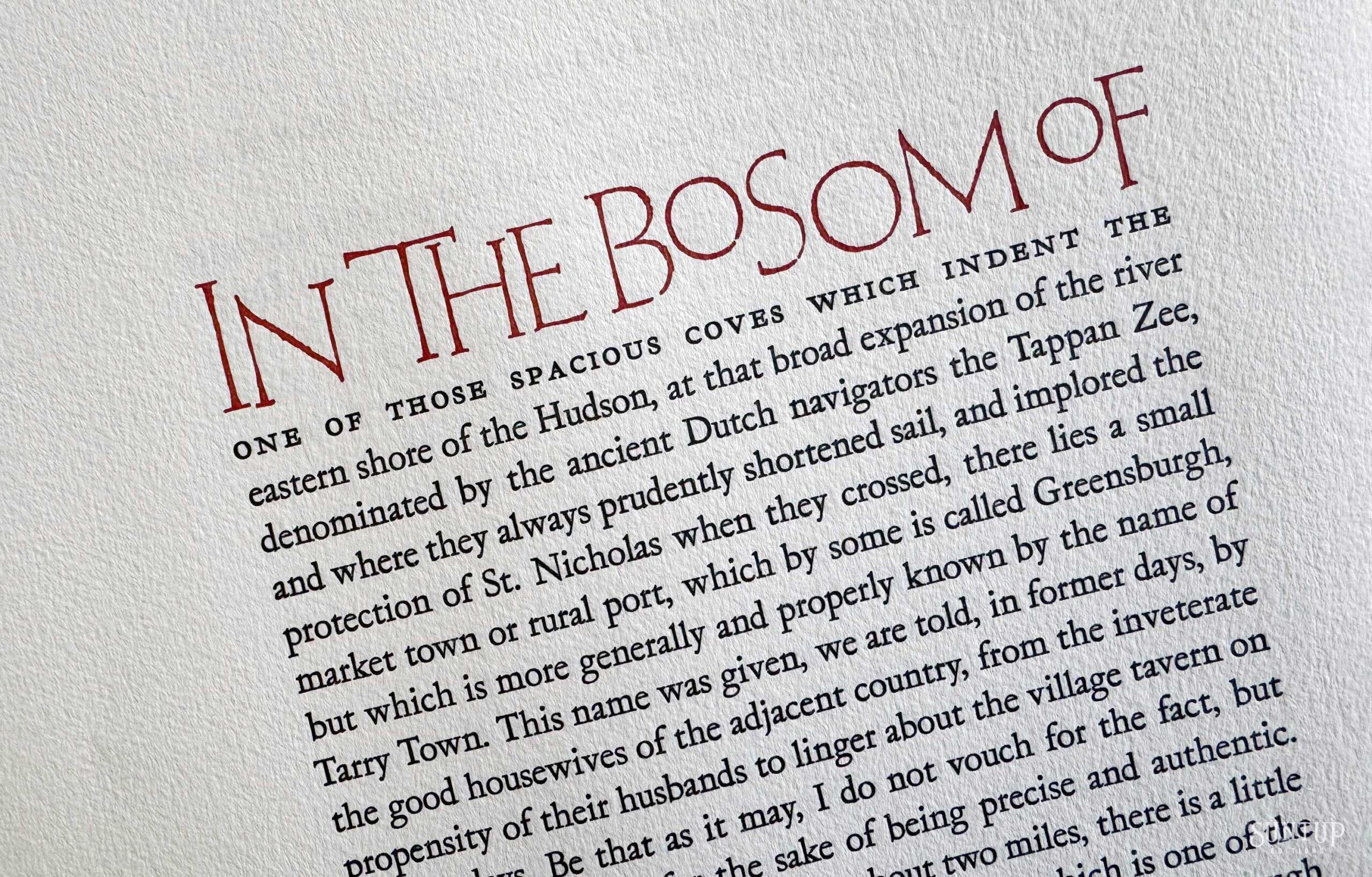
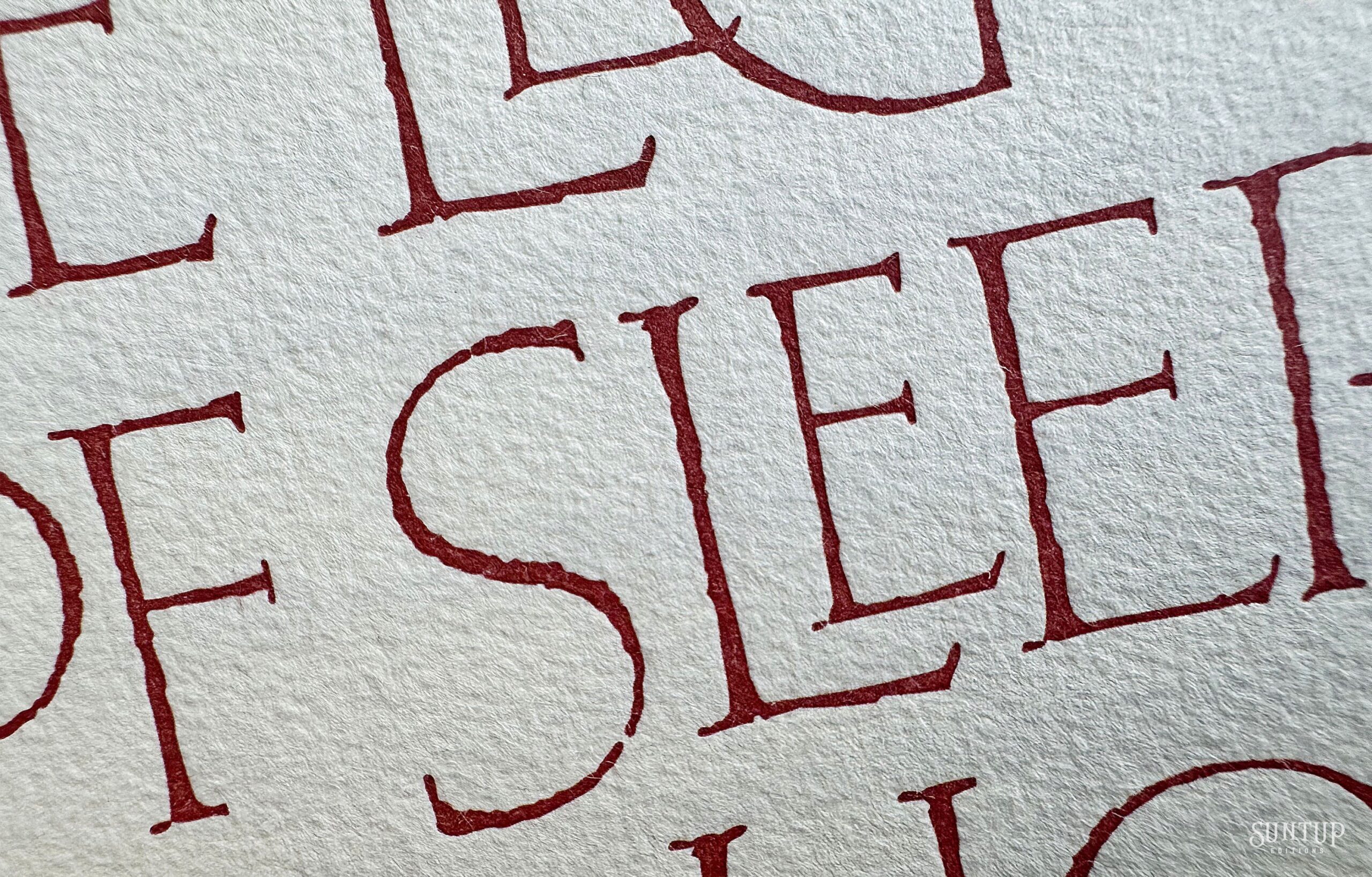
The text pages are set in Monotype Garamont, with Poppl Capitals for display. The edition is printed letterpress by Elias Roustom on his Heidelberg Cylinder in Middleborough, Massachusetts on Cougar Natural, Neenah Cotton, and mouldmade Hahnemühle Biblio papers. Interior design and typography by Jason Dewinetz.
A Note on the Typography
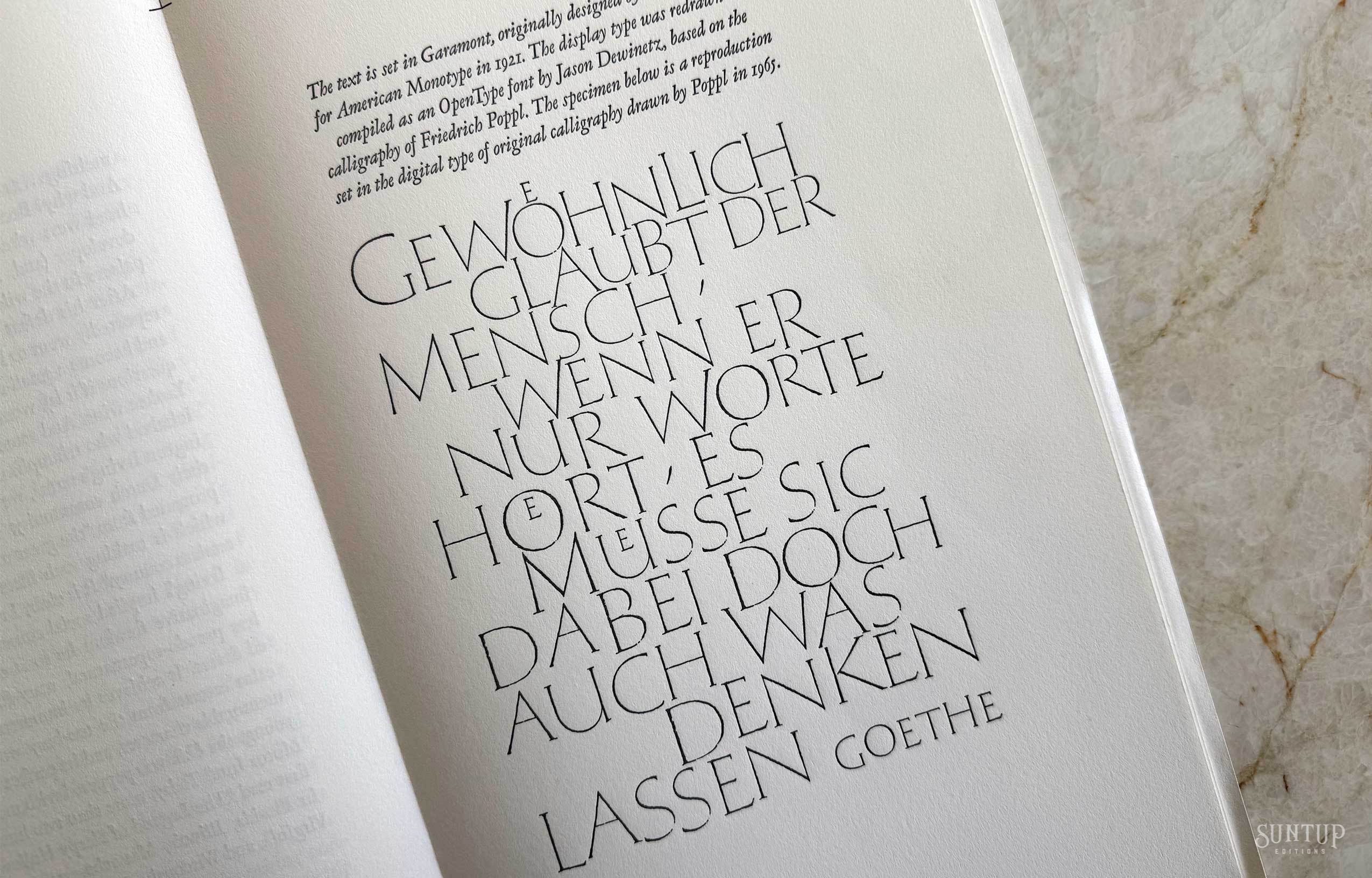
The text is set in Monotype Garamont, drawn by Frederic W. Goudy for Lanston Monotype in 1921 — a face Goudy deliberately spelled “Garamont” to distinguish his rendering from rival versions then in circulation. His aim, by his own account, was not to correct or refine the original but to reproduce as faithfully as possible the form and spirit of the types attributed to Claude Garamond, mannerisms and all.
However, Goudy (like so many others at the time) was actually working from examples of types designed and cut not by Claude Garamond, but by Jean Jannon in the early 17th century. As such, Goudy’s attempt to distinguish his design by using the variant spelling further complicated this long-standing misattribution.
The display type is Poppl Capitals, based on original calligraphy executed by the German letterer and type designer Friedrich Poppl in 1965 and compiled as an OpenType font by Jason Dewinetz. Poppl, whose work was rooted in the calligraphic tradition of the Offenbach and Wiesbaden schools, brought an assured, hand-wrought authority to his lettering.
Artist Edition
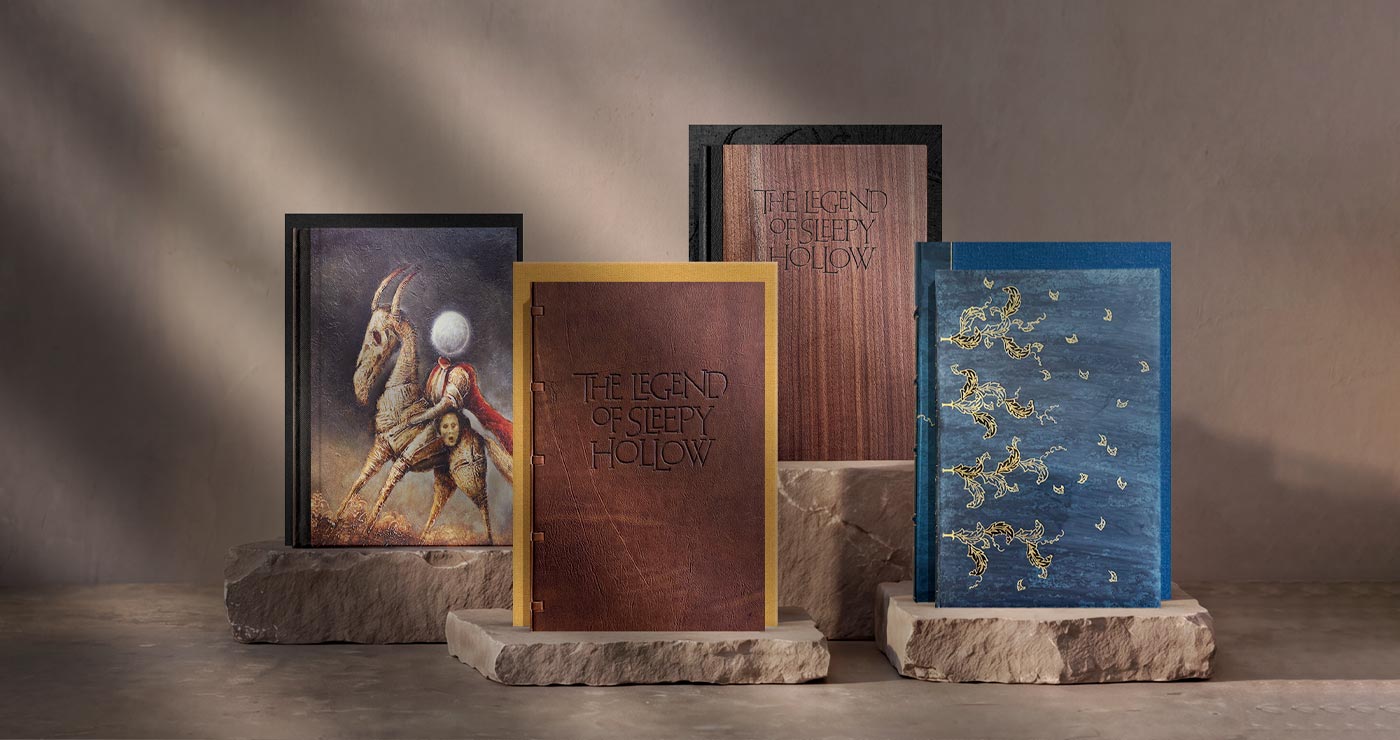
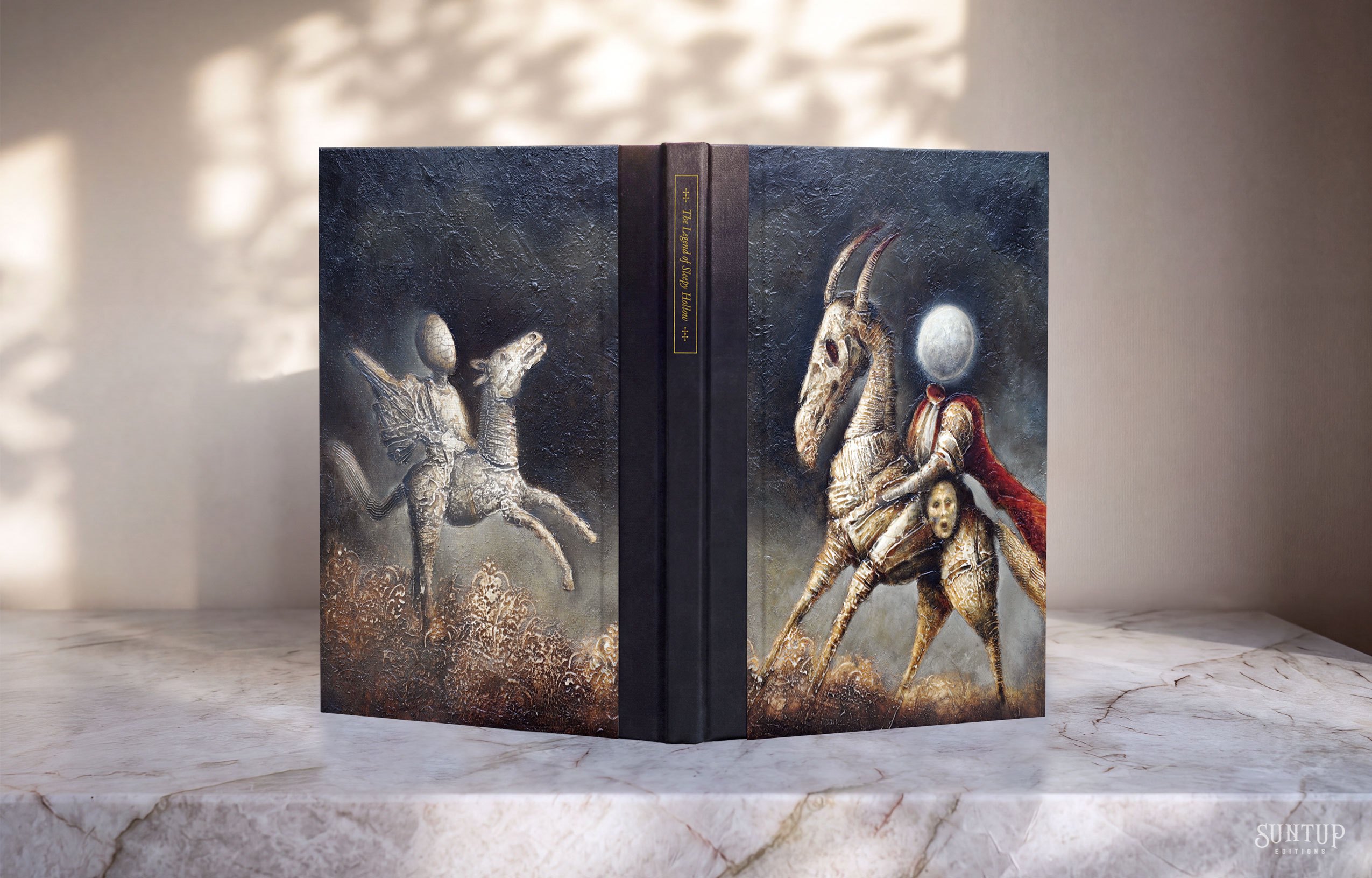
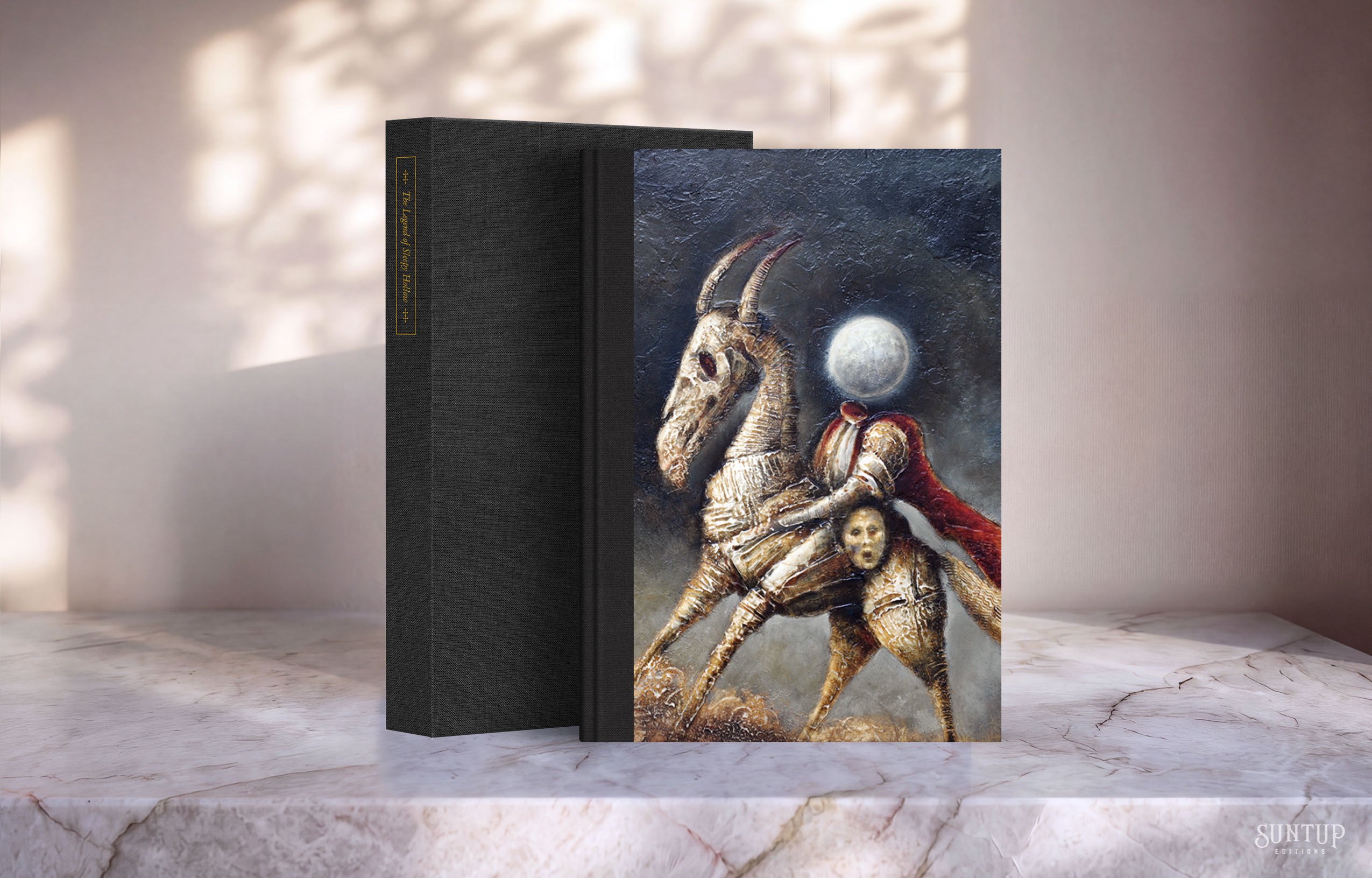
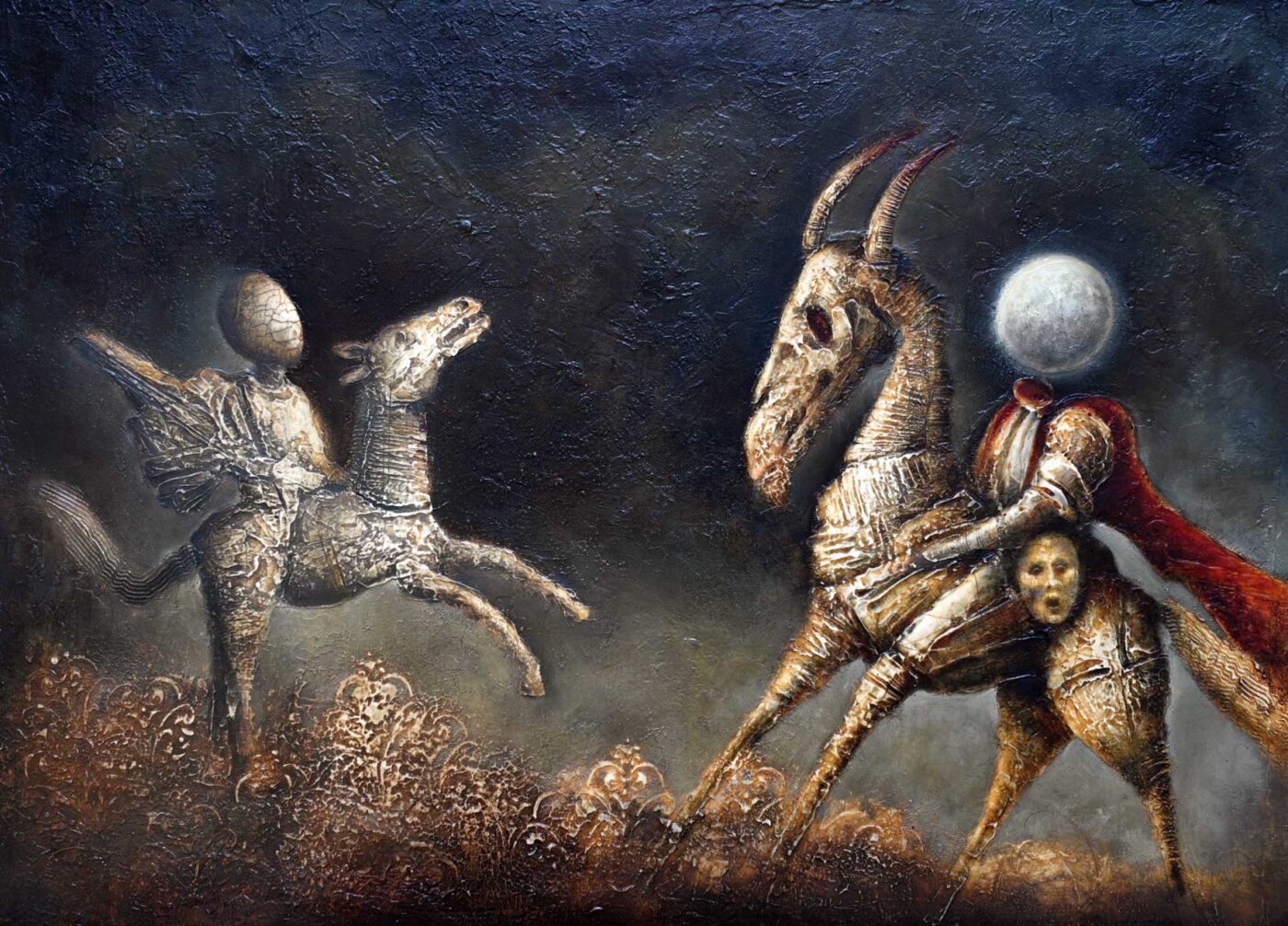
Pre-orderThe Artist edition of seven hundred fifty copies is a quarter cloth binding with illustrated paper sides. The book spine includes gold foil blocking, and endsheets are embossed Rainbow. The edition is printed letterpress on Cougar Natural, and includes a fold-out reproduction of the full cover painting. It is housed in a cloth-covered slipcase, and is signed by Oleh Denysenko.
Numbered Edition
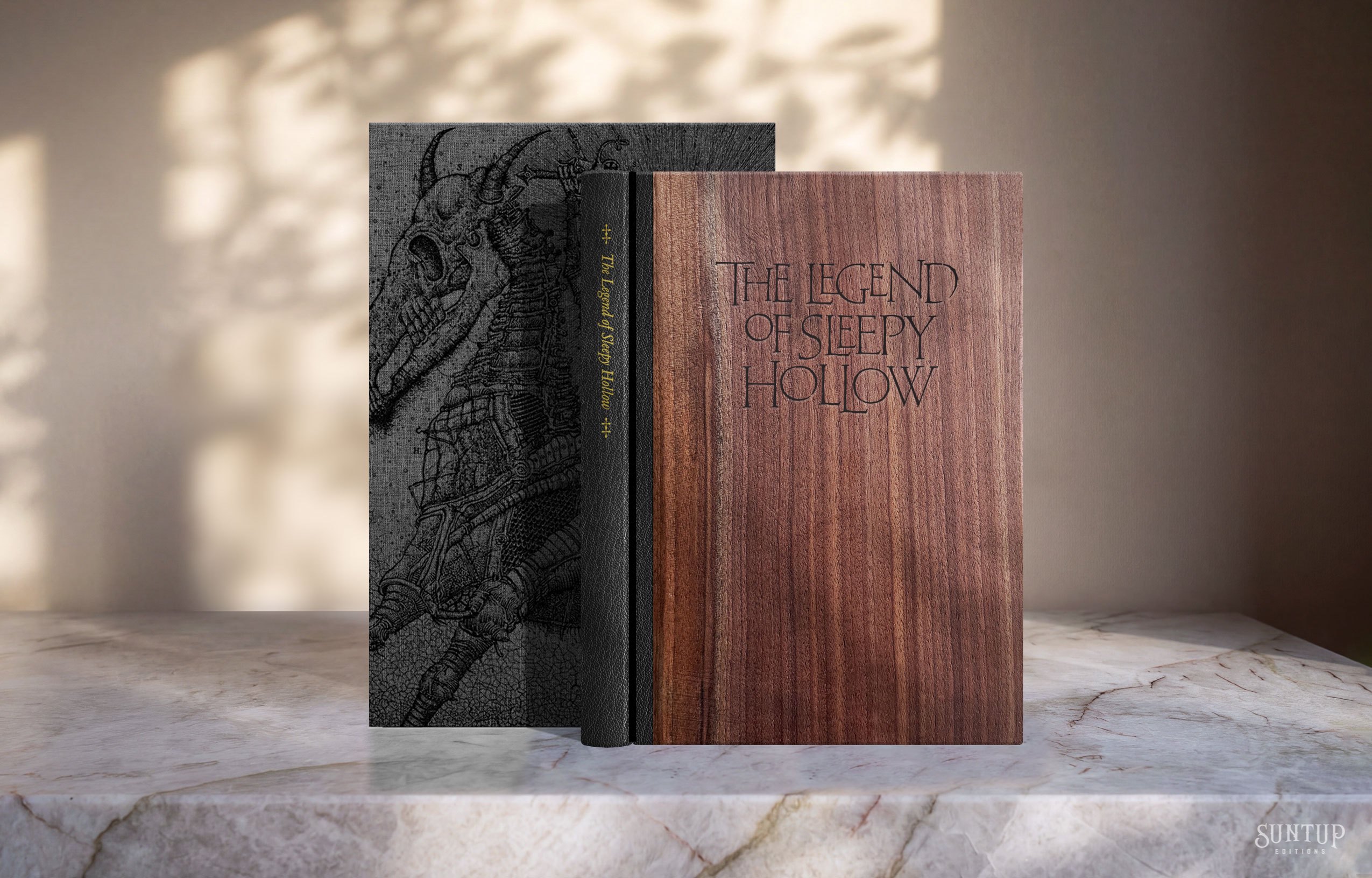
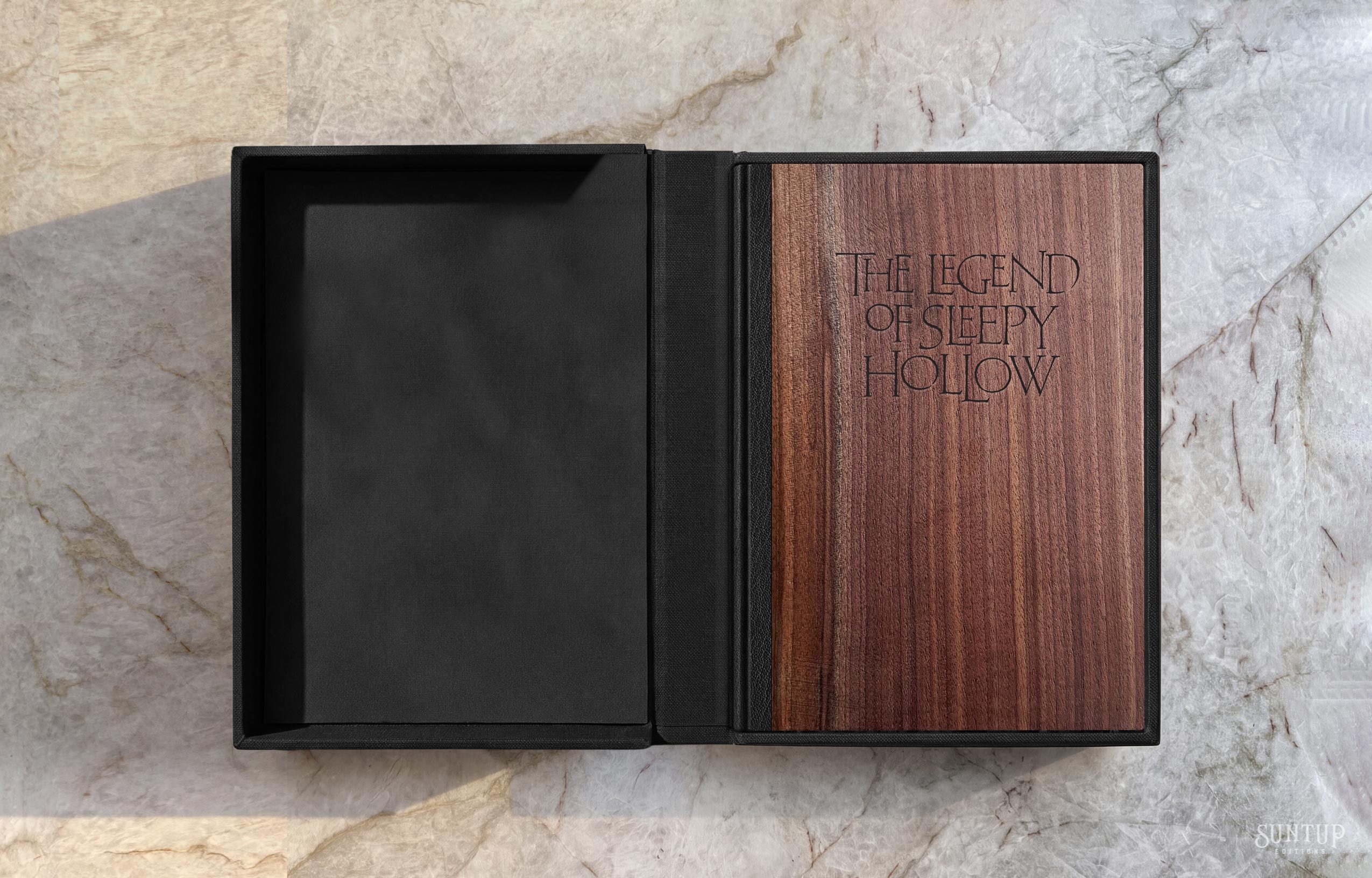
The Numbered edition of two hundred fifty copies is a quarter binding with a goatskin spine and walnut wood boards. The boards are quarter sawn and kiln dried, the edges chamfered, the corners softened, and the wood sealed by hand. The goatskin is from Harmatan and Oakridge, hand-finished by traditional methods. Endsheets are Hahnemühle Bugra, and the head and tail bands are handmade in cloth.
The edition is printed letterpress on Neenah Cotton and includes a fold-out reproduction of the full cover painting from the Artist edition. It is housed in a clamshell enclosure covered in a finely woven, two-toned cloth and lined in velour, with one of Denysenko’s illustrations printed on the front cover. The edition is signed by Oleh Denysenko and Haskell Springer.
Lettered Edition
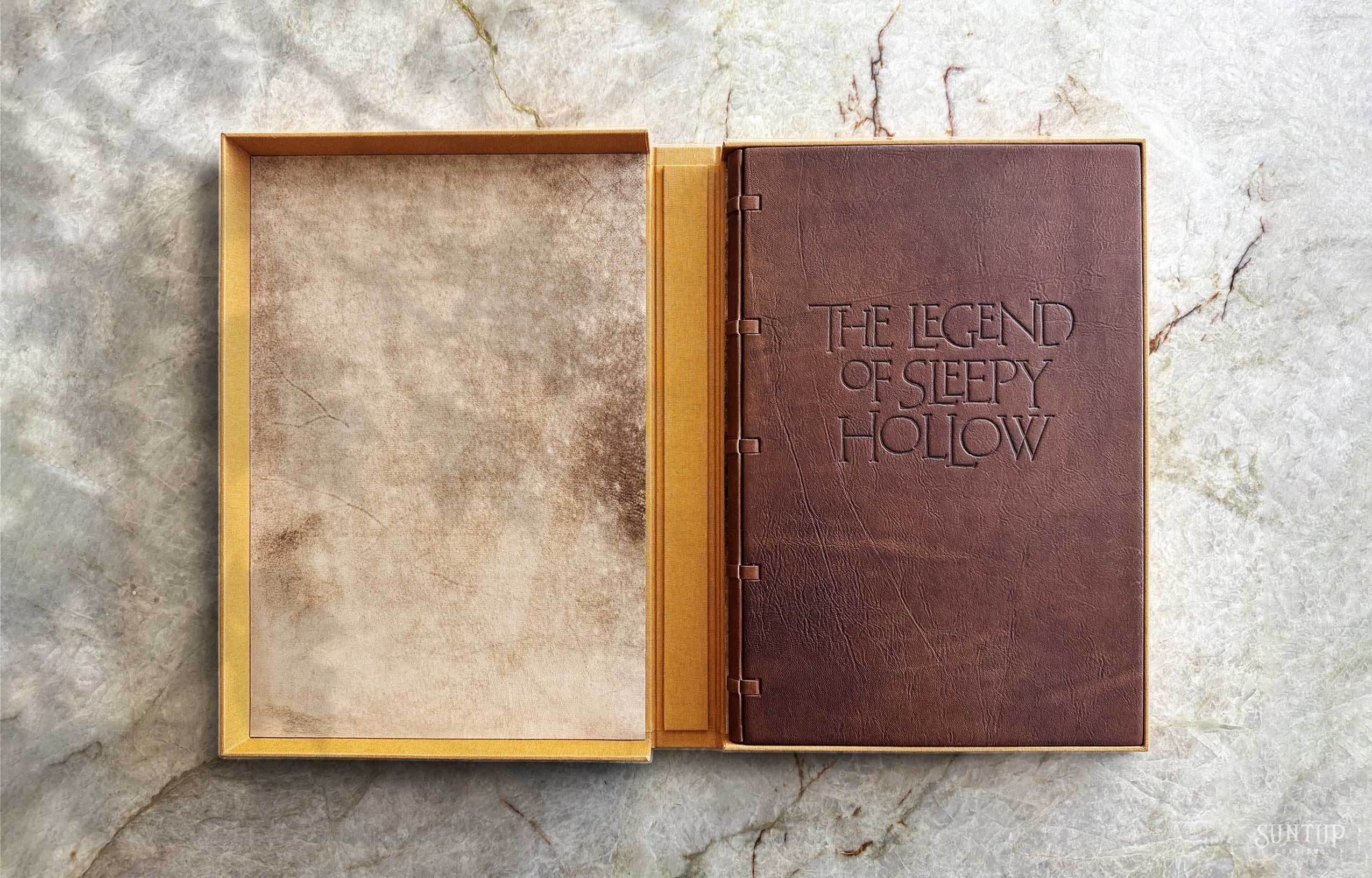
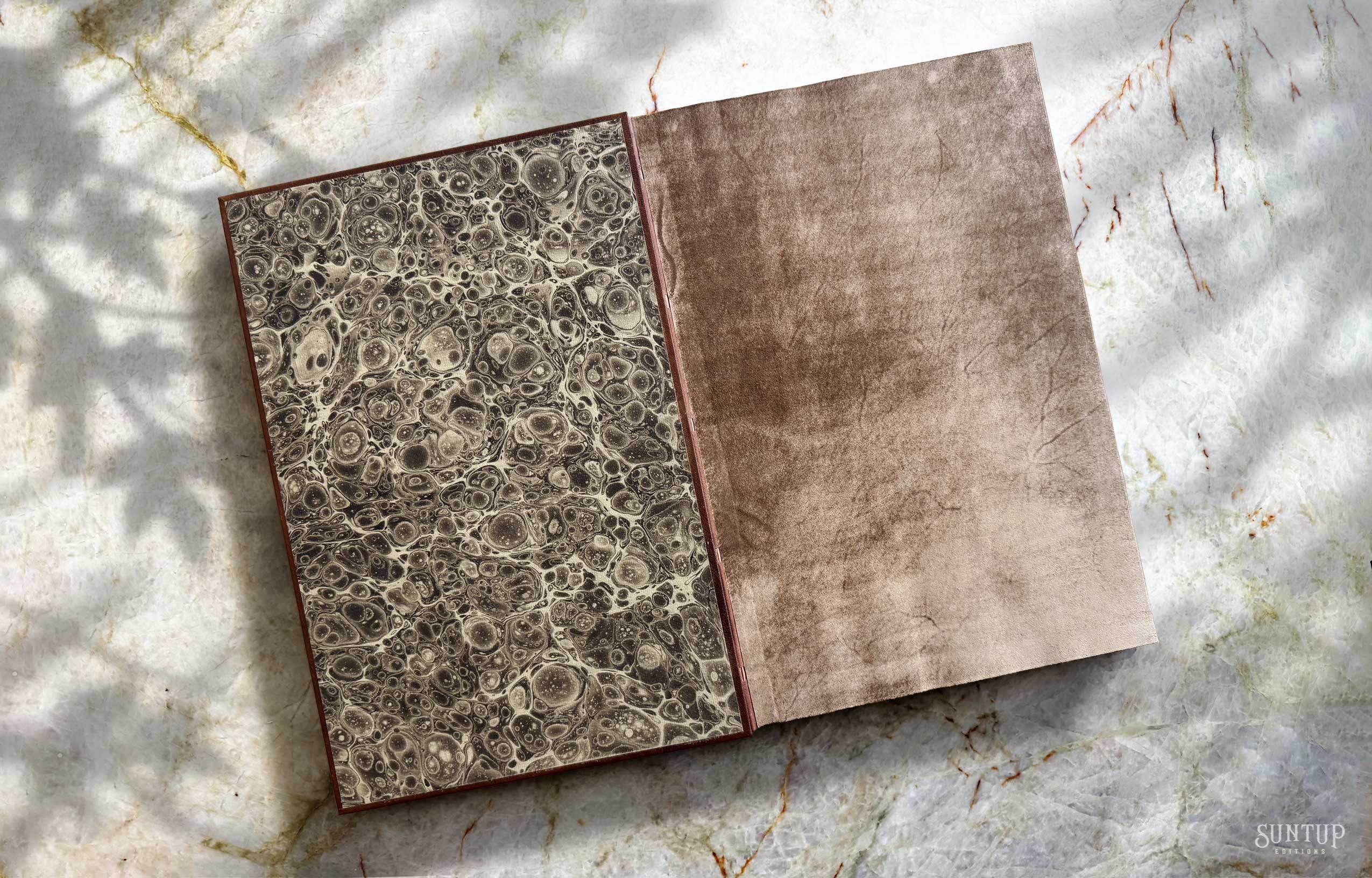
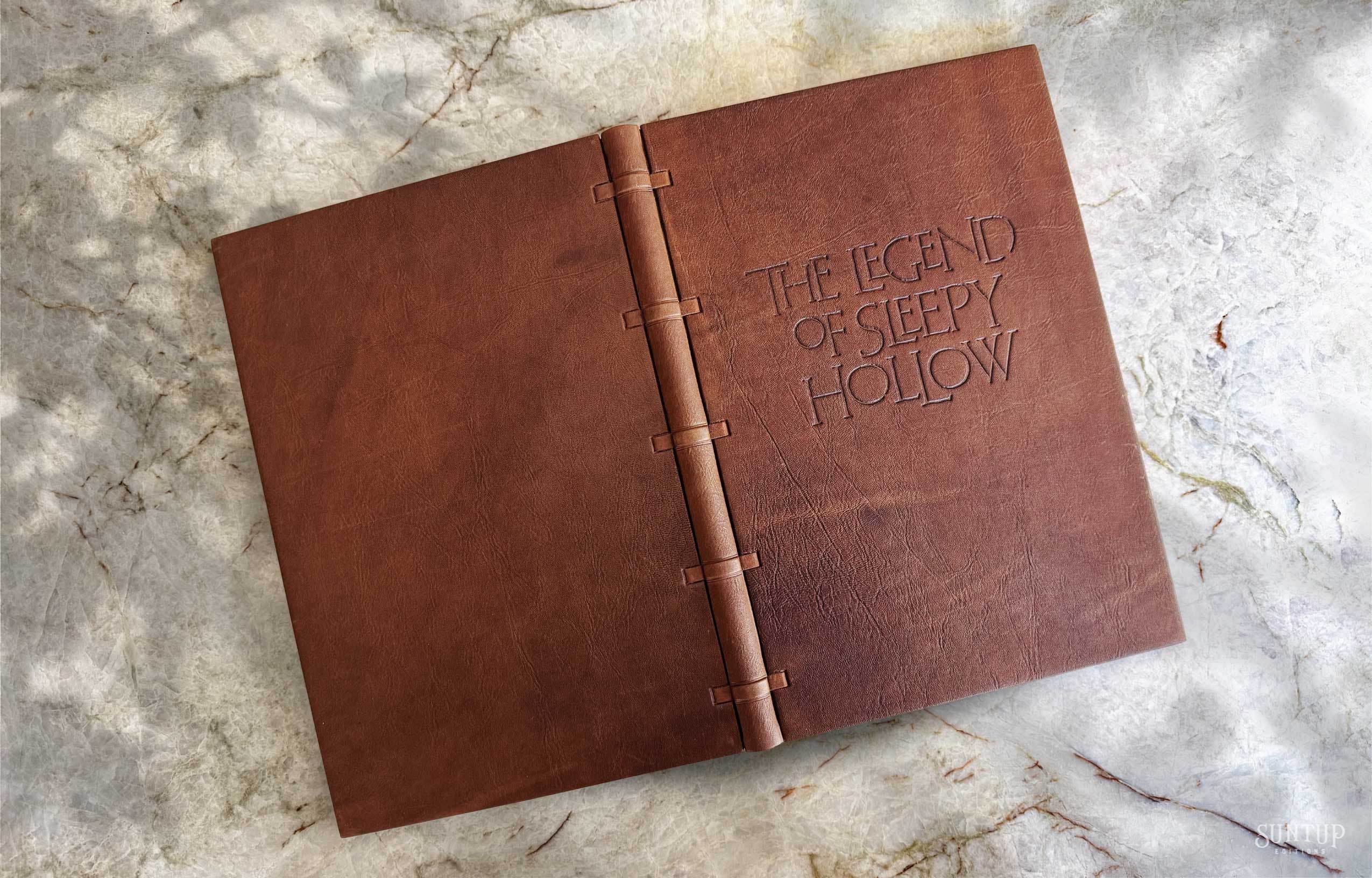
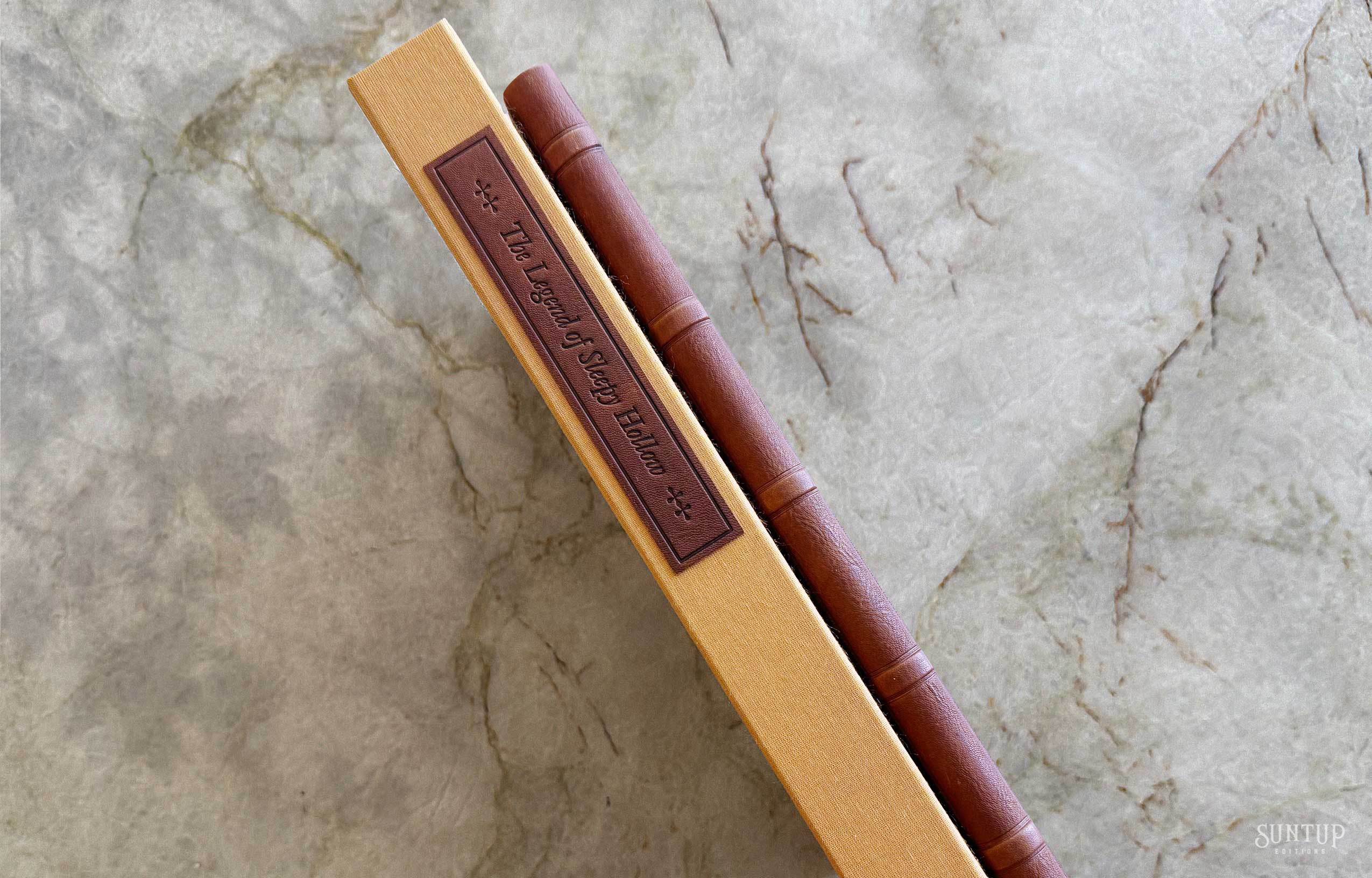
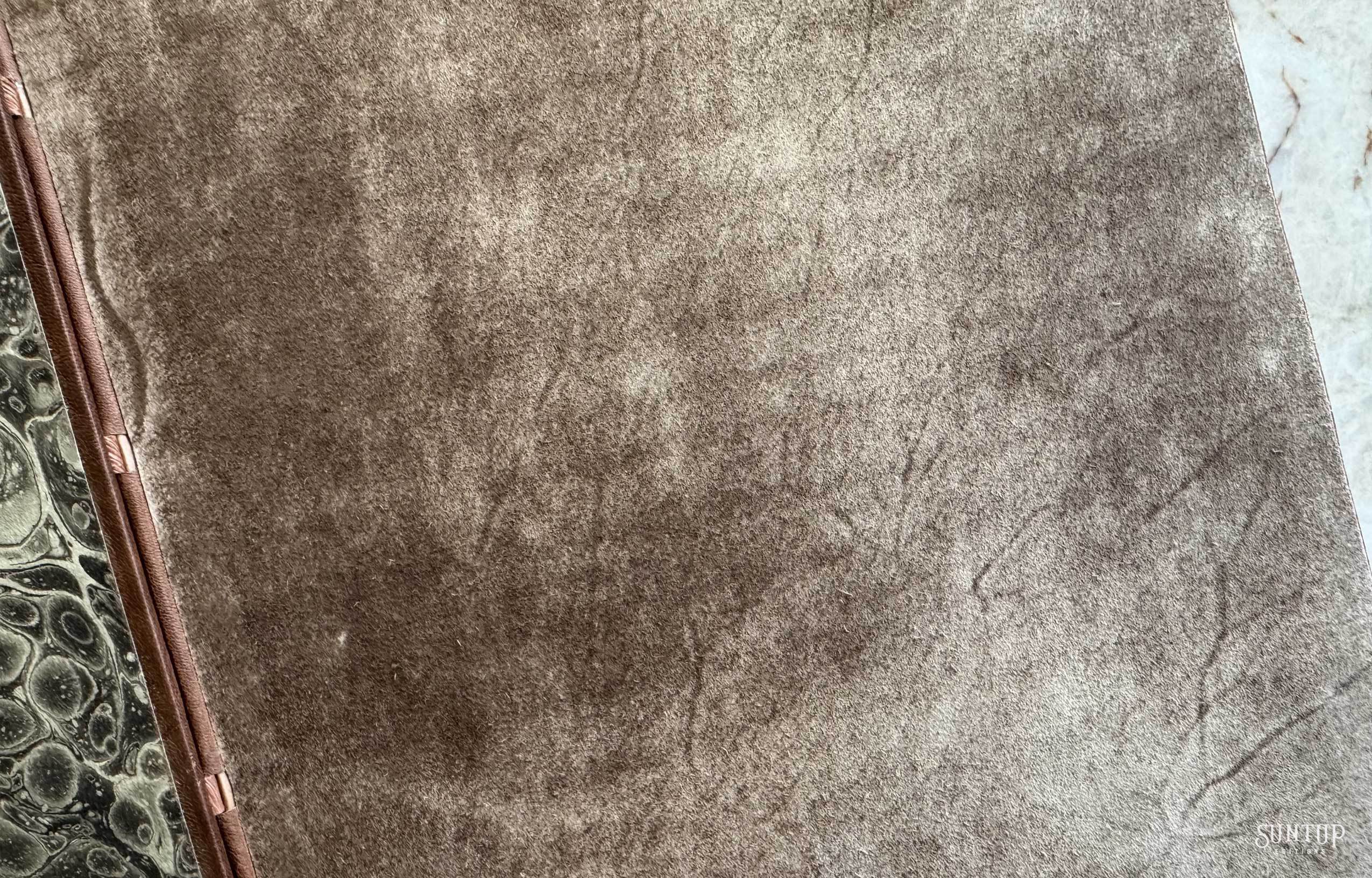
The Lettered edition of twenty-six copies is a full leather binding inspired by the technique of Dutch artist and bookbinder Karli Frigge, also well known for her marbled papers. The text block is sewn on leather straps made from the same leather as the binding. The straps are then laced into the separately made boards. Raised bands on the spine correspond with the position and width of the leather straps. The doublures are covered with hand marbled paper by Dirk Lange in Germany, while the flyleaves are lined with natural goatskin suede.
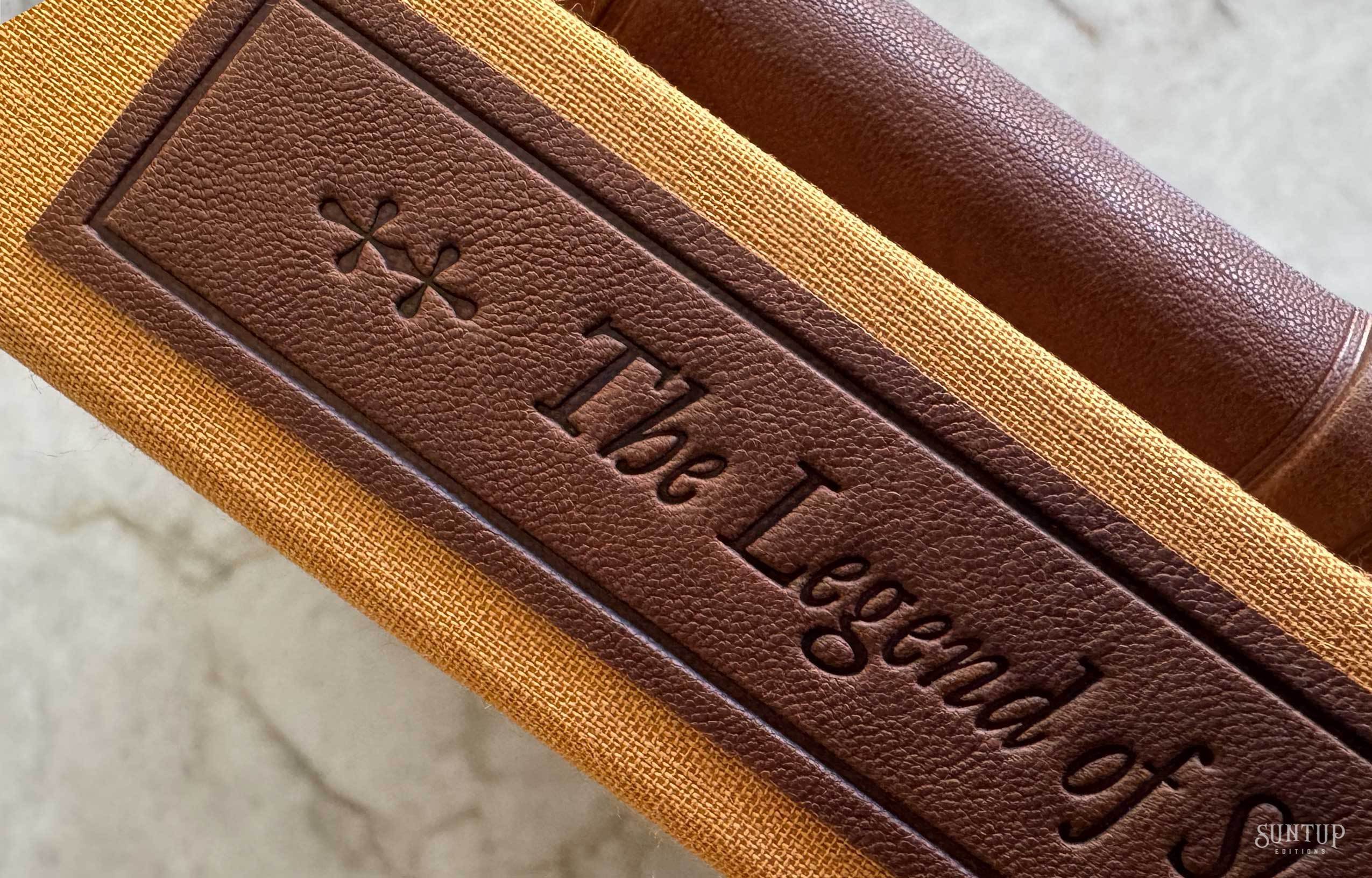
The edition is housed in a cloth-covered clamshell box, lined with the same natural goatskin suede. Both the leather spine label on the box and the title on the front cover are blind stamped.
The edition is printed letterpress on mouldmade Hahnemühle Biblio, and includes a fold-out of the full cover painting from the Artist edition, printed giclée. It is bound by Jacek Tylkowski in Komorniki, Poland and is signed by Oleh Denysenko and Haskell Springer.
Roman Numeral Edition
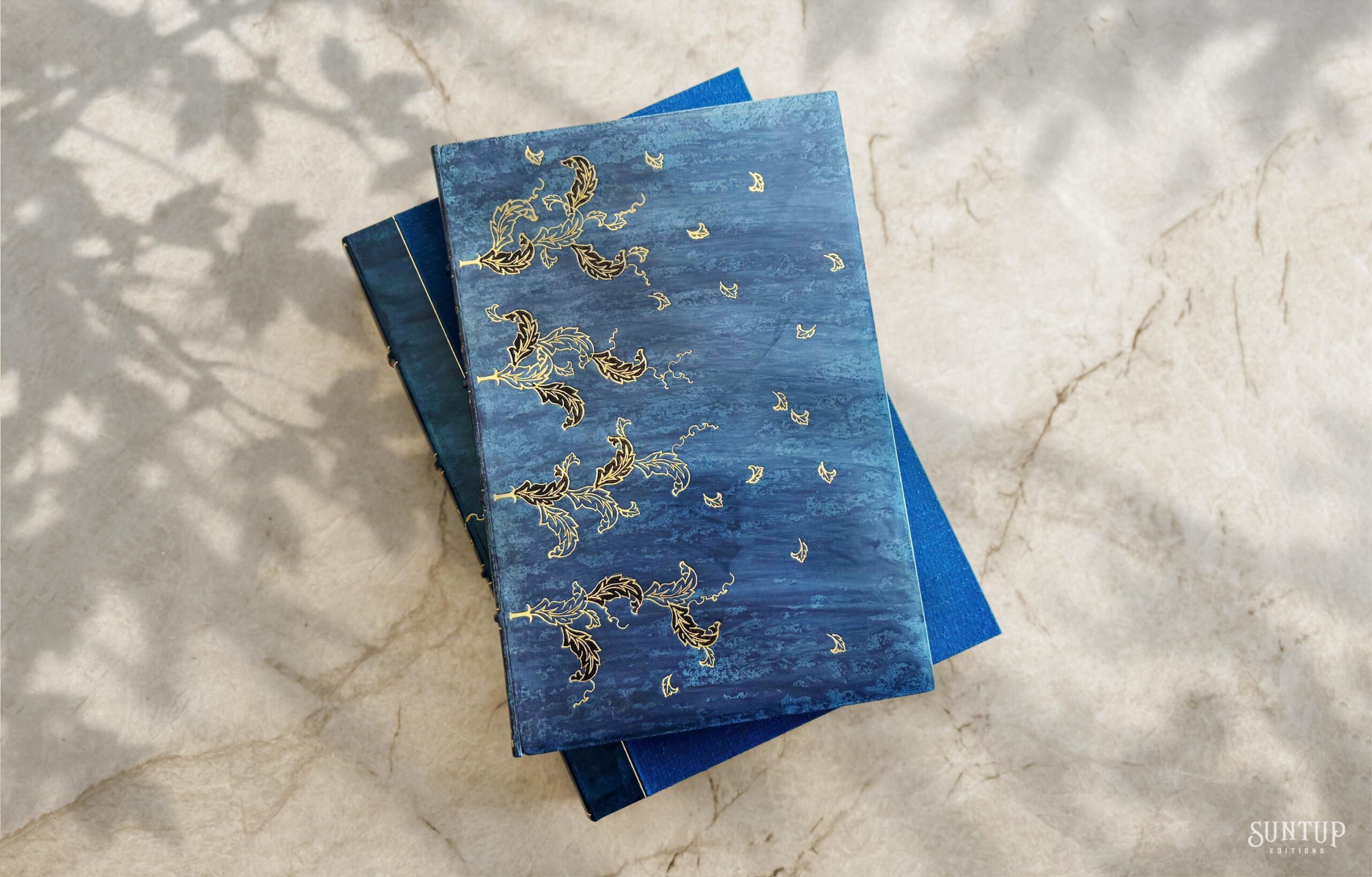
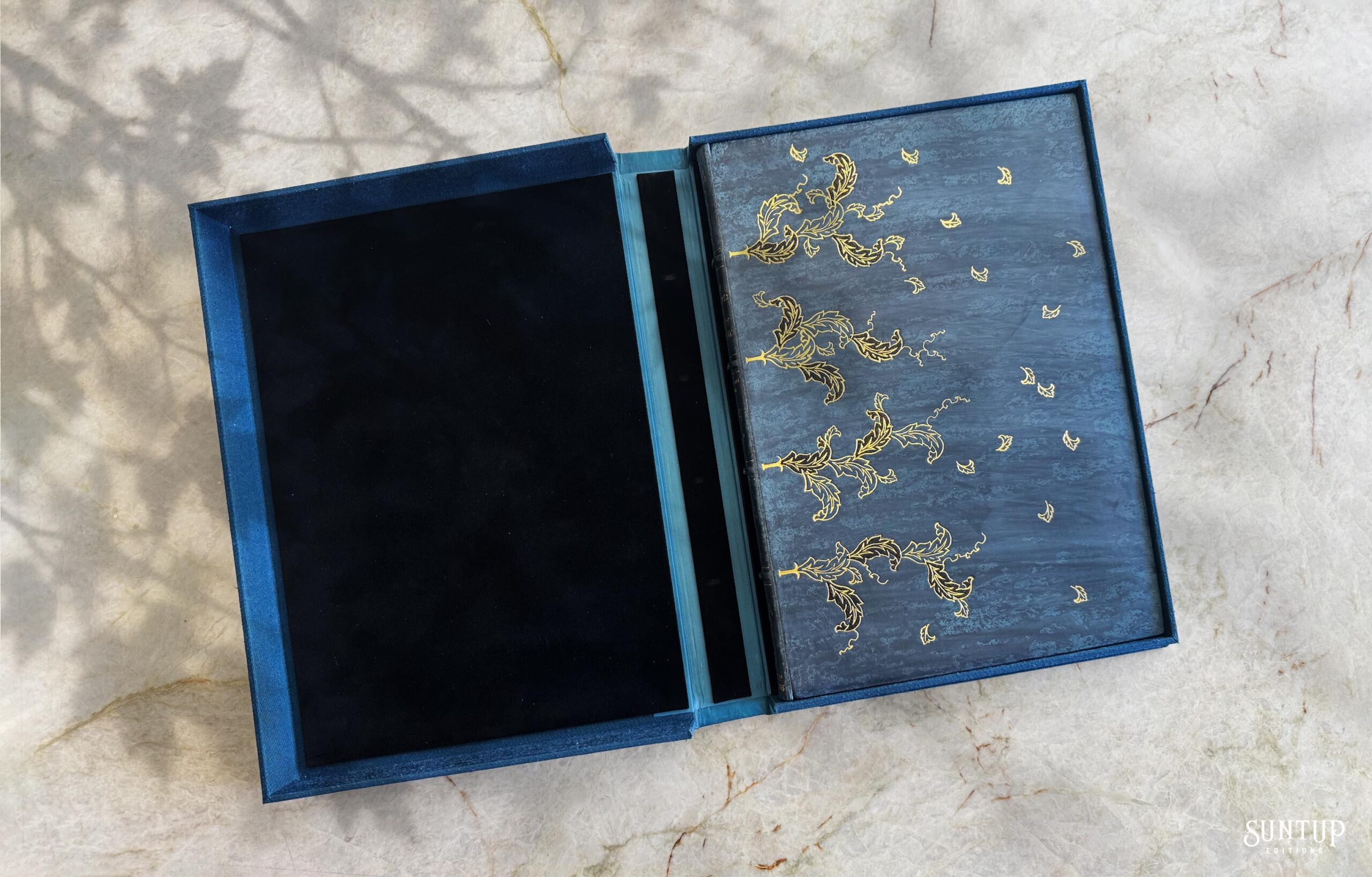
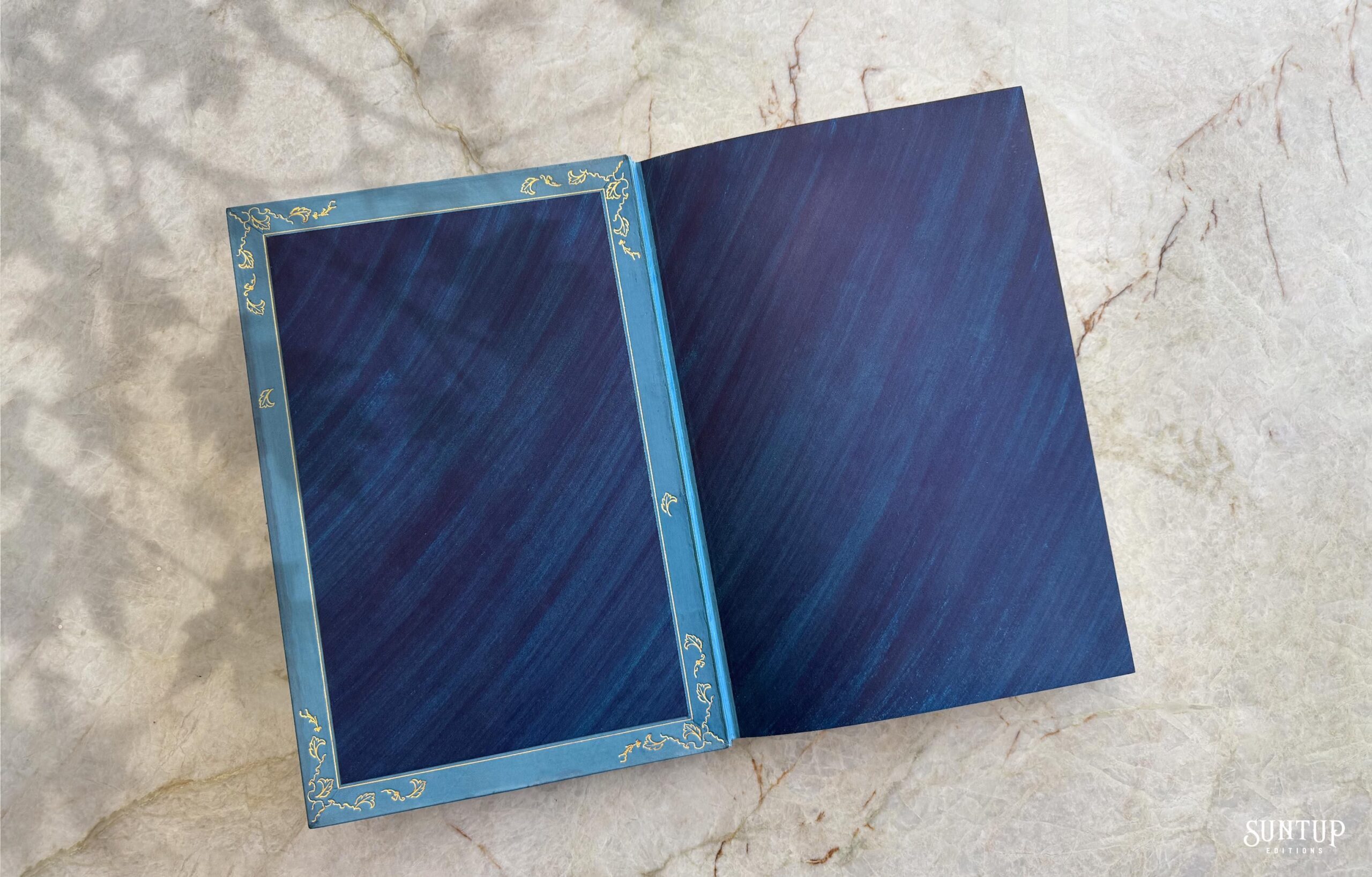
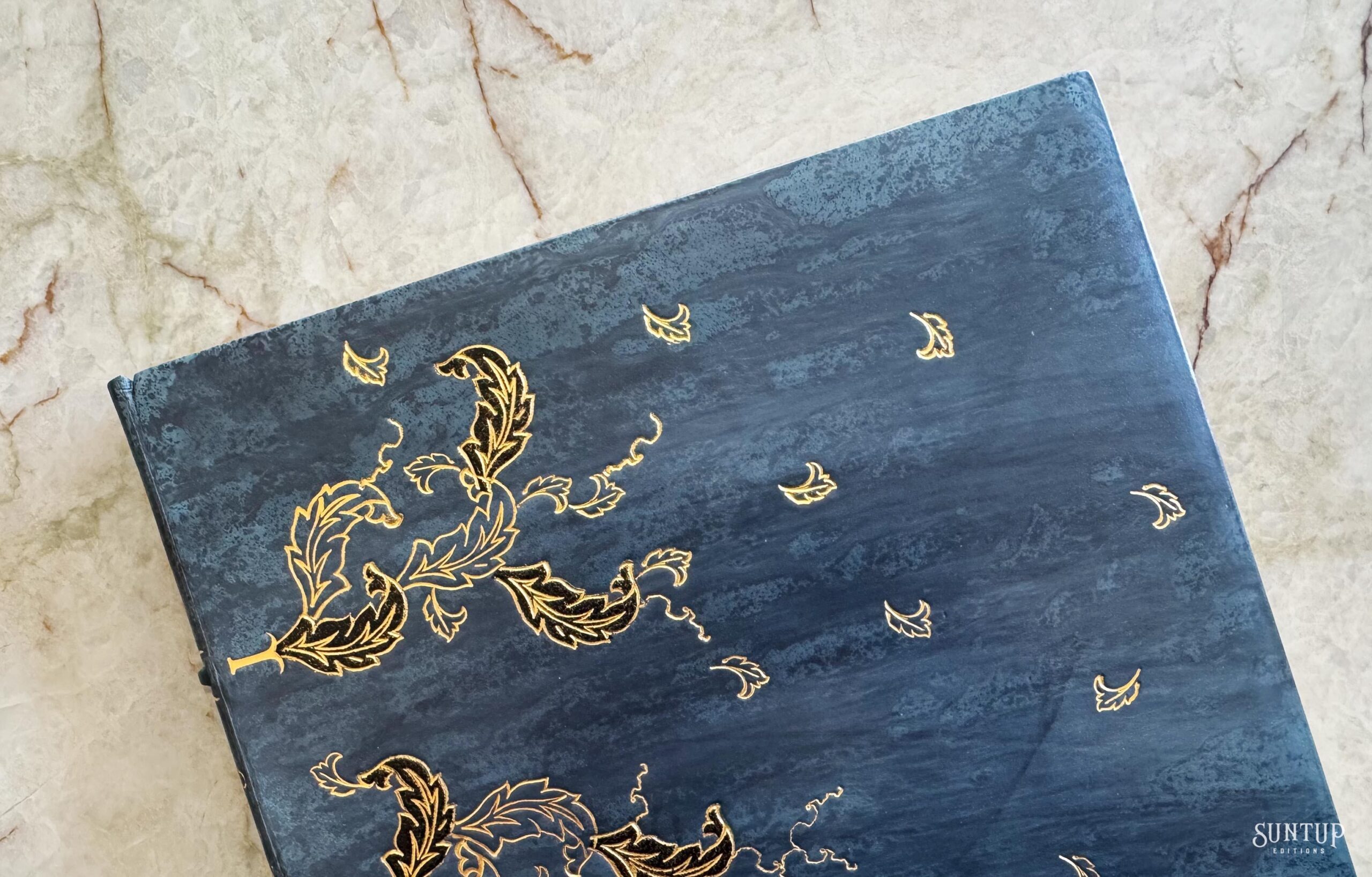
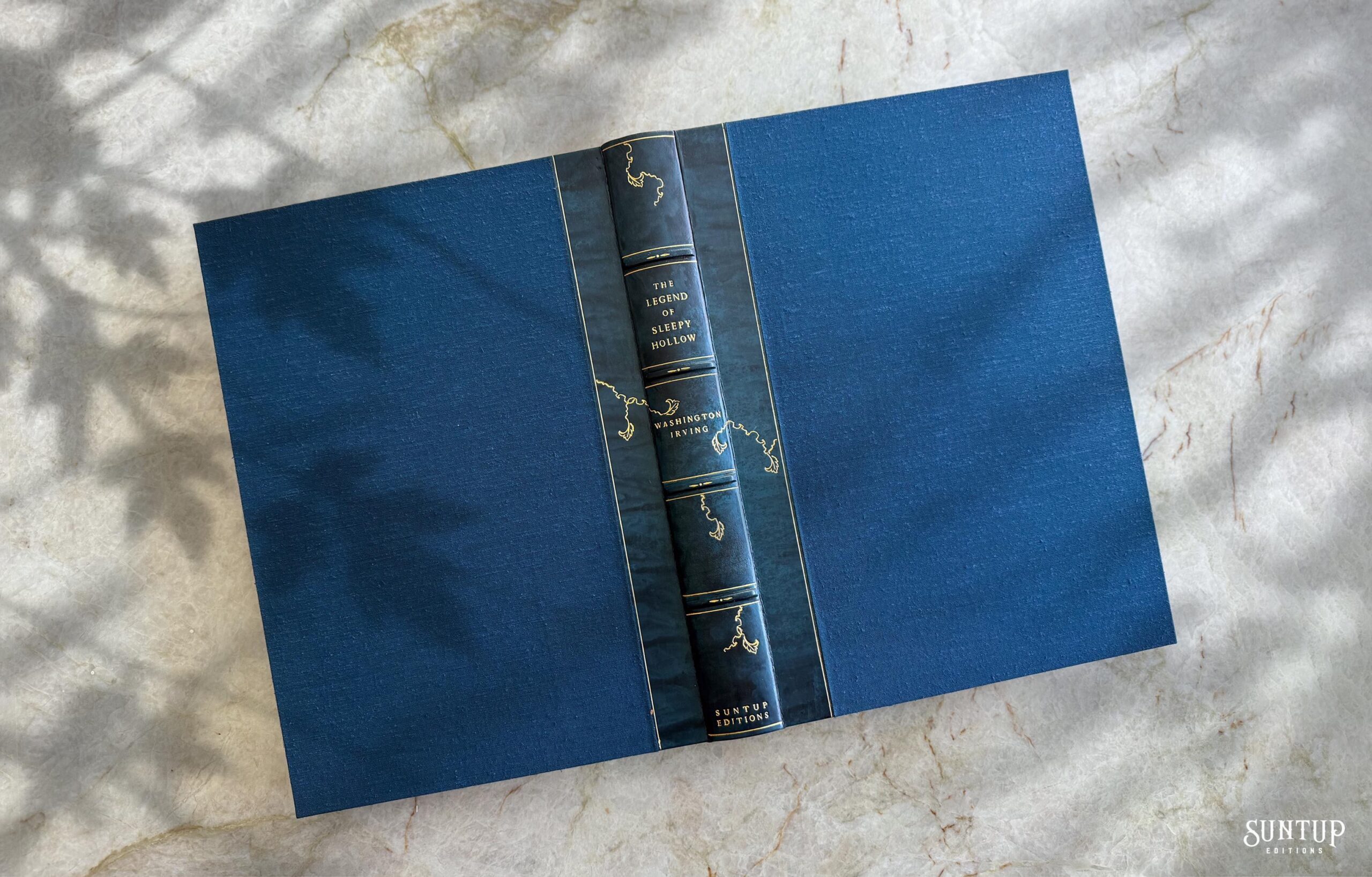
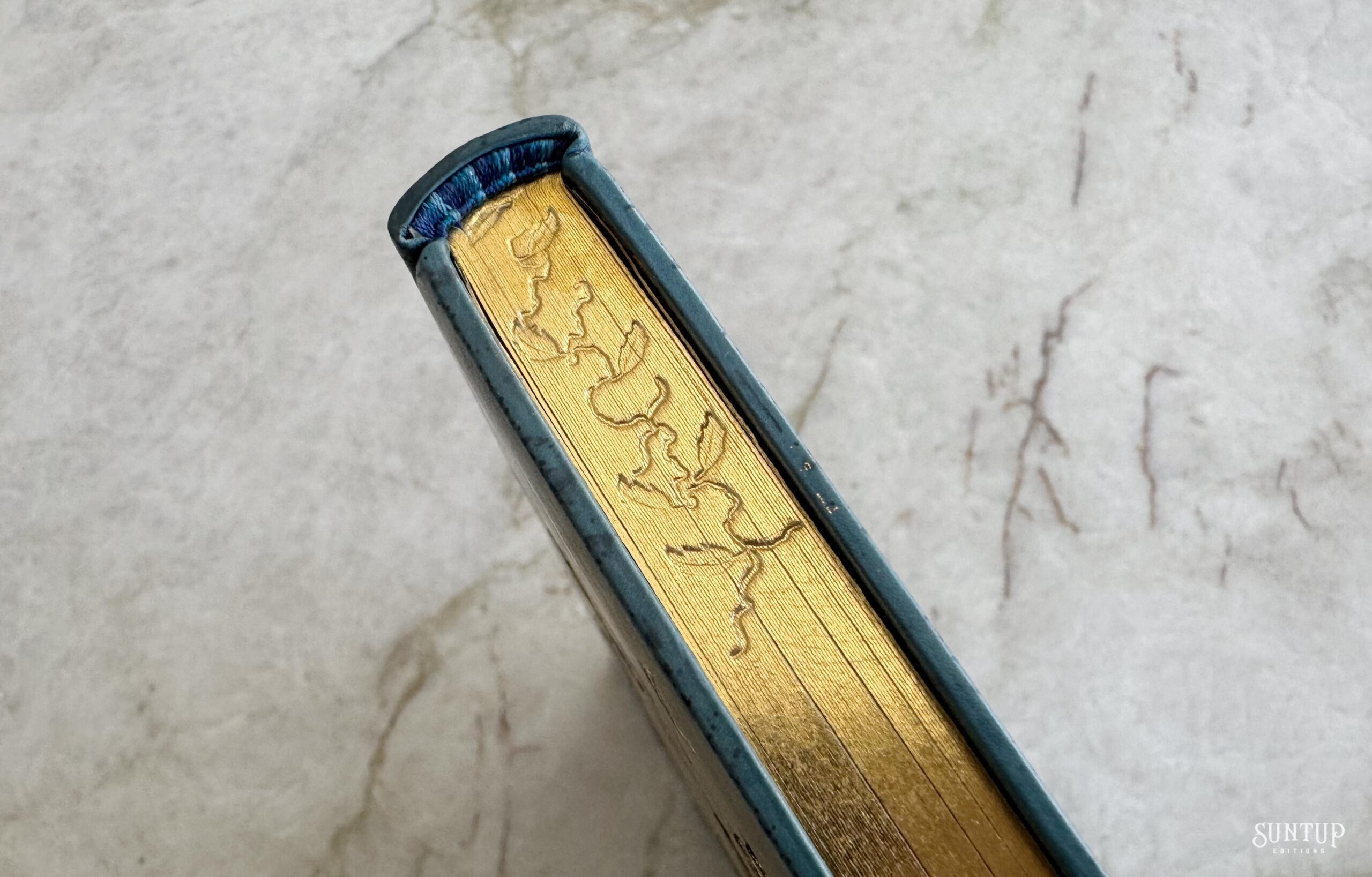
The Roman Numeral edition of five copies is a full tree calf binding by Shepherds Sangorski & Sutcliffe in London, one of the oldest and most celebrated craft bookbinding firms in England. The blue vegetable-tanned bookcalf is decorated by a marbling technique most common in late eighteenth- and early nineteenth-century binding, in which salt of tartar and copperas are drawn down the covers under running water to leave a permanent branching pattern.
The book is sewn by hand on linen tapes with the chamfered boards laced on, and finished with handsewn silk endbands. The spine carries four raised bands, and the covers are tooled by hand in gold leaf with leaves and trailing stalks set against black inlays. The edges are fully gilt and gauffered. Inside, leather-jointed doublures face endpapers hand-painted in spirit dye with acrylic overtones.
The binding is housed in a quarter bookcalf clamshell box with a rounded spine and raised bands, its calf worked to match and tooled in gold leaf, with Japanese silk cloth sides. The cover design and tooling draw on Ichabod’s midnight ride, worked in a deliberately restless composition.
The edition is printed letterpress on mouldmade Hahnemühle Biblio, and includes a fold-out of the full cover painting from the Artist edition, printed giclée. It is signed by Oleh Denysenko and Haskell Springer.
The Legend of Sleepy Hollow – Art Portfolio
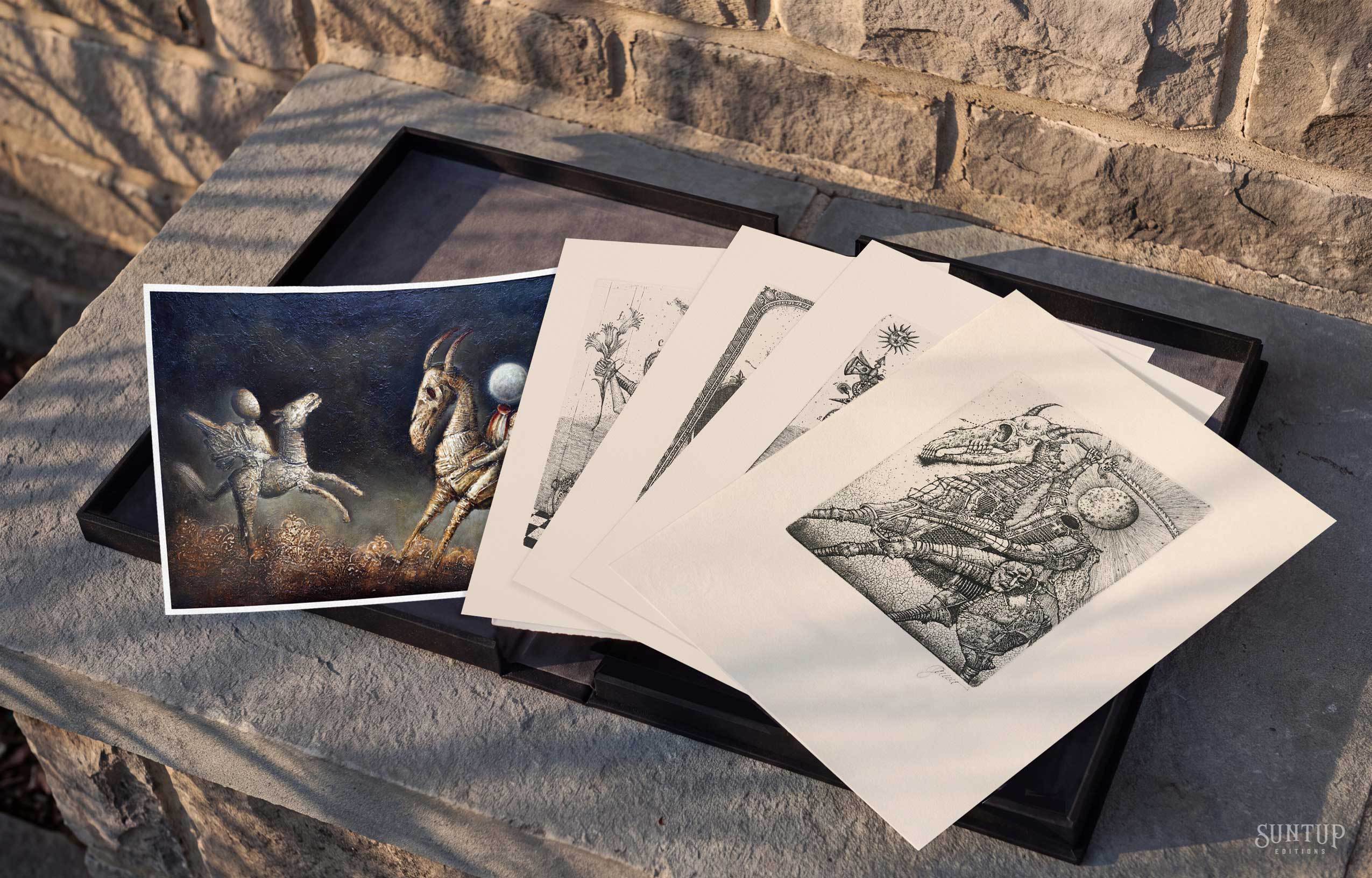
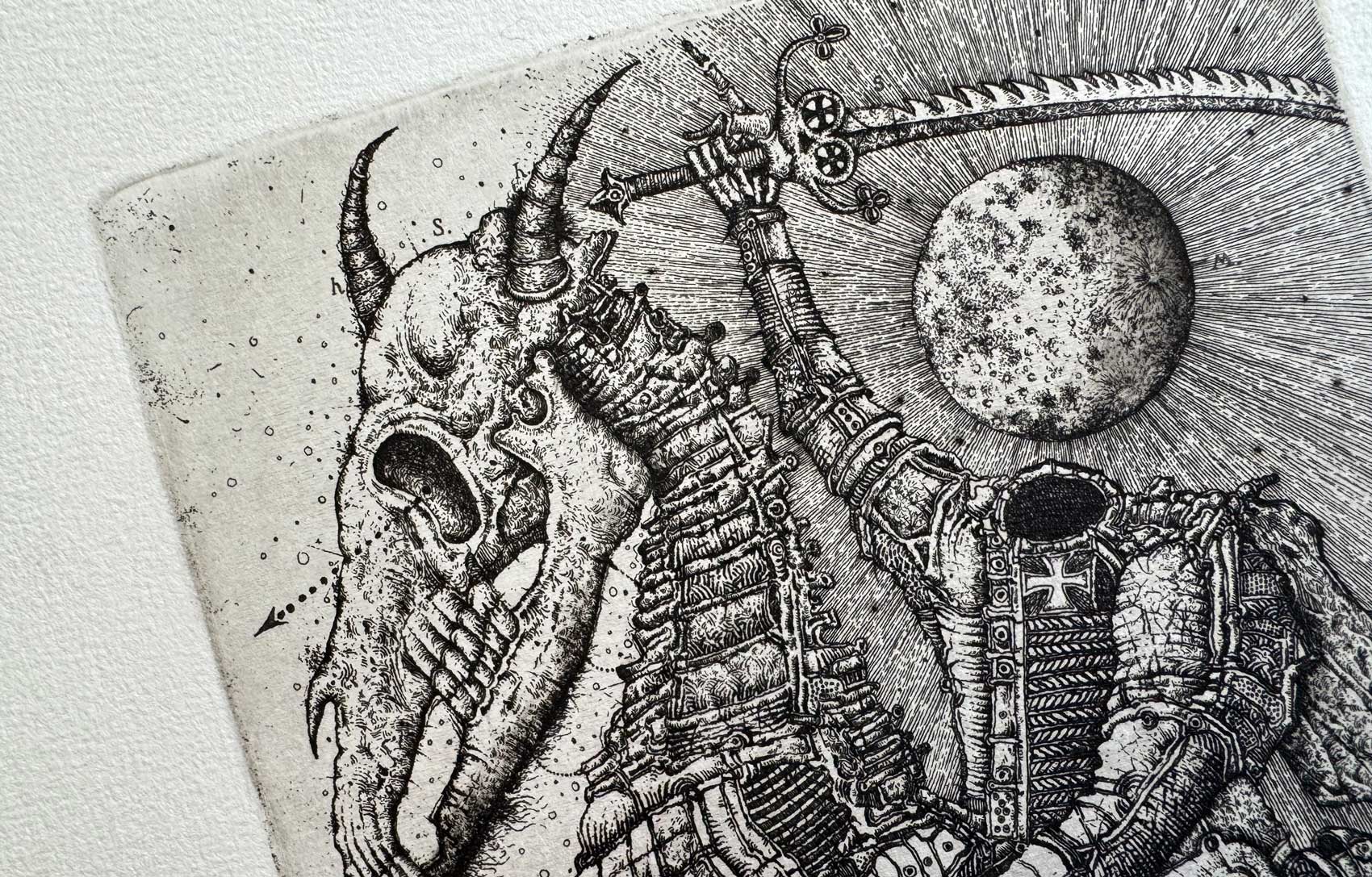
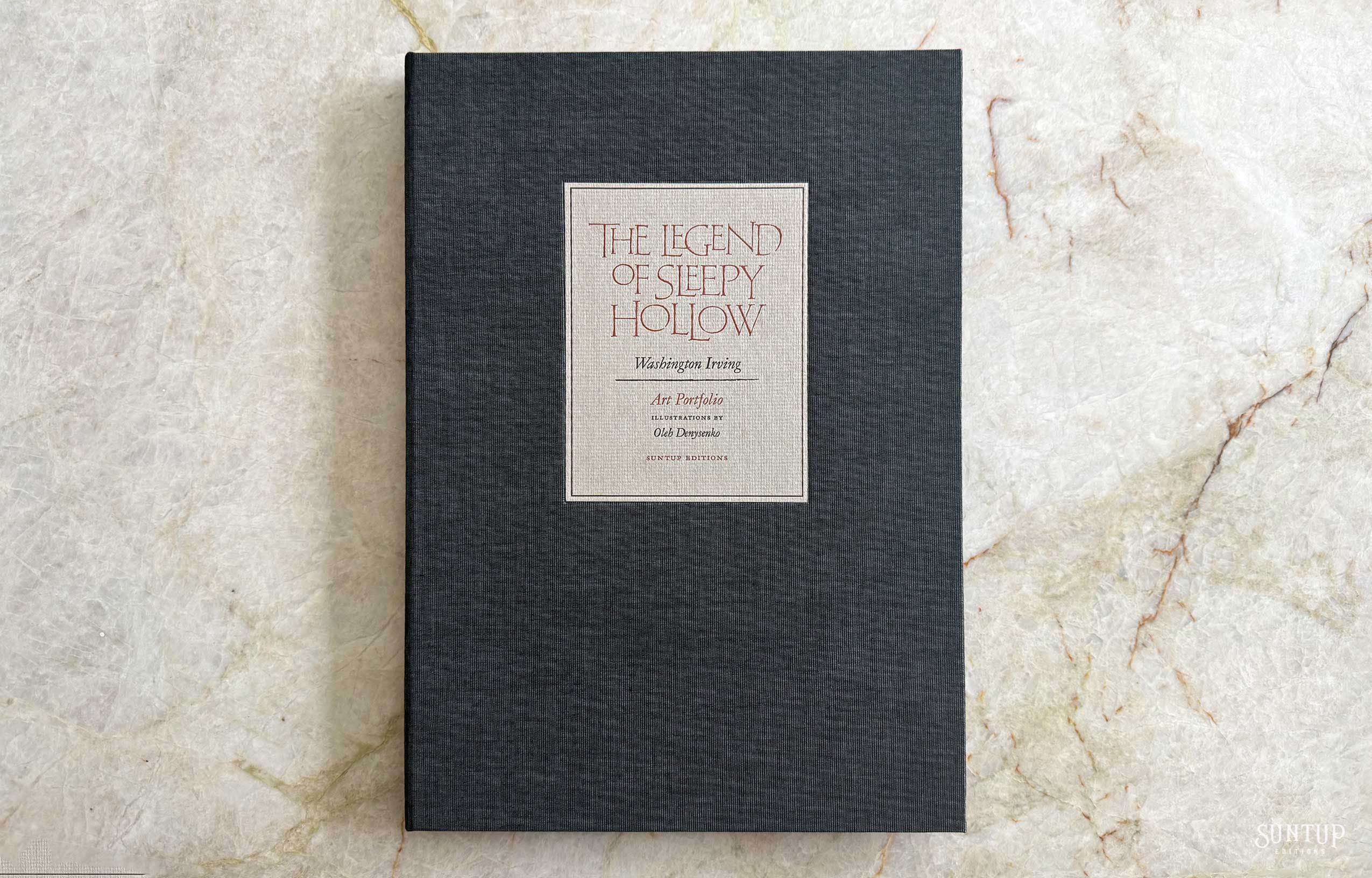
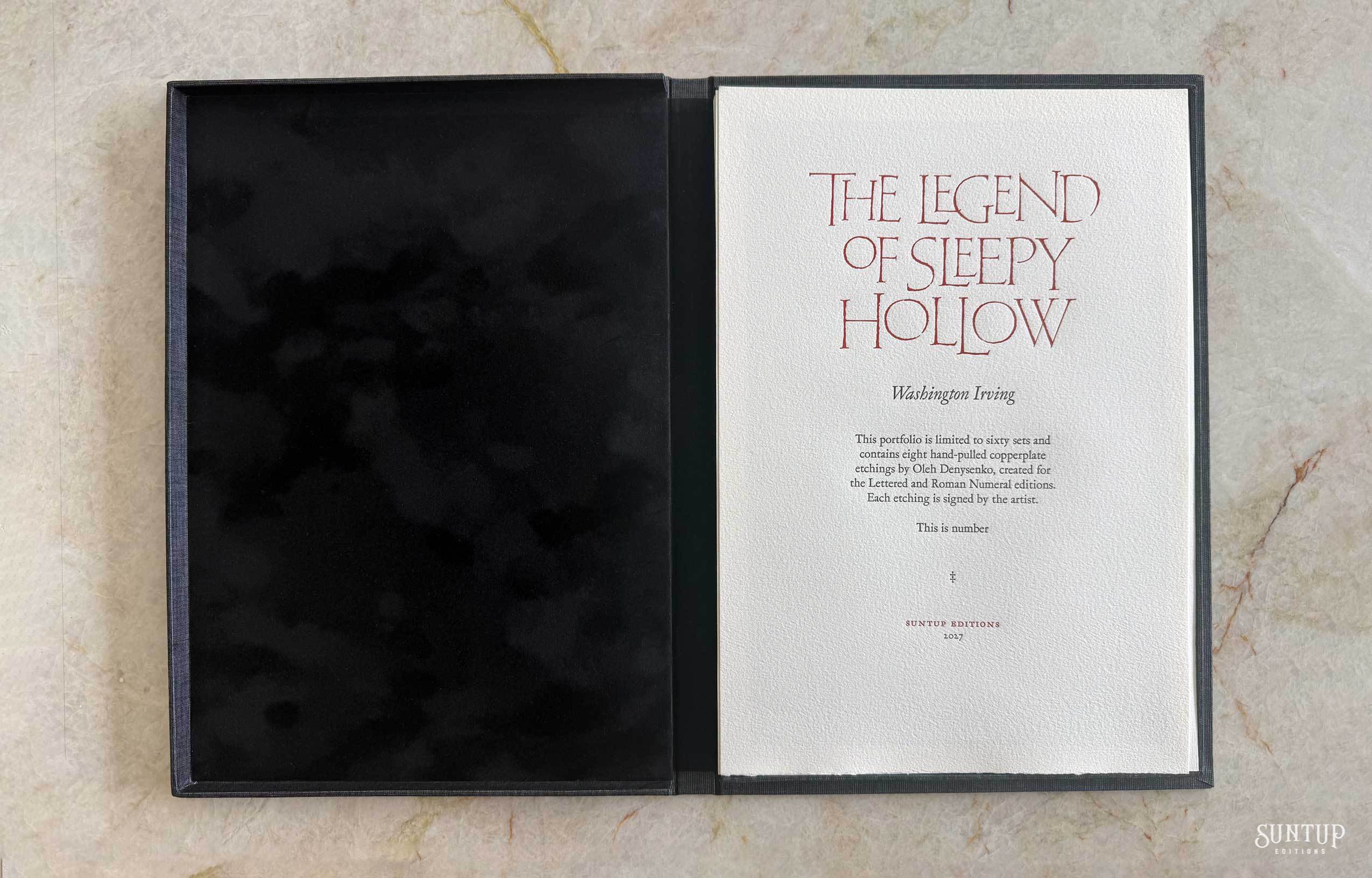
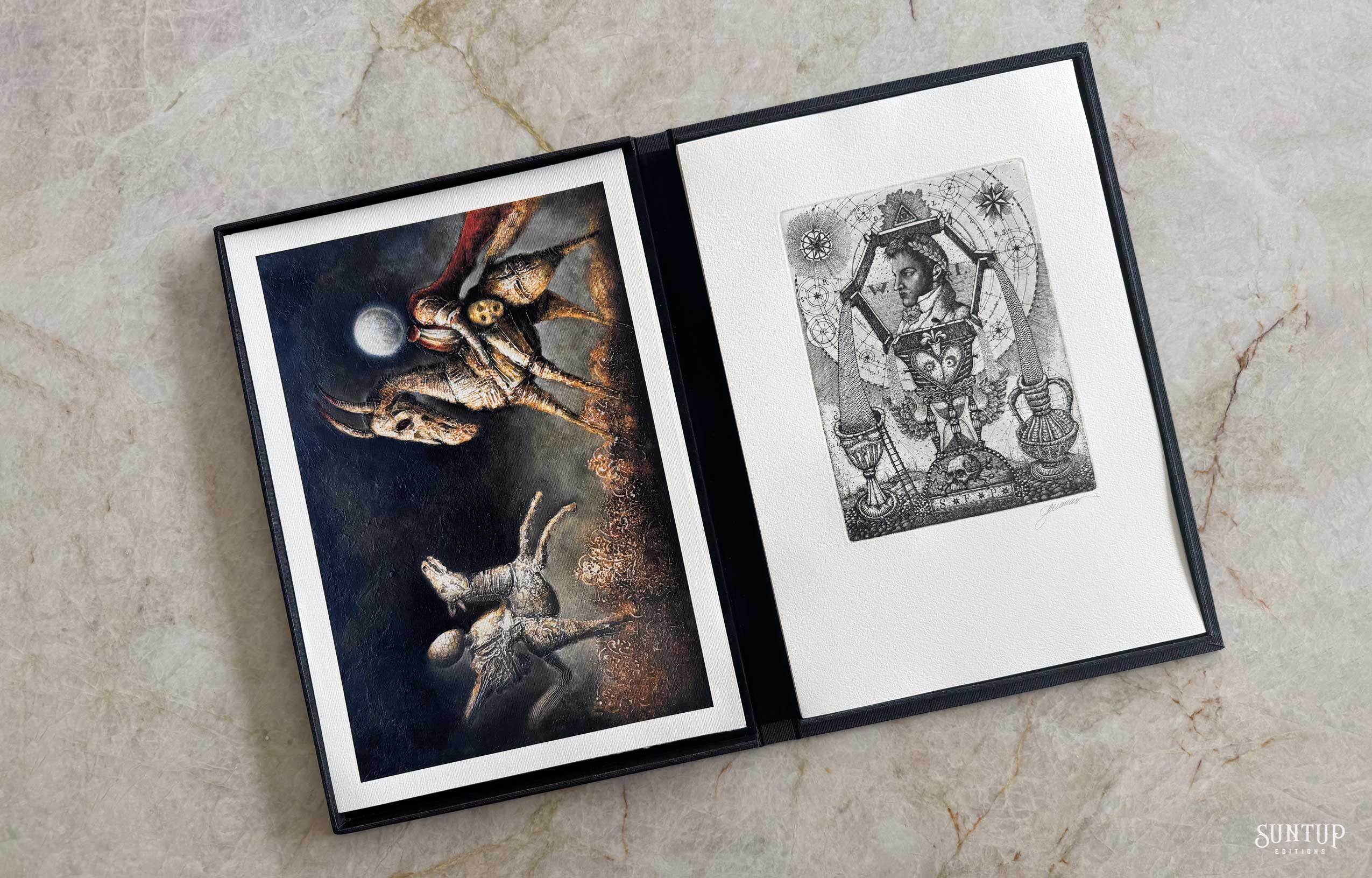
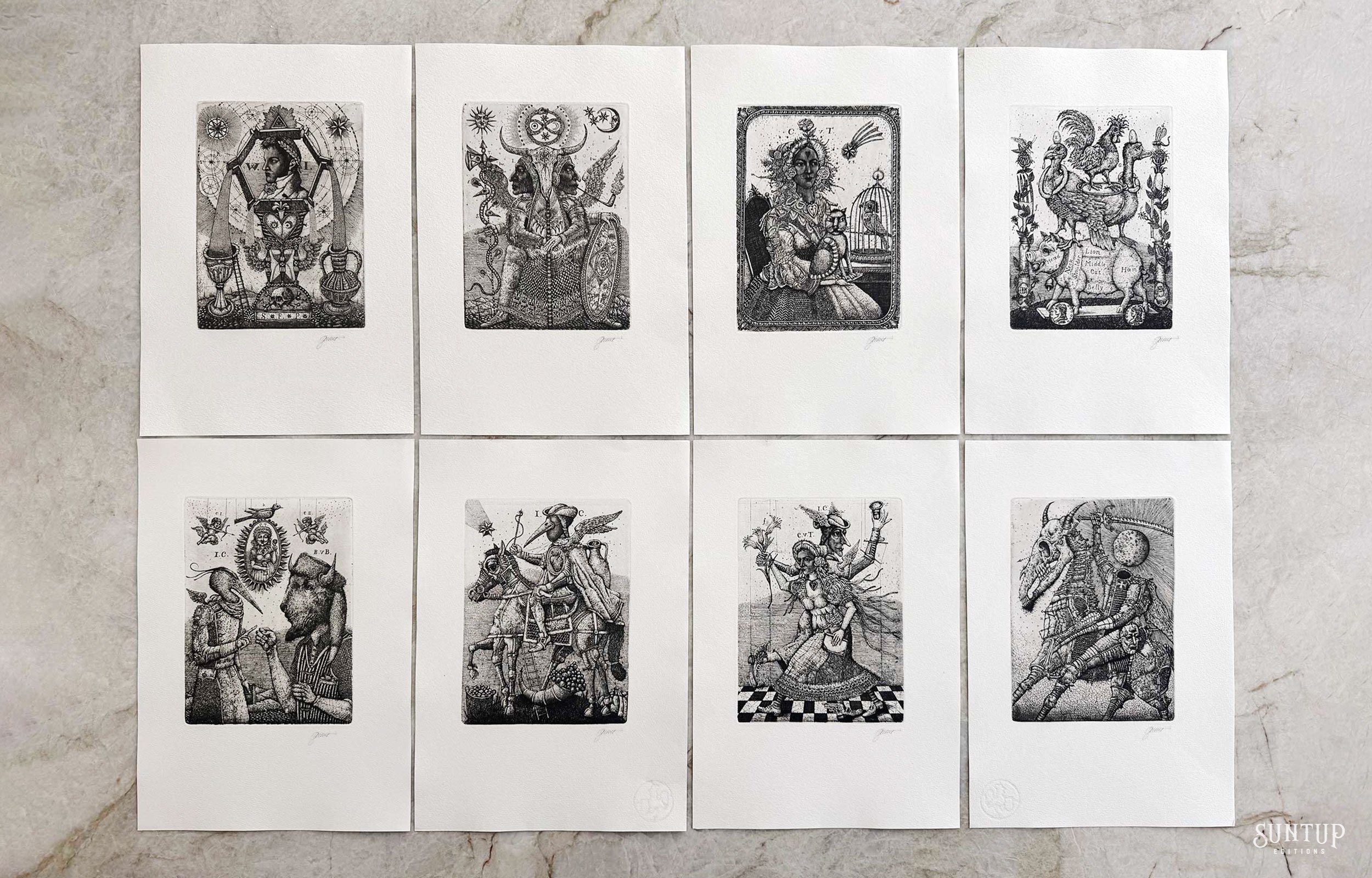
The eight etchings created by Oleh Denysenko for The Legend of Sleepy Hollow are offered together as a signed portfolio, limited to sixty sets.
Each is a copperplate etching, drawn and etched by Denysenko on polished copper and pulled by hand on Hahnemühle Biblio mouldmade paper. The sheets measure 8 × 11½ inches, with a plate mark of 4⅞ × 6¾ inches, and signed by the artist.
Each set also includes a giclée print of the full cover painting created for the Artist edition, printed on Hahnemühle Bugra.
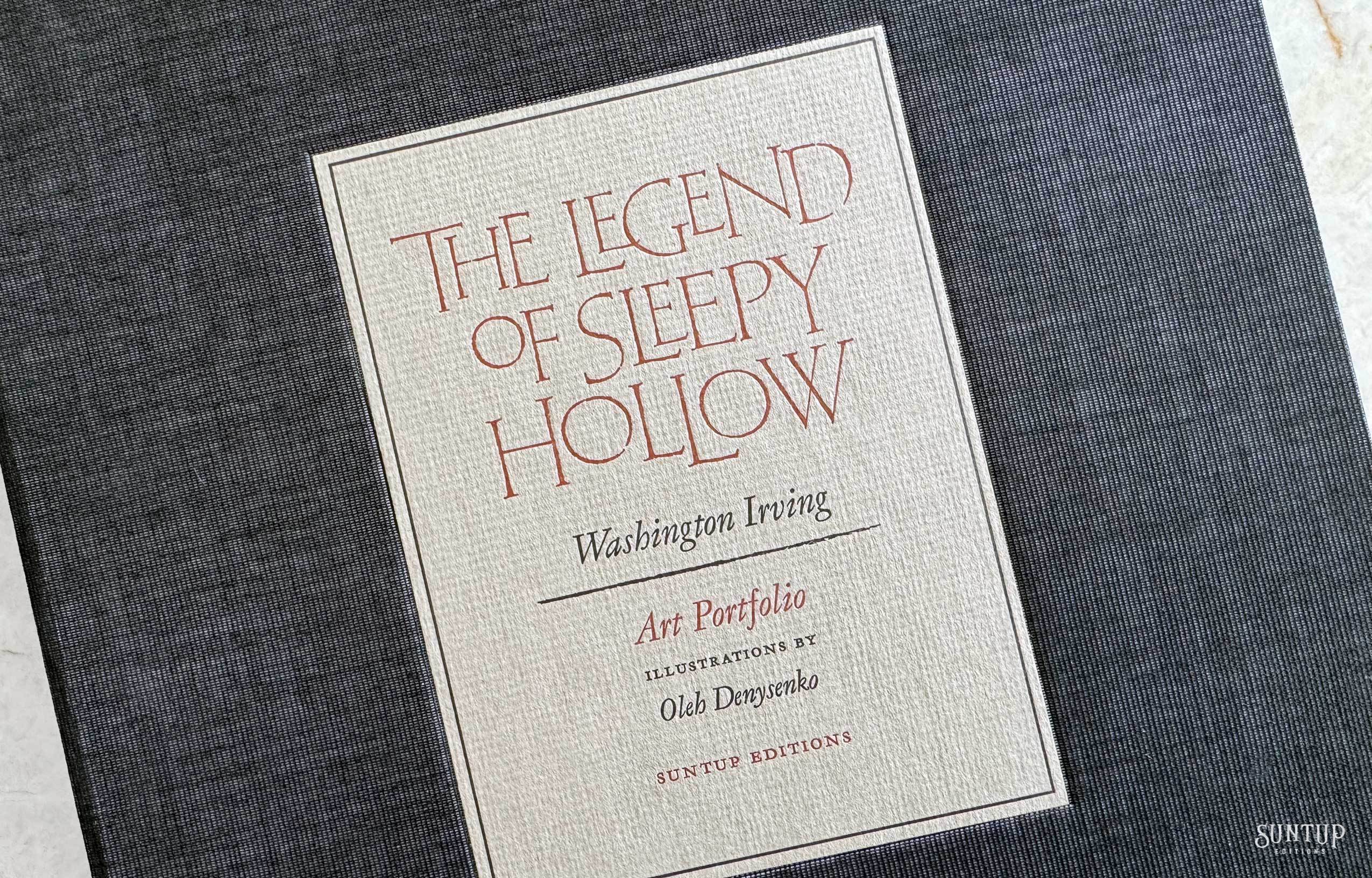
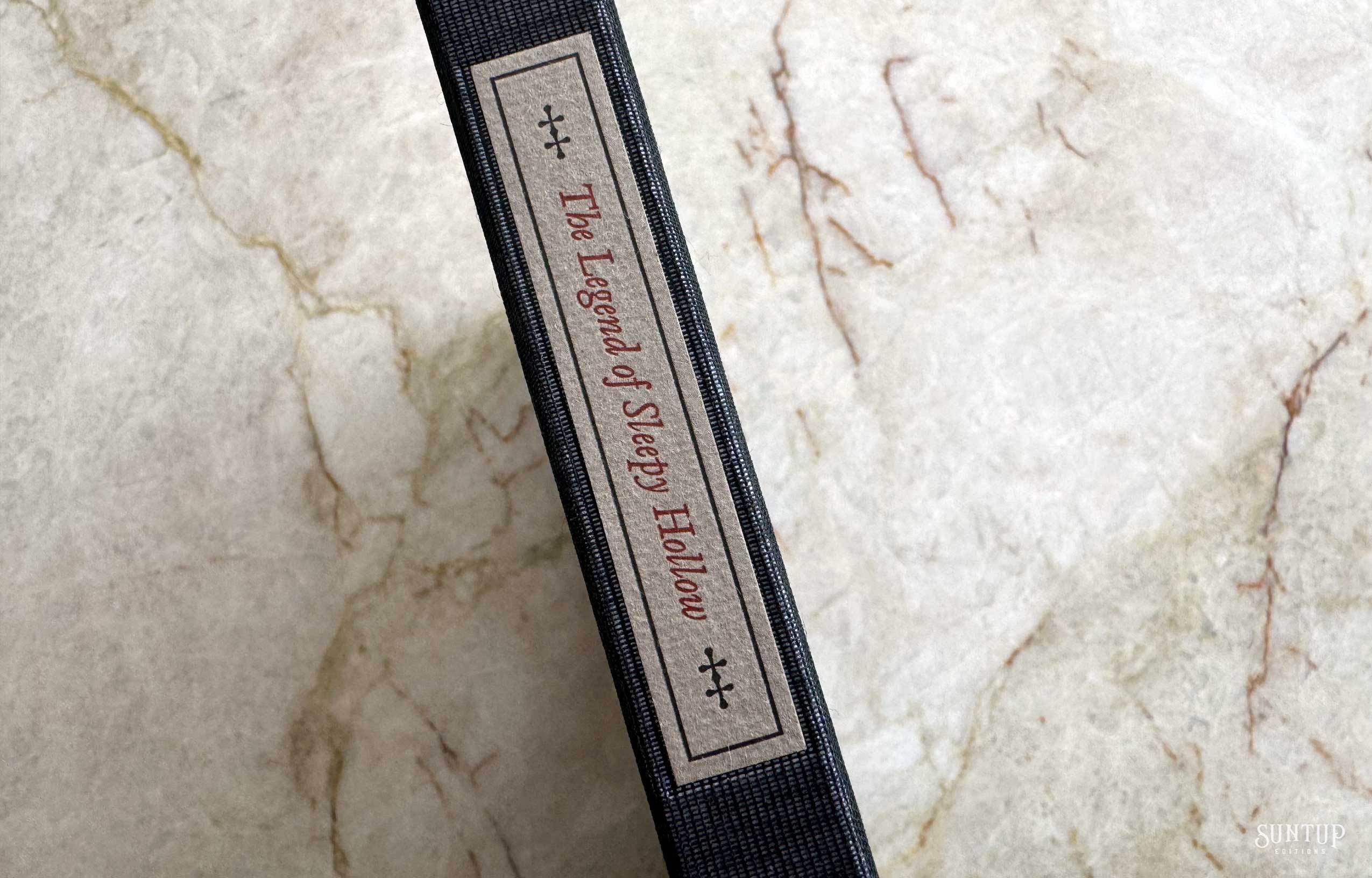
The etchings and giclée are housed in a cloth-covered clamshell enclosure lined in velour, with a letterpress-printed cover label and matching spine label. A hand-numbered limitation leaf, letterpress printed, accompanies the set.
The portfolio designations are not being matched to Numbered edition orders.
$575 — Ships December 2026
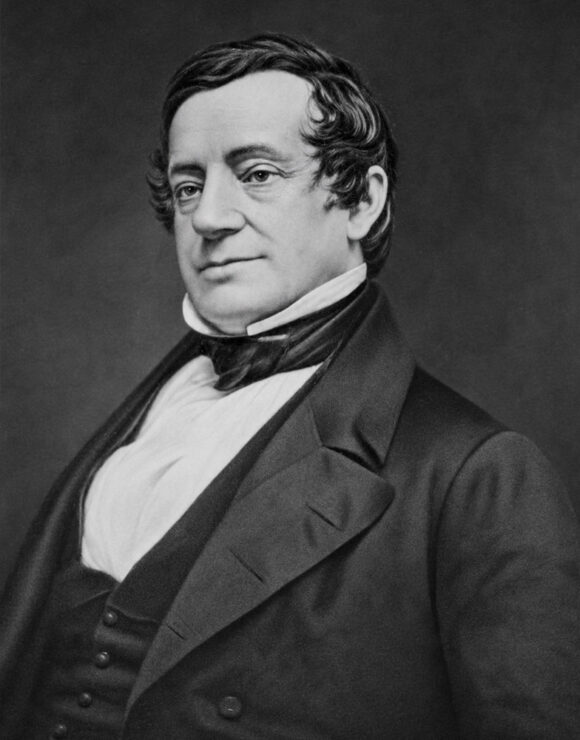
About the Author
About the Collaborators

Haskell Springer
Haskell Springer is a literary scholar and professor emeritus of English at the University of Kansas whose work has focused on American literature, particularly the writings of Washington Irving and Herman Melville. He wrote the introduction to the 1974 edition of Rip Van Winkle & The Legend of Sleepy Hollow. His scholarship on Irving includes Washington Irving: A Reference Guide (1976) and his editing of The Sketch Book of Geoffrey Crayon, Gent. (1978) for The Complete Works of Washington Irving. His other editorial credits include America and the Sea: A Literary History (1995) and Melville & Women (2006).

Oleh Denysenko
Oleh Denysenko is an internationally acclaimed Ukrainian artist based in Lviv, whose work spans engraving, painting, sculpture, and artists’ books. Known for his intricate detail, fantastical imagery, and rich symbolism, his distinctive style combines the traditions of medieval graphic art with innovative techniques of his own invention, including Gessography. His work has been featured in more than 300 exhibitions worldwide and has earned him over thirty international awards and honors, including a grant from the Pollock-Krasner Foundation. Denysenko is a member of the Academic Senate of the International Academy of Modern Art in Rome, and his works are held in prestigious public and private collections, including the Royal Academy of Arts in London and Albrecht Dürer’s House in Nuremberg. Read Oleh’s artist statement.
Matching Numbers & Letters
A Matching Pre-Order email is sent to owners of our previous publication, The Great God Pan & The White People and to Roman Numeral owners of American Gods with designations I-V at 9:00 A.M. PT on the day of announcement. If you did not receive the email, contact us here. If your order is not received before the deadline, your designated number or letter will be assigned to the new owner.
Copperplate etchings by Oleh Denysenko
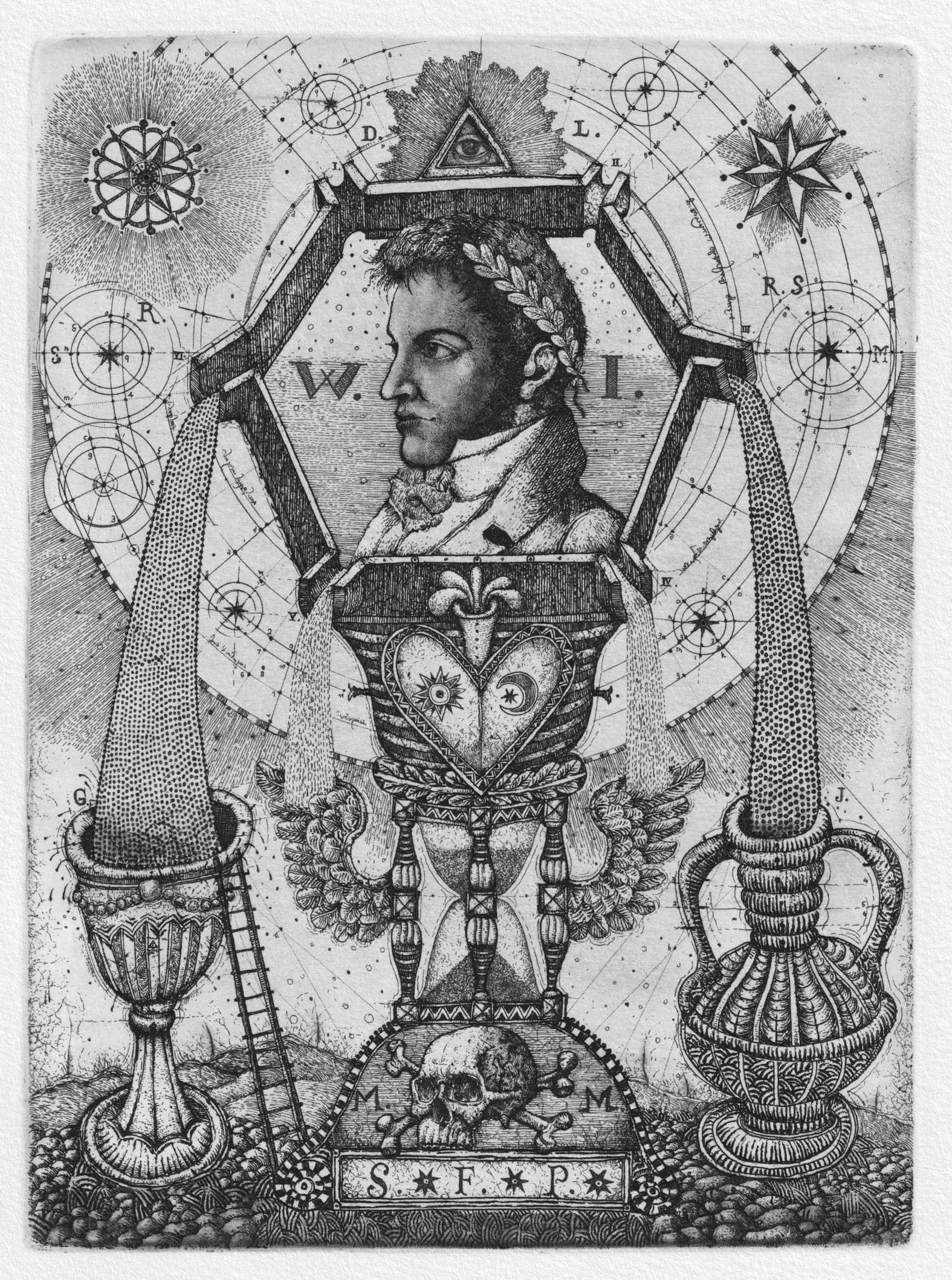
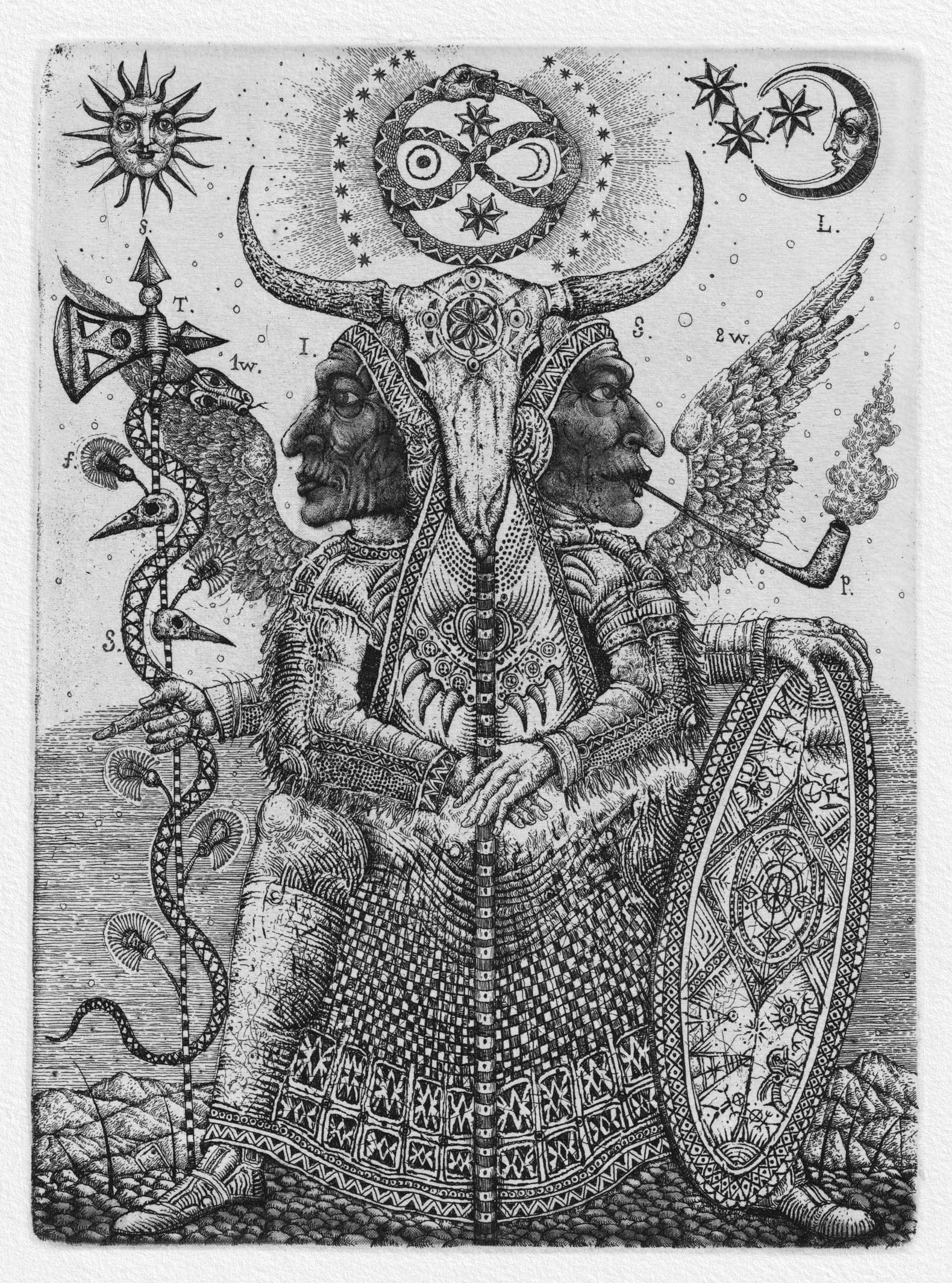
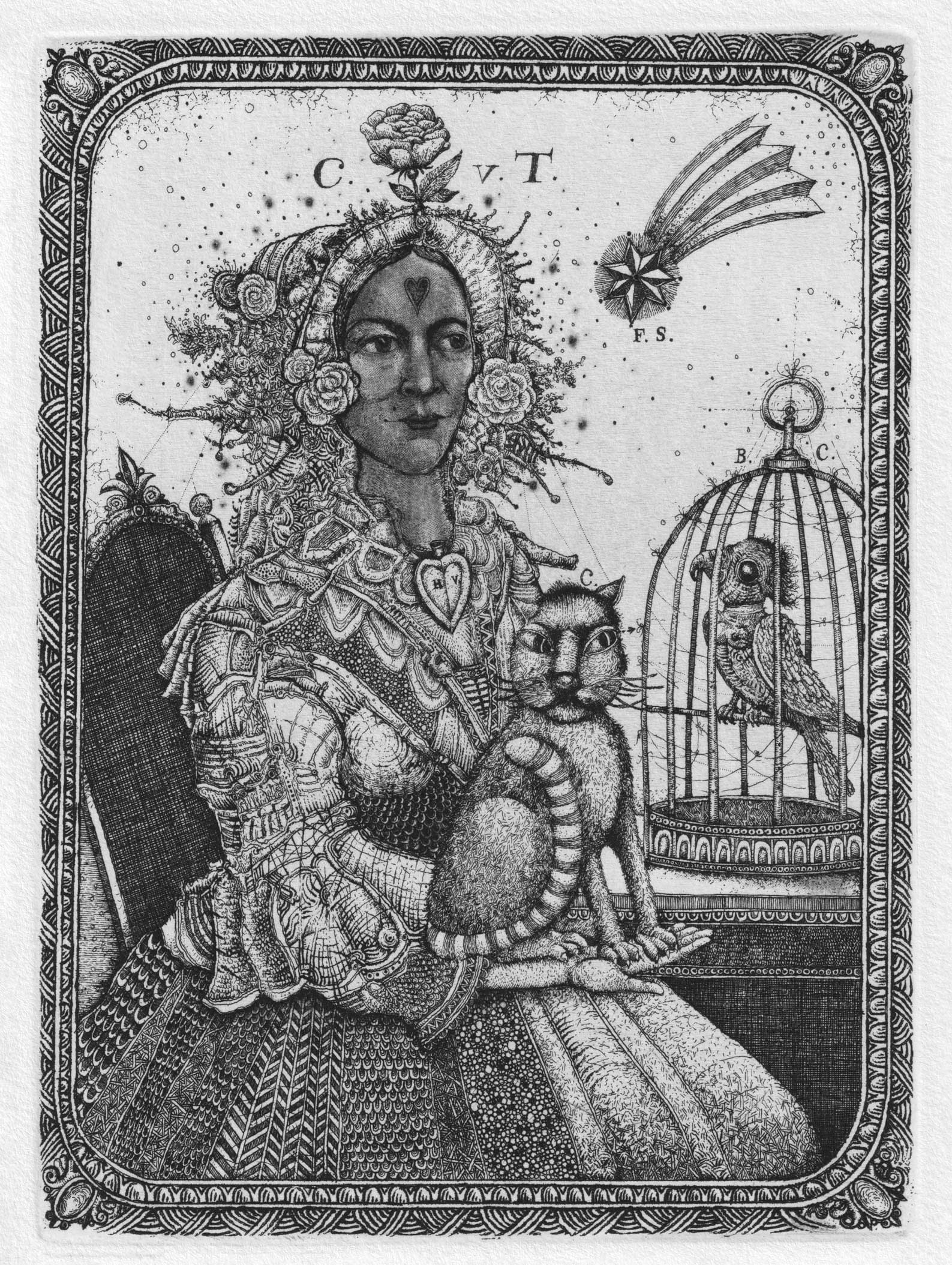
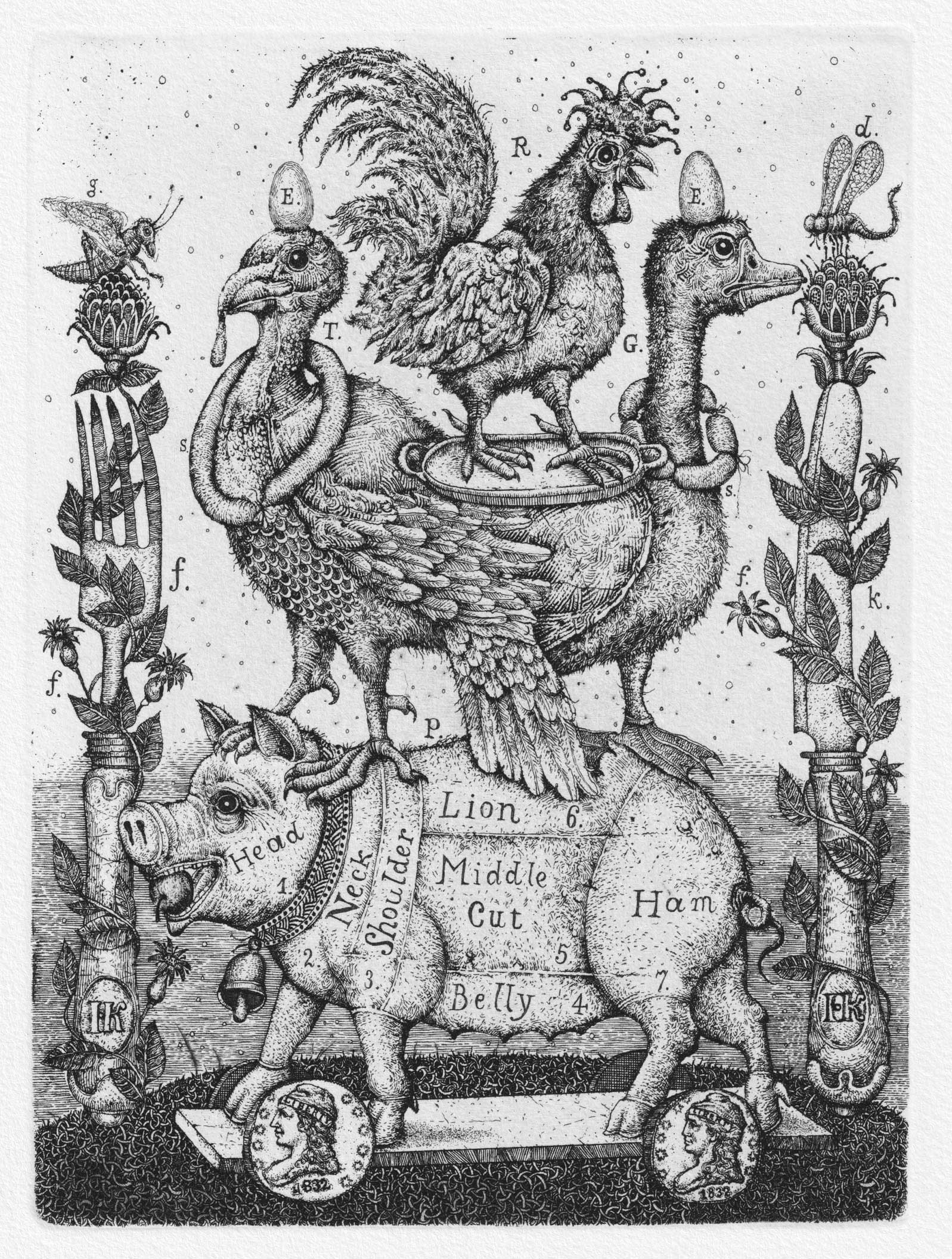
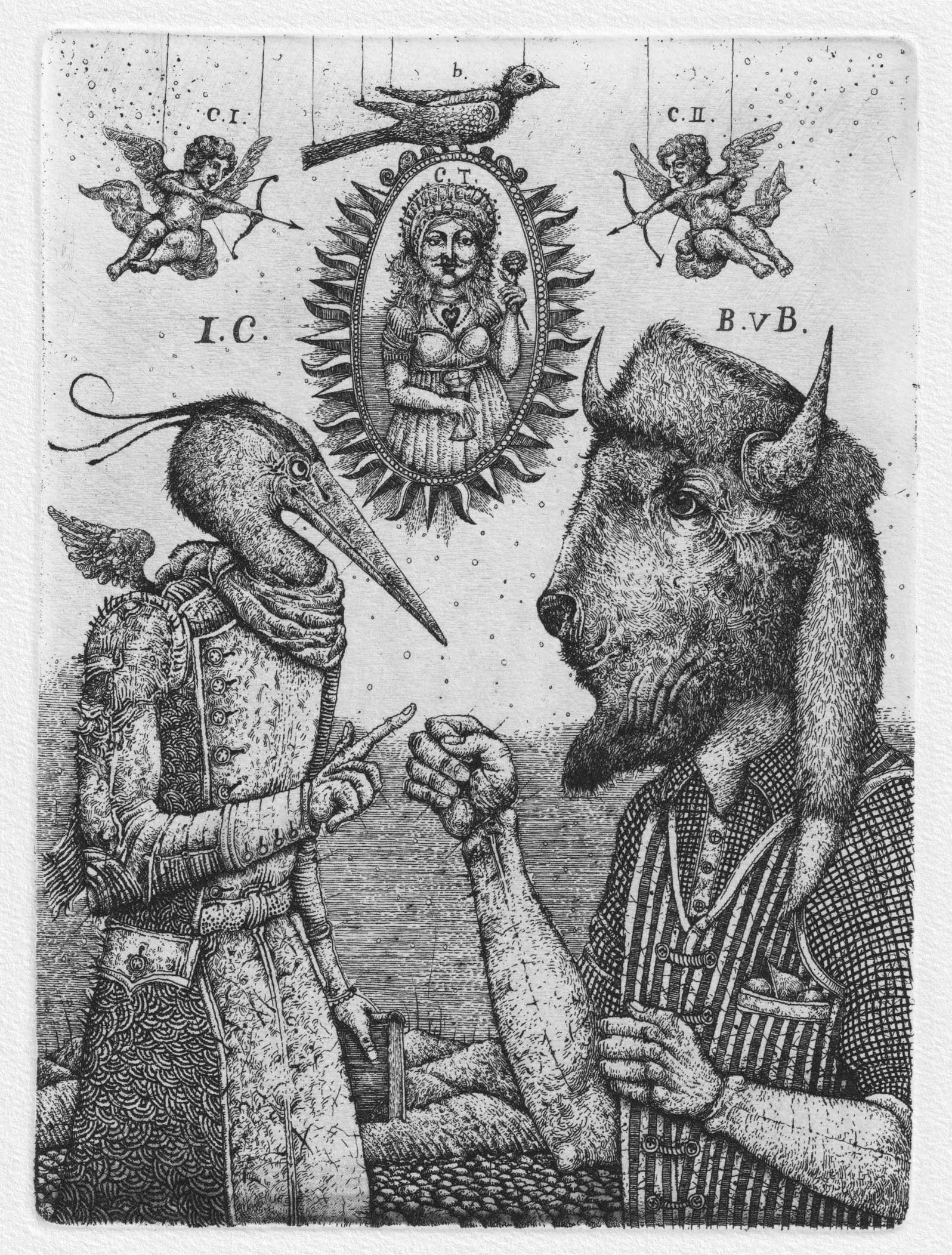
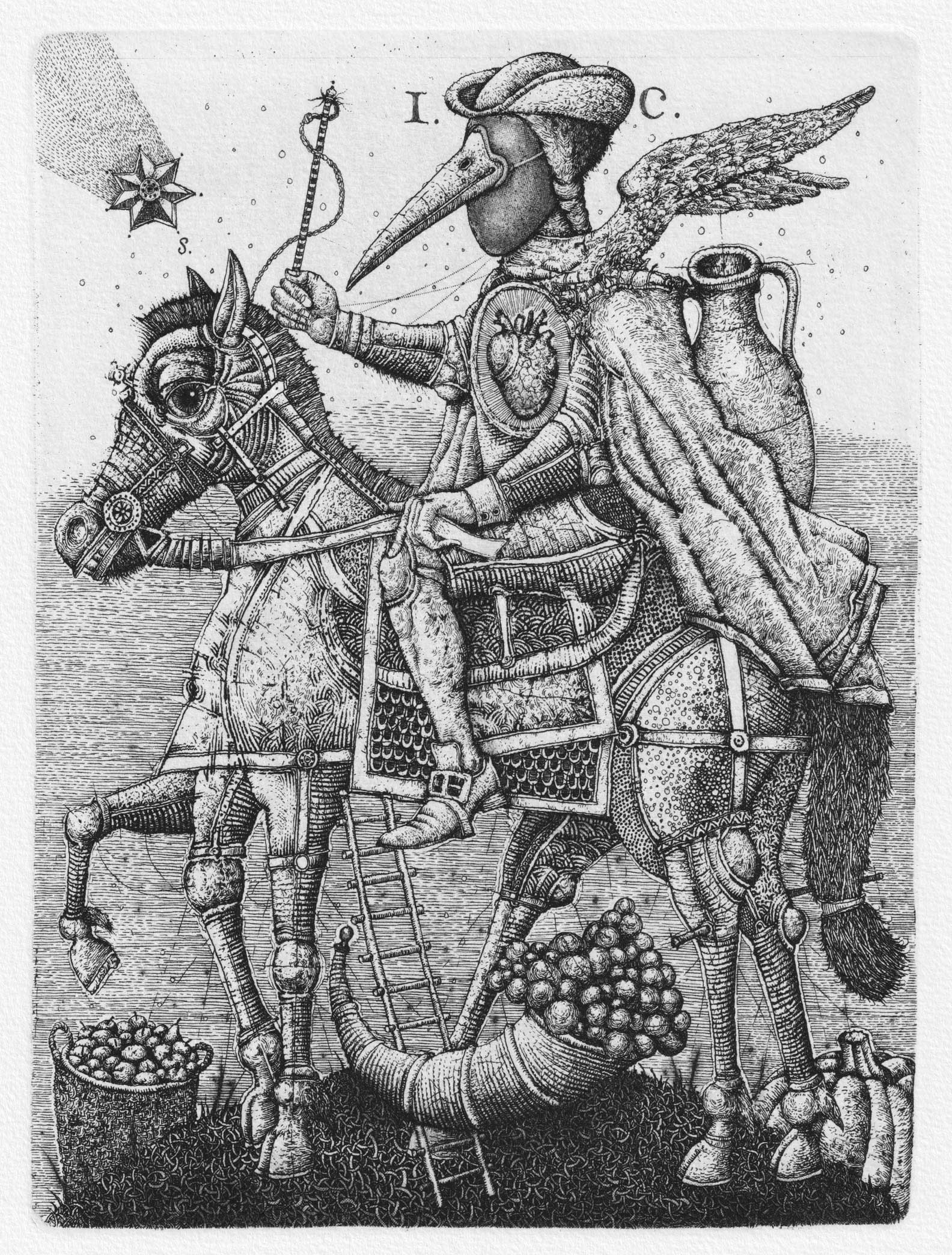
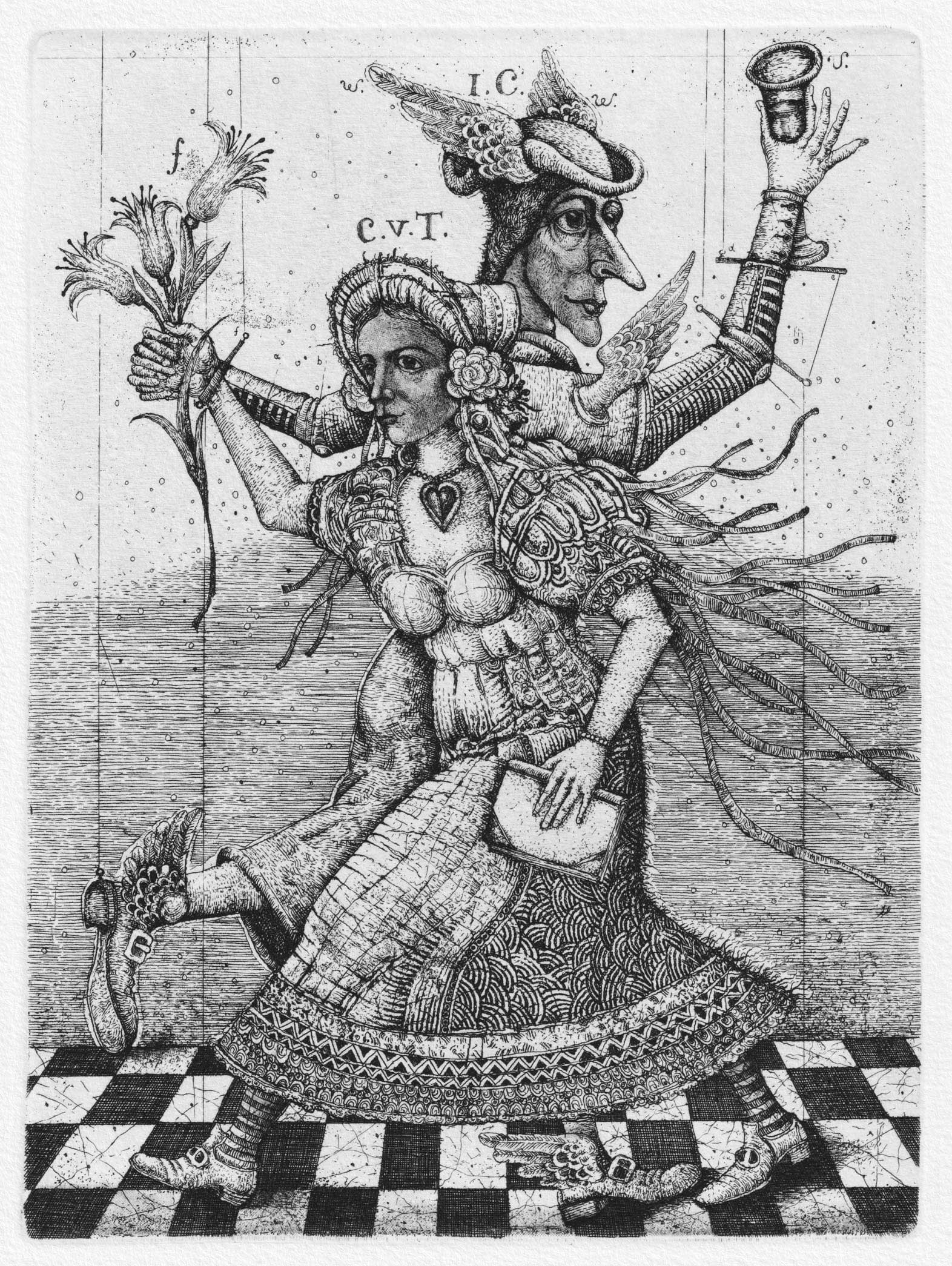
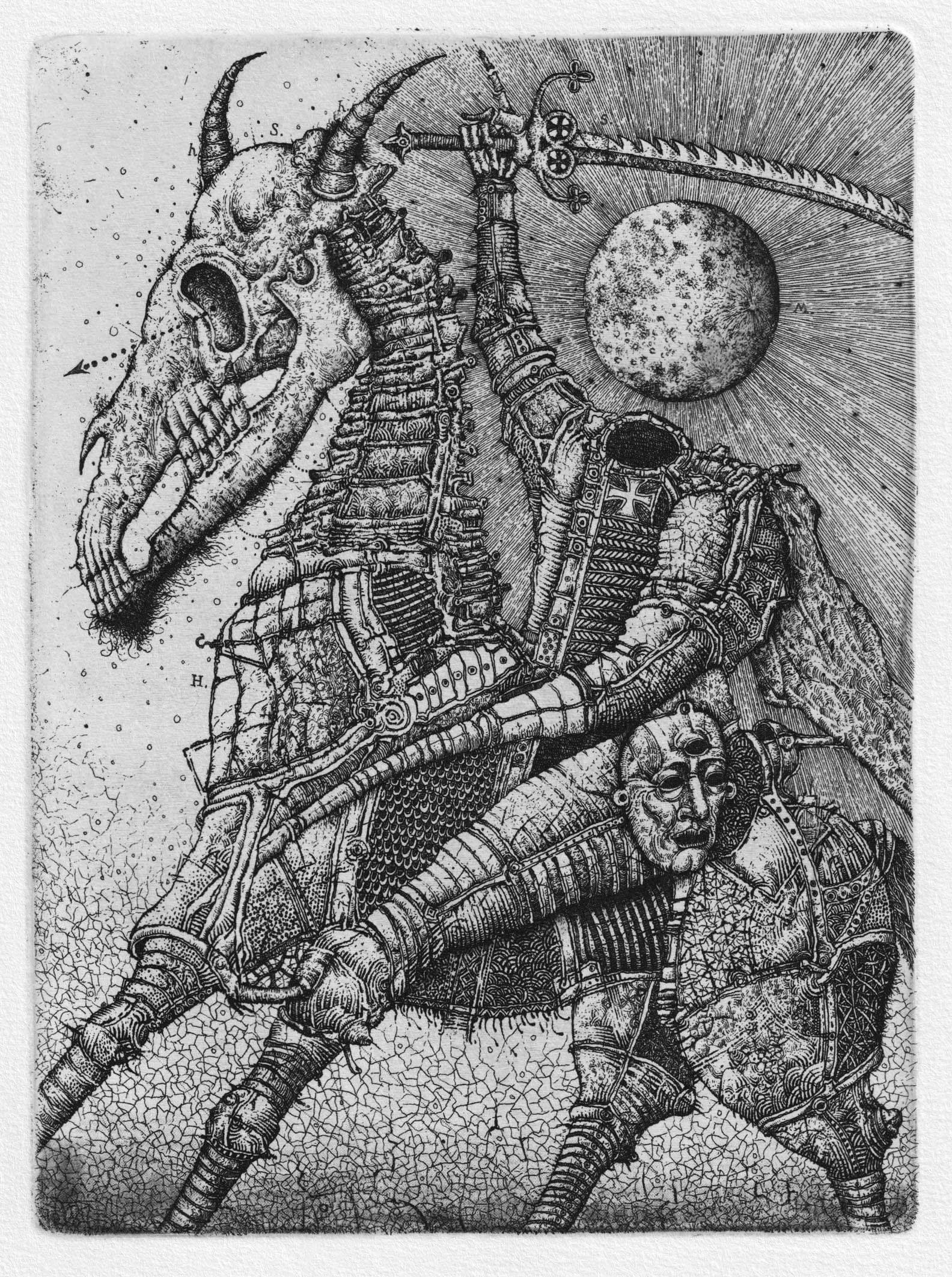
Published editions may differ slightly from mockups and prototype designs.
Illustrations © 2025 by Oleh Denysekno