

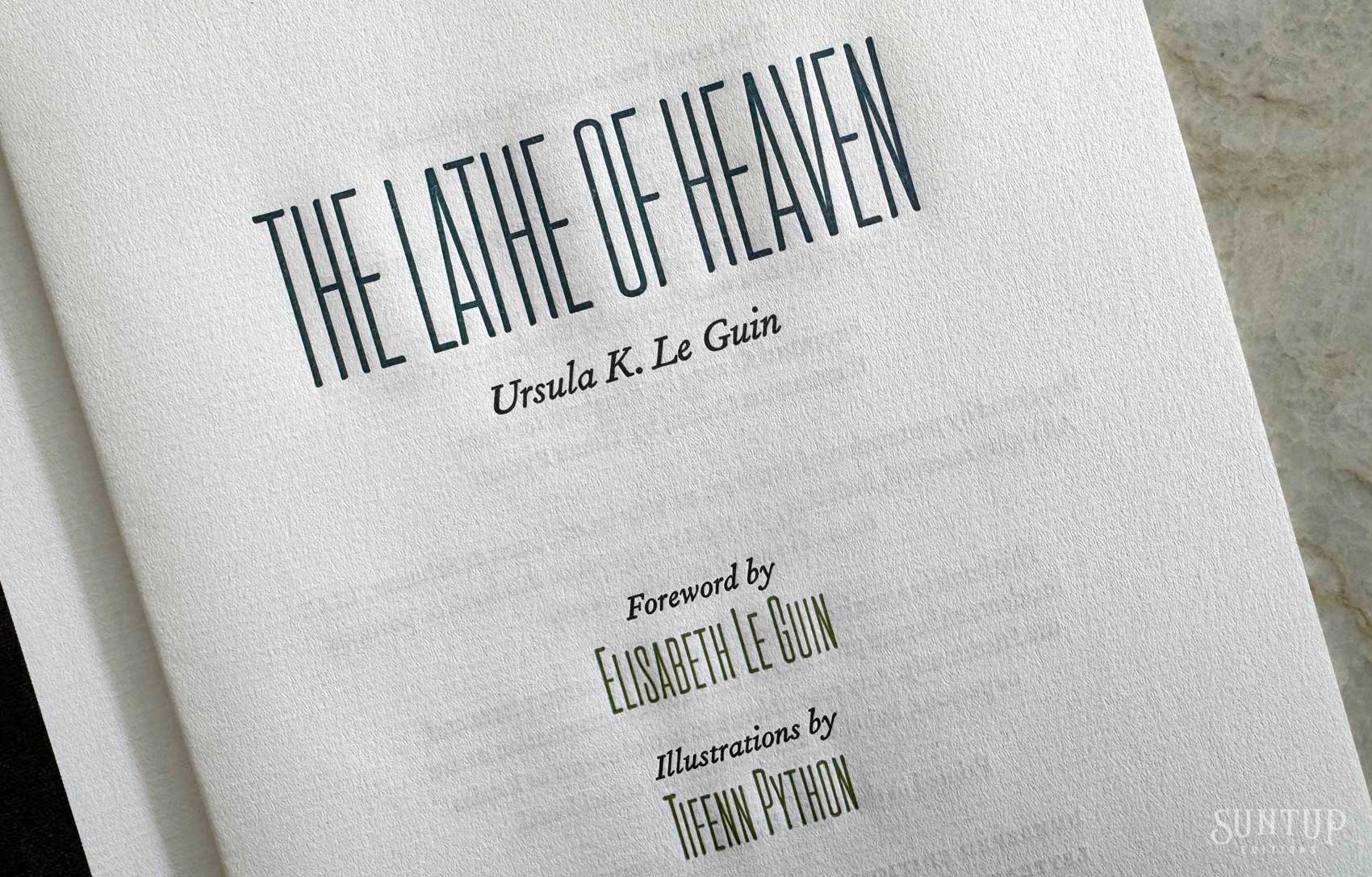
The Lathe of Heaven Ursula K. Le Guin
Foreword by Elisabeth Le Guin
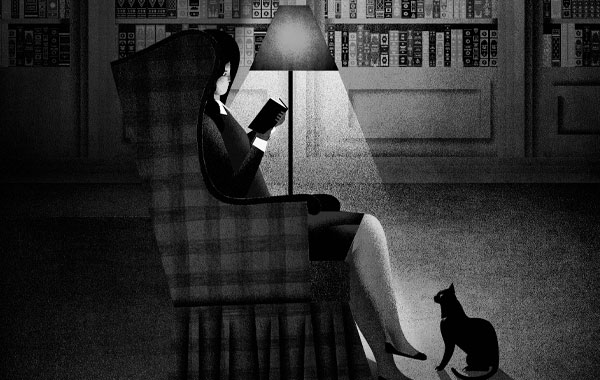
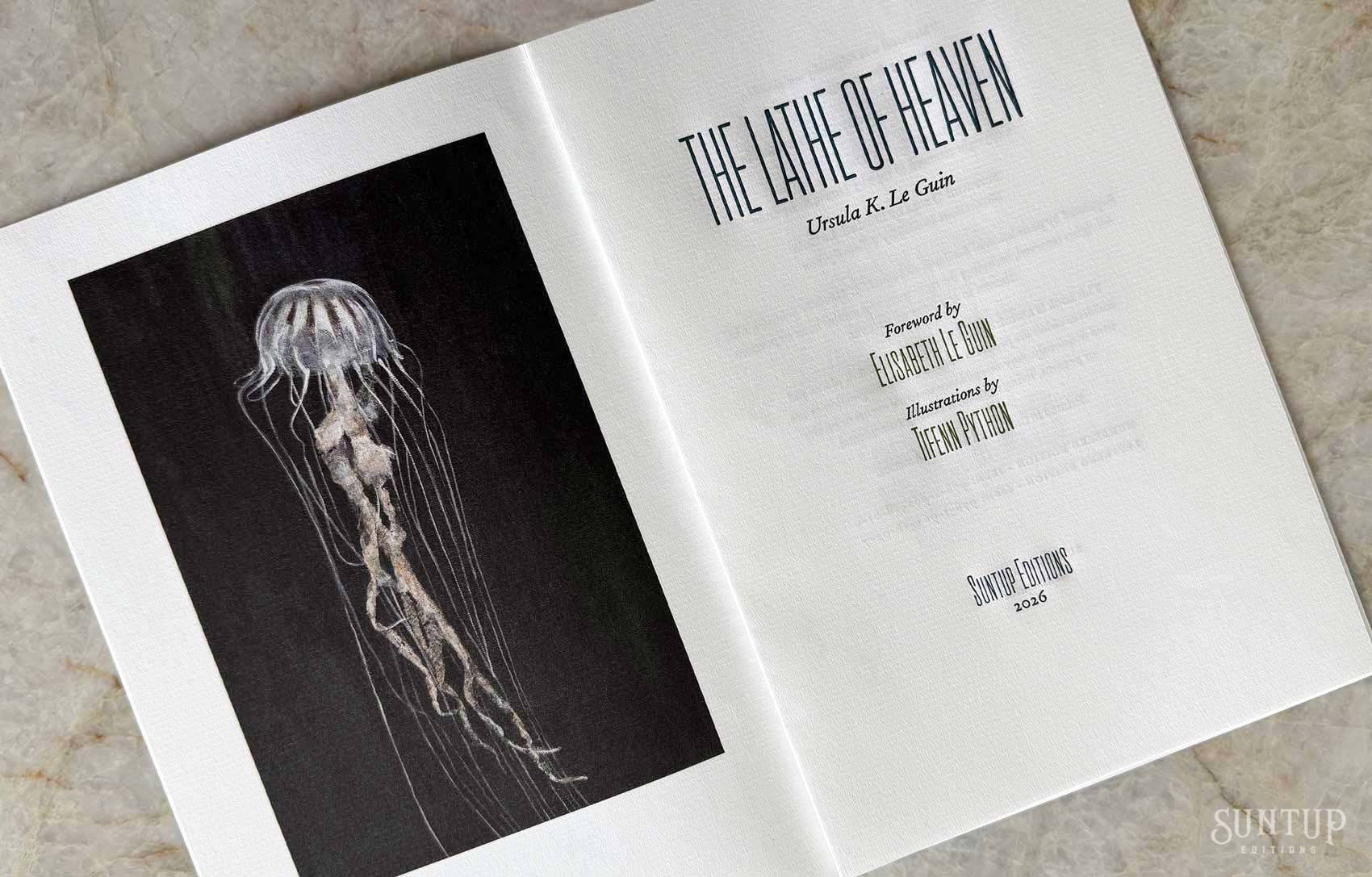
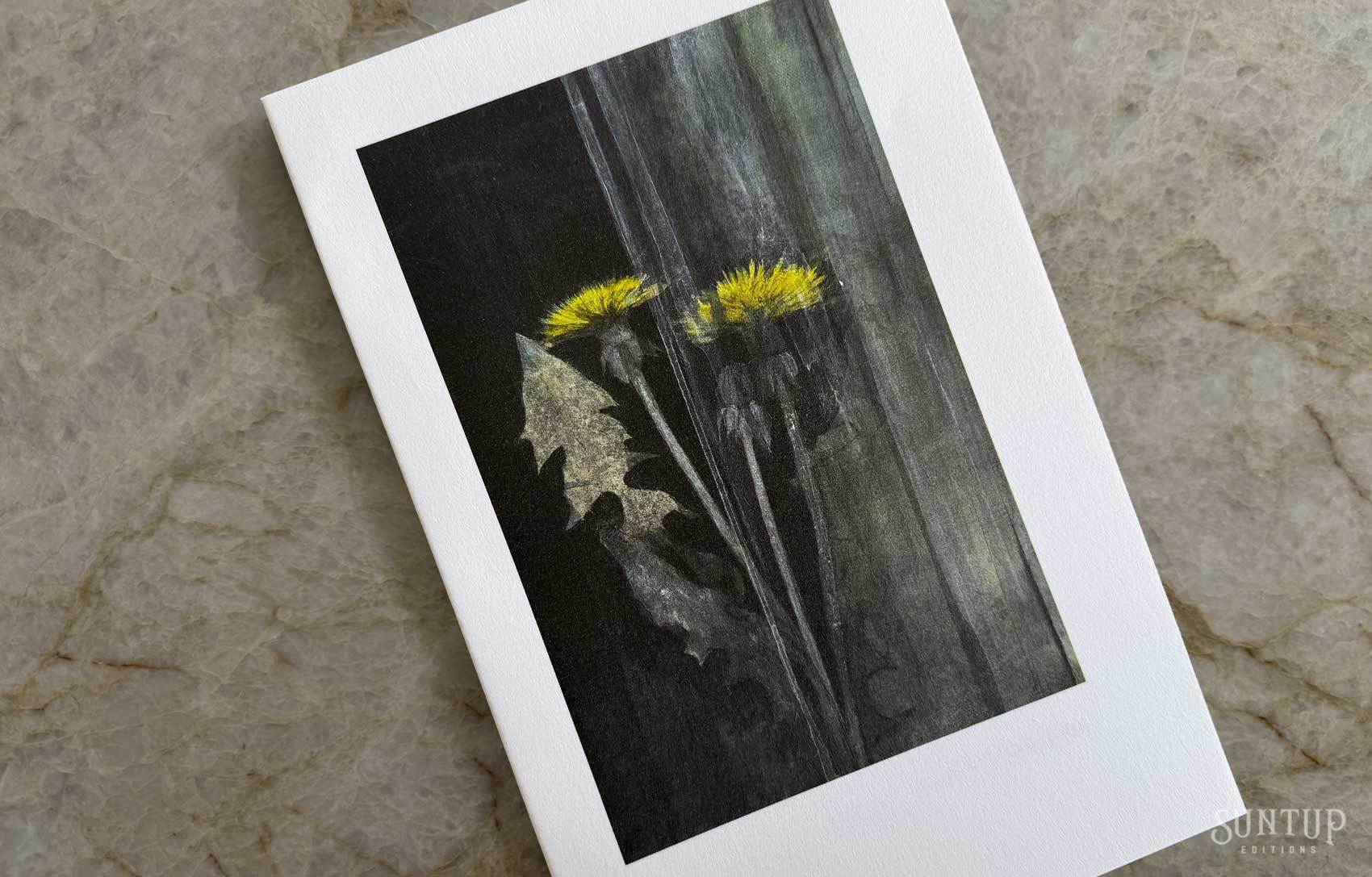
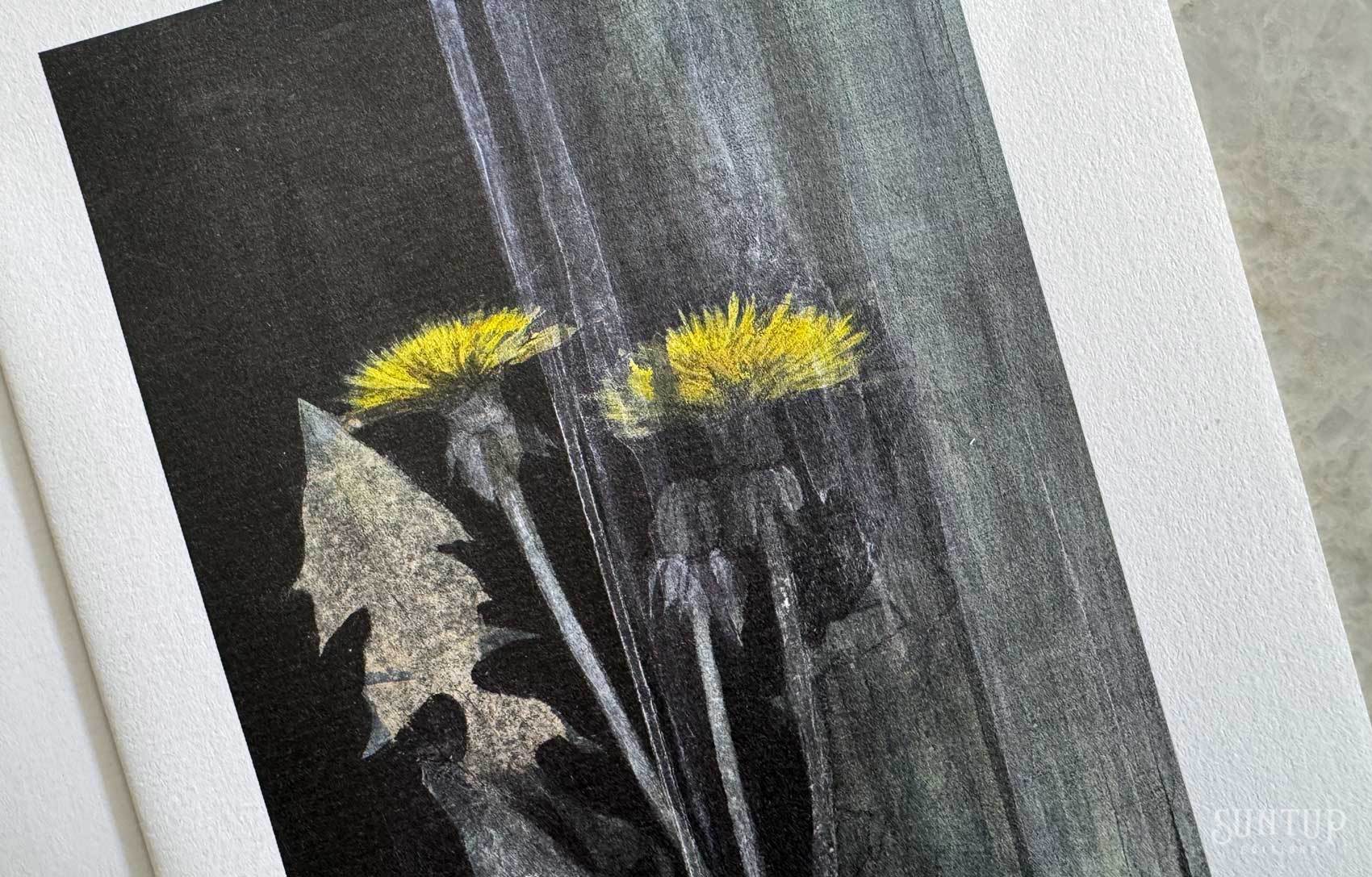
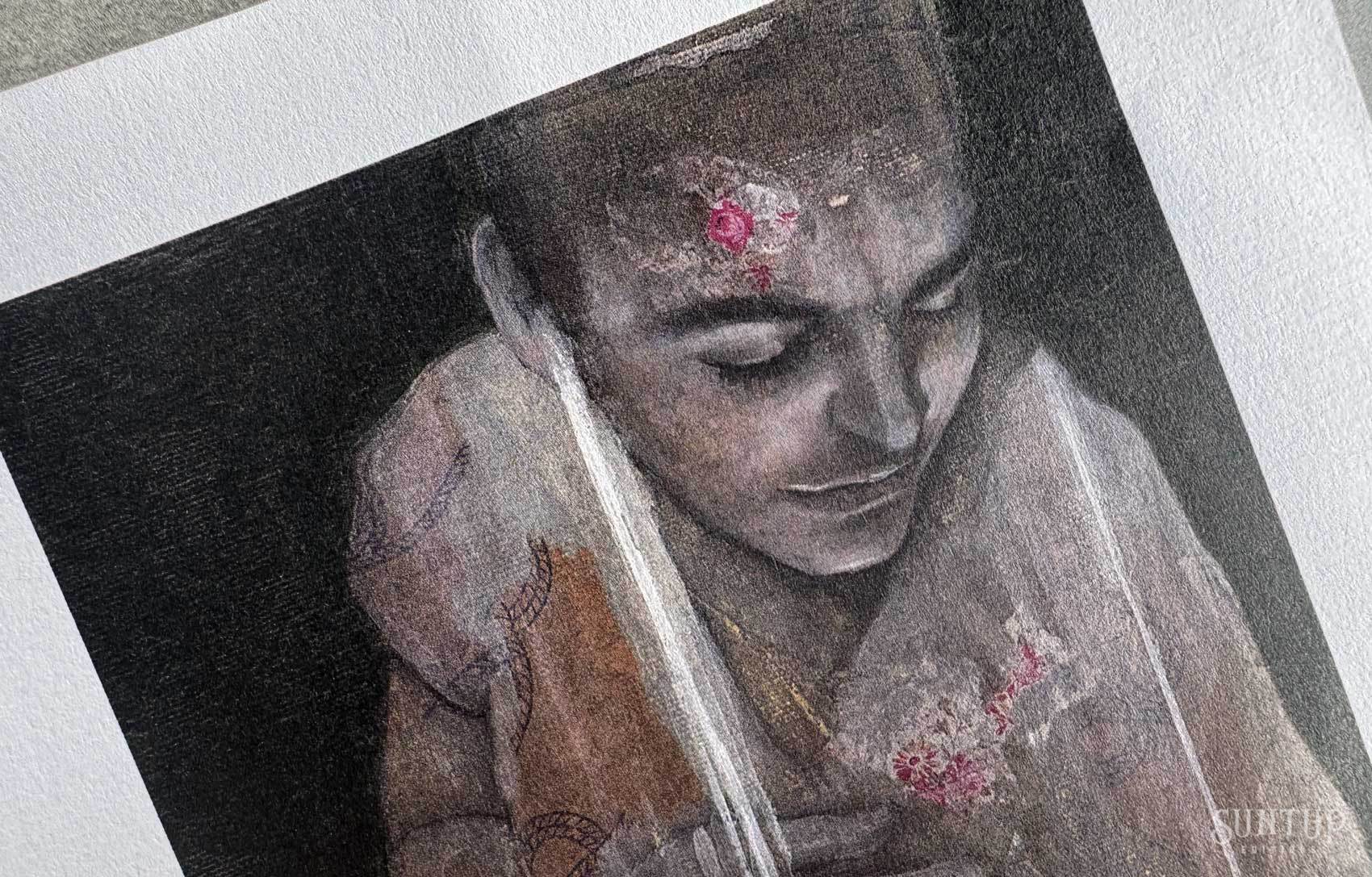
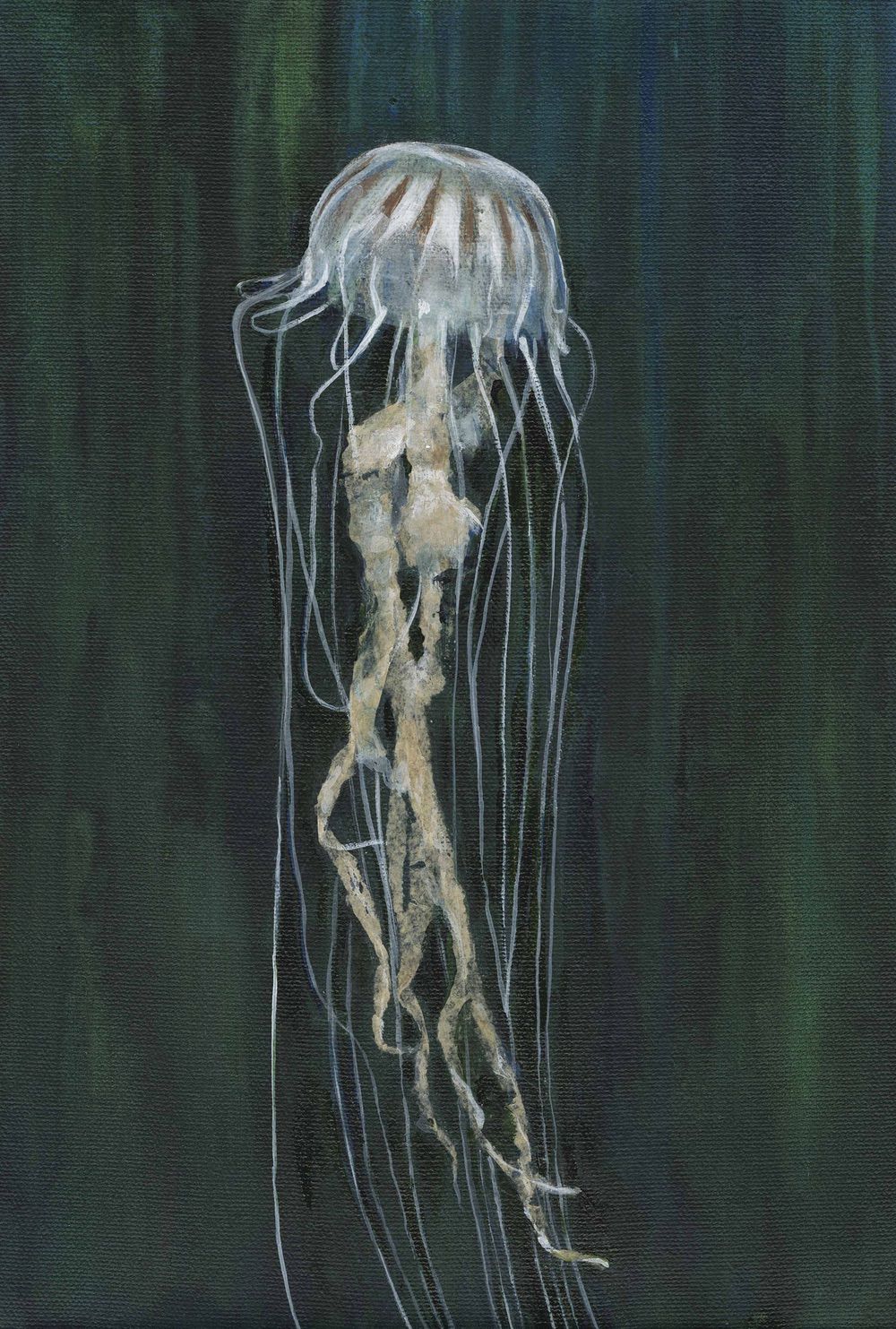
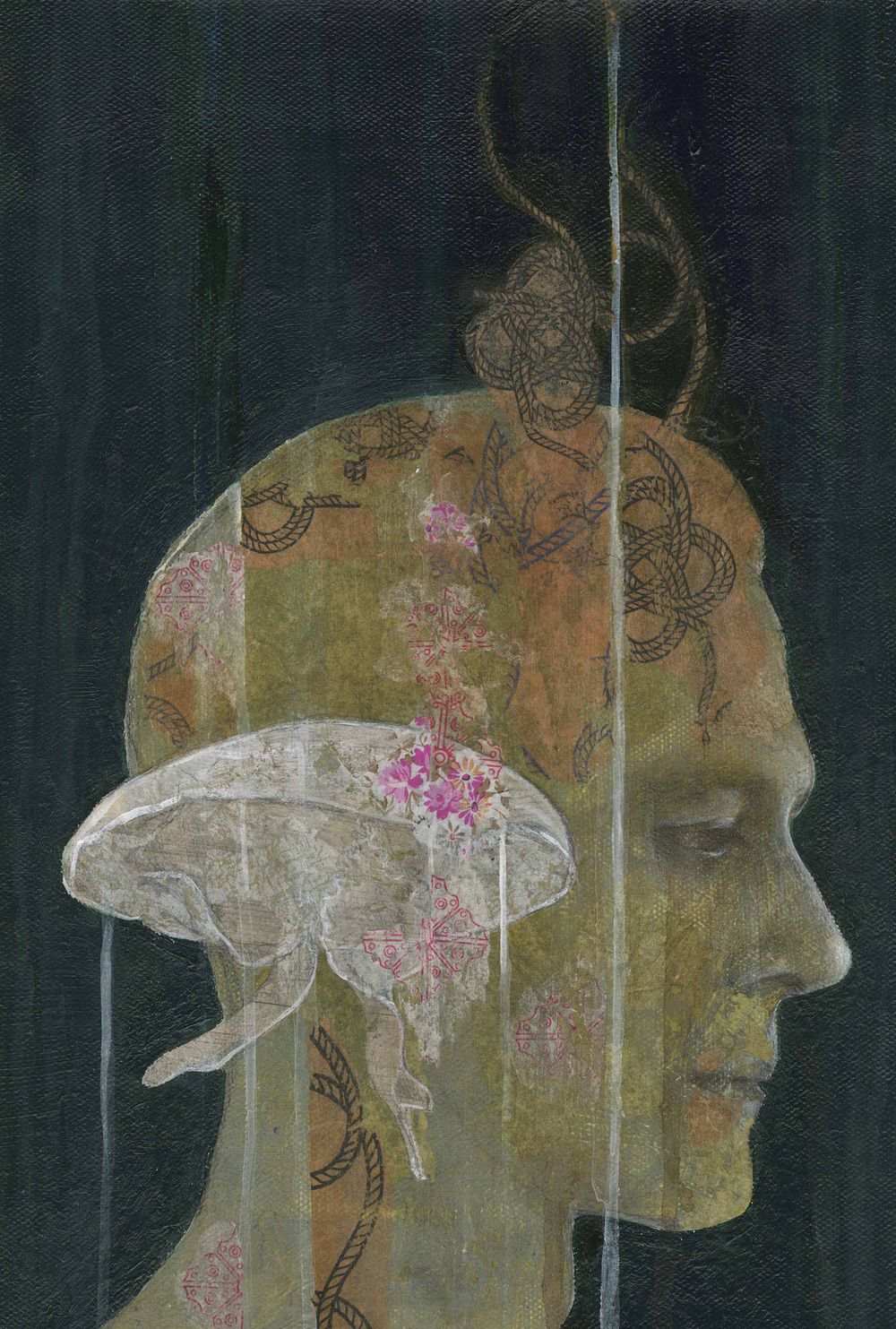
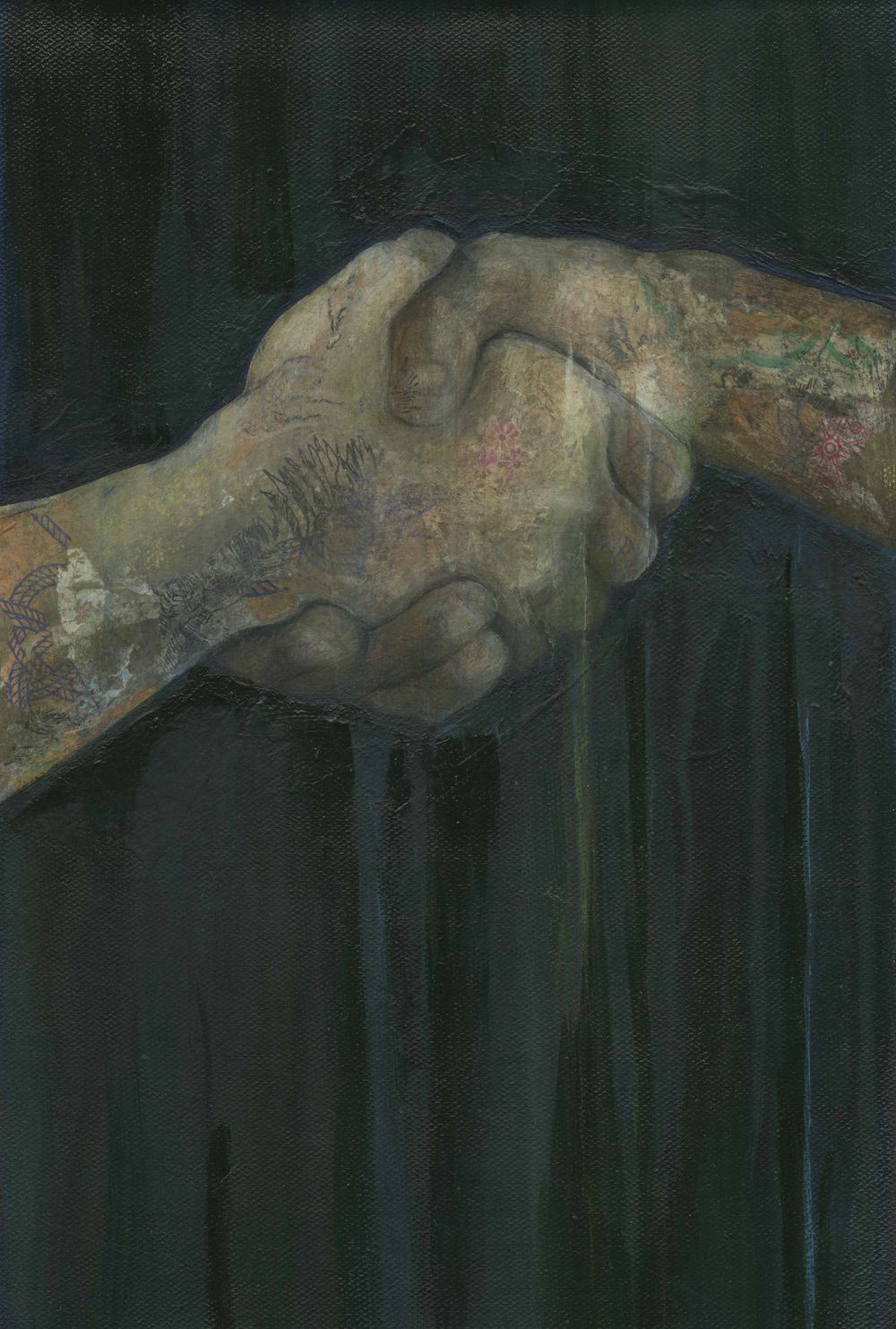
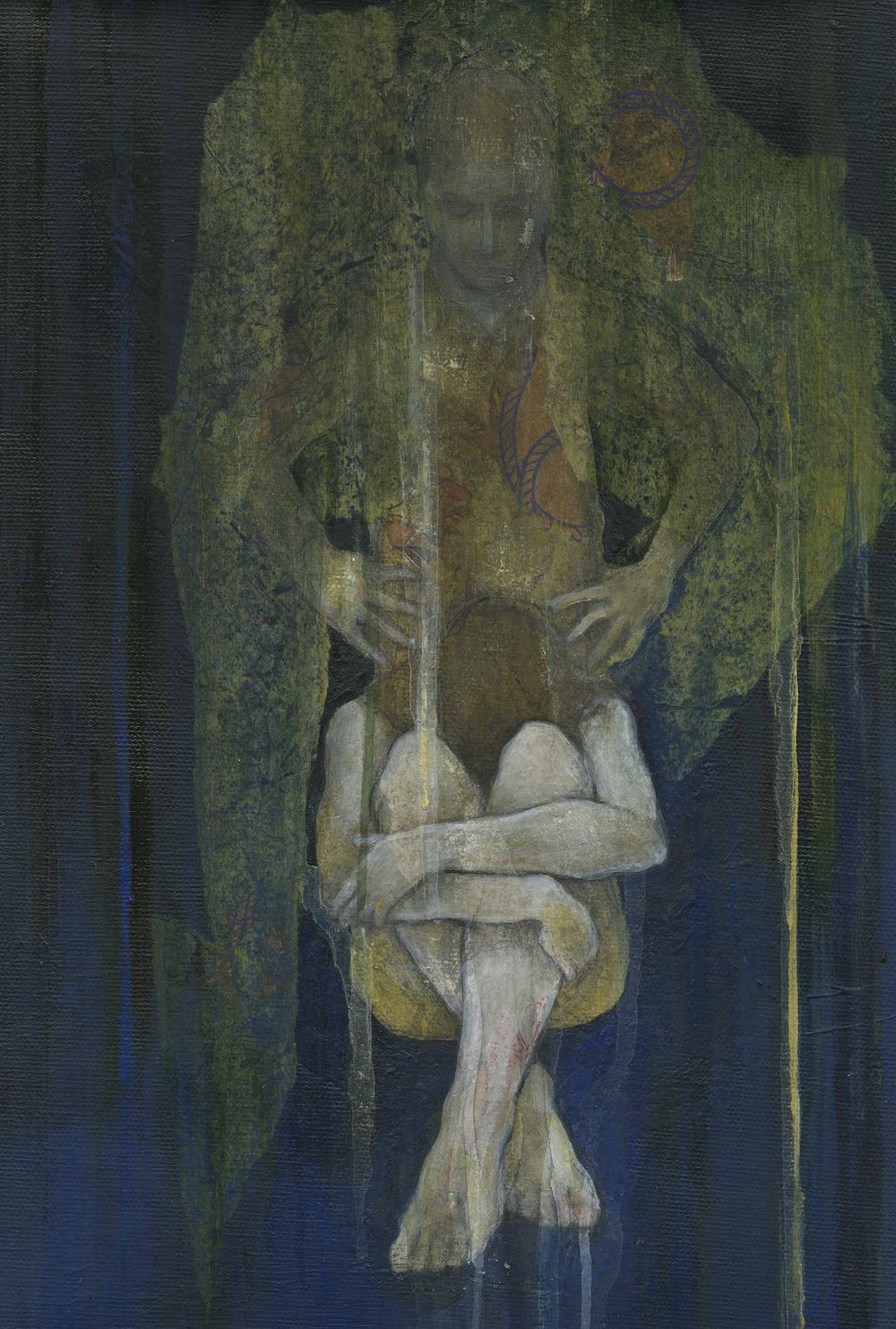
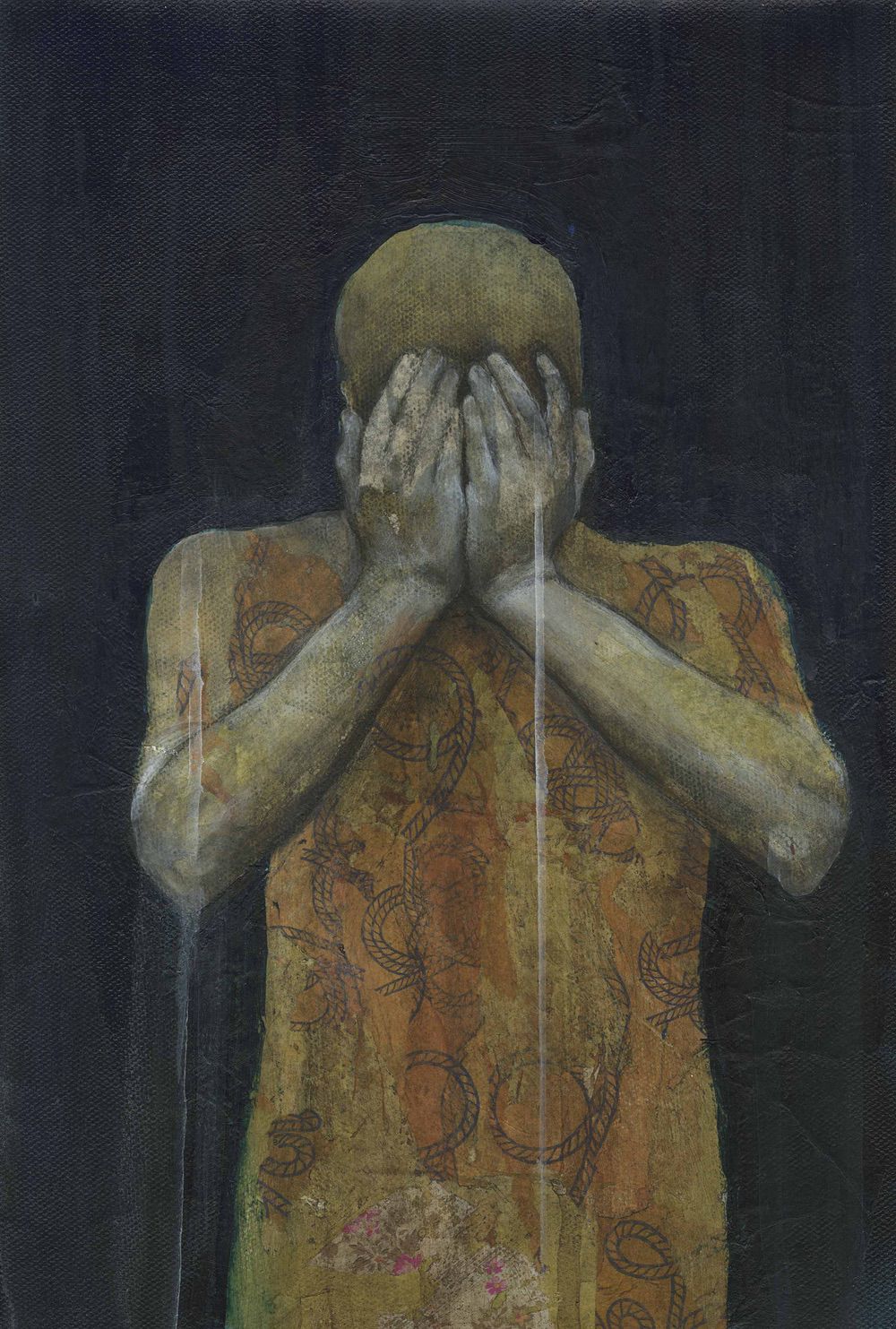
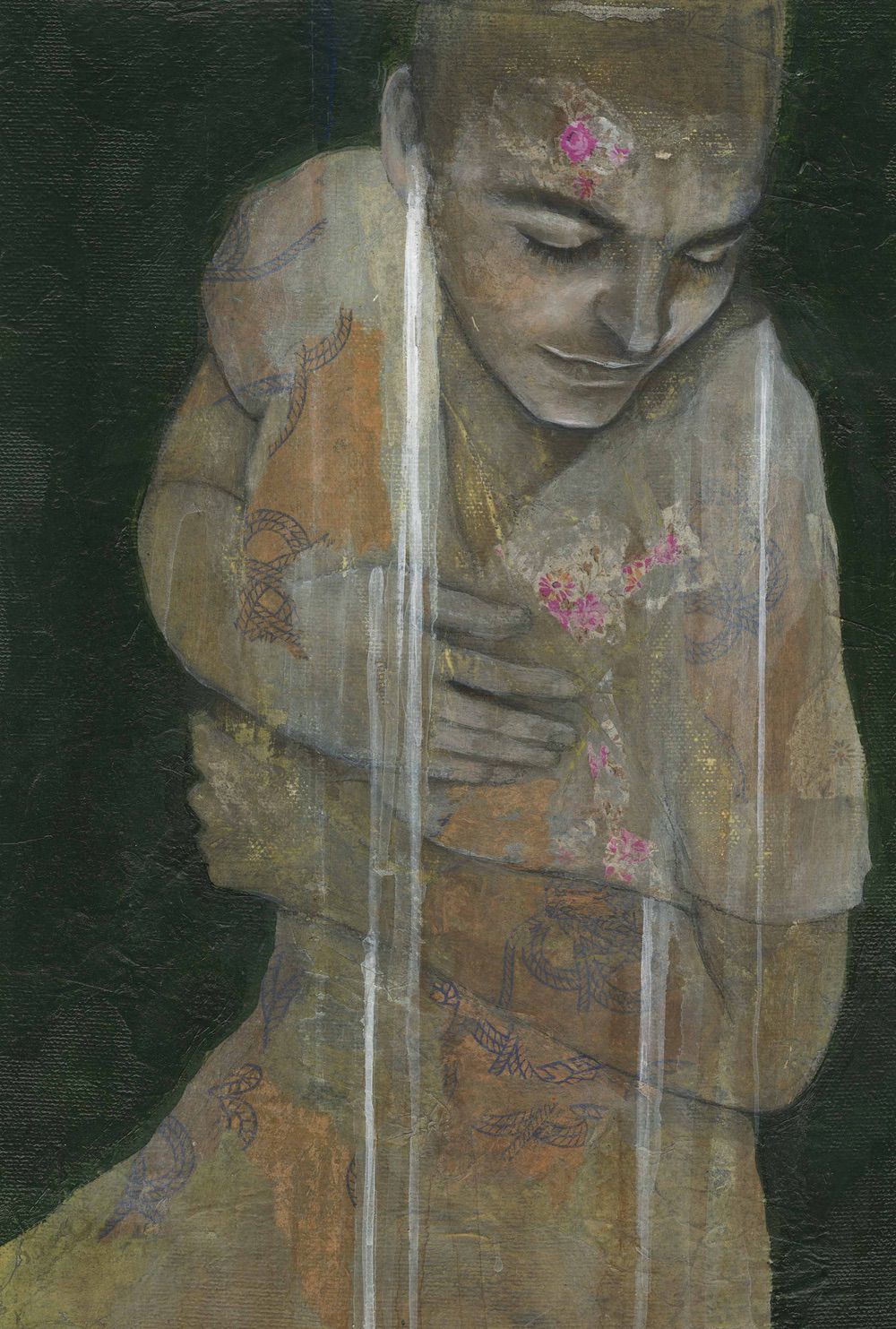
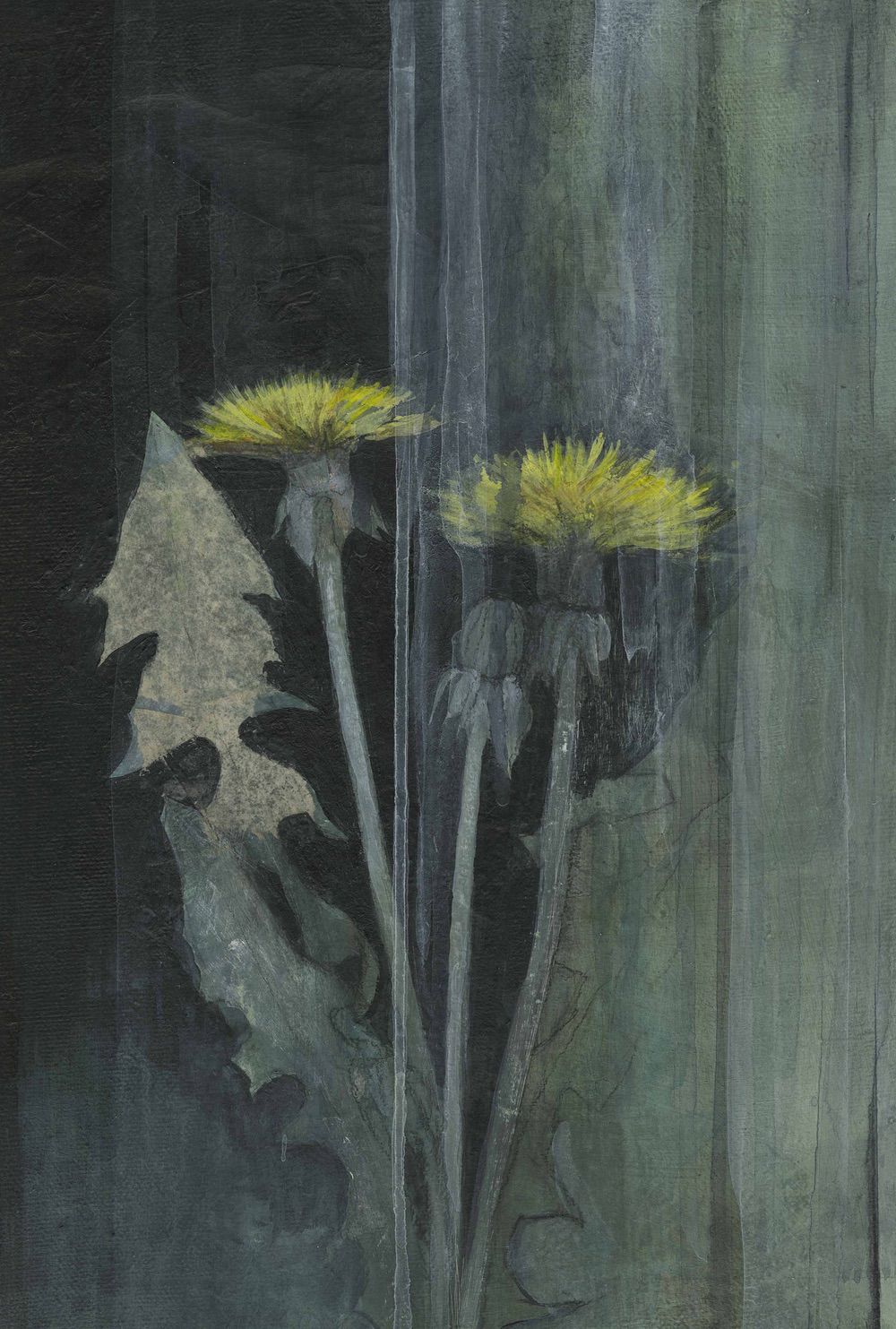
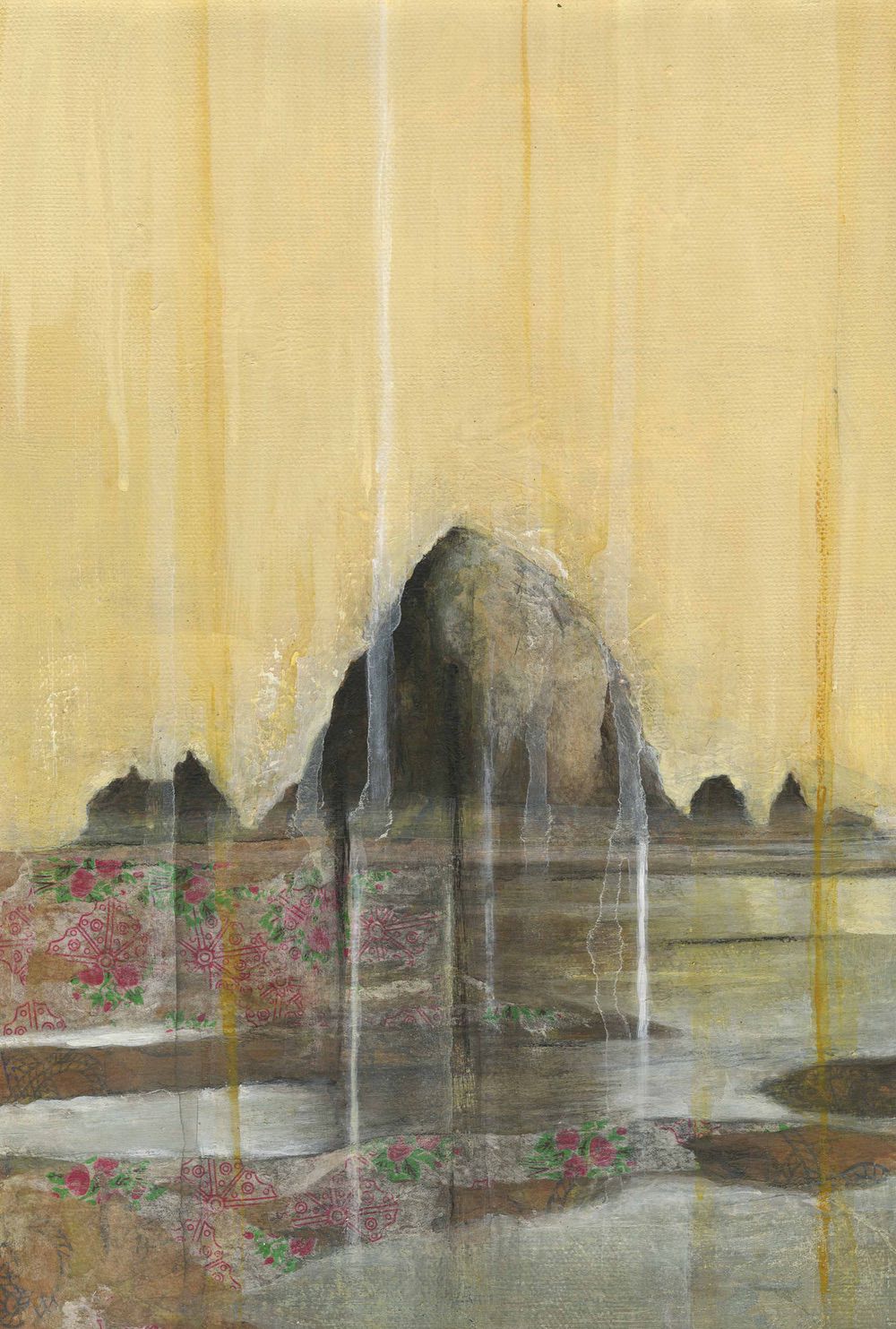
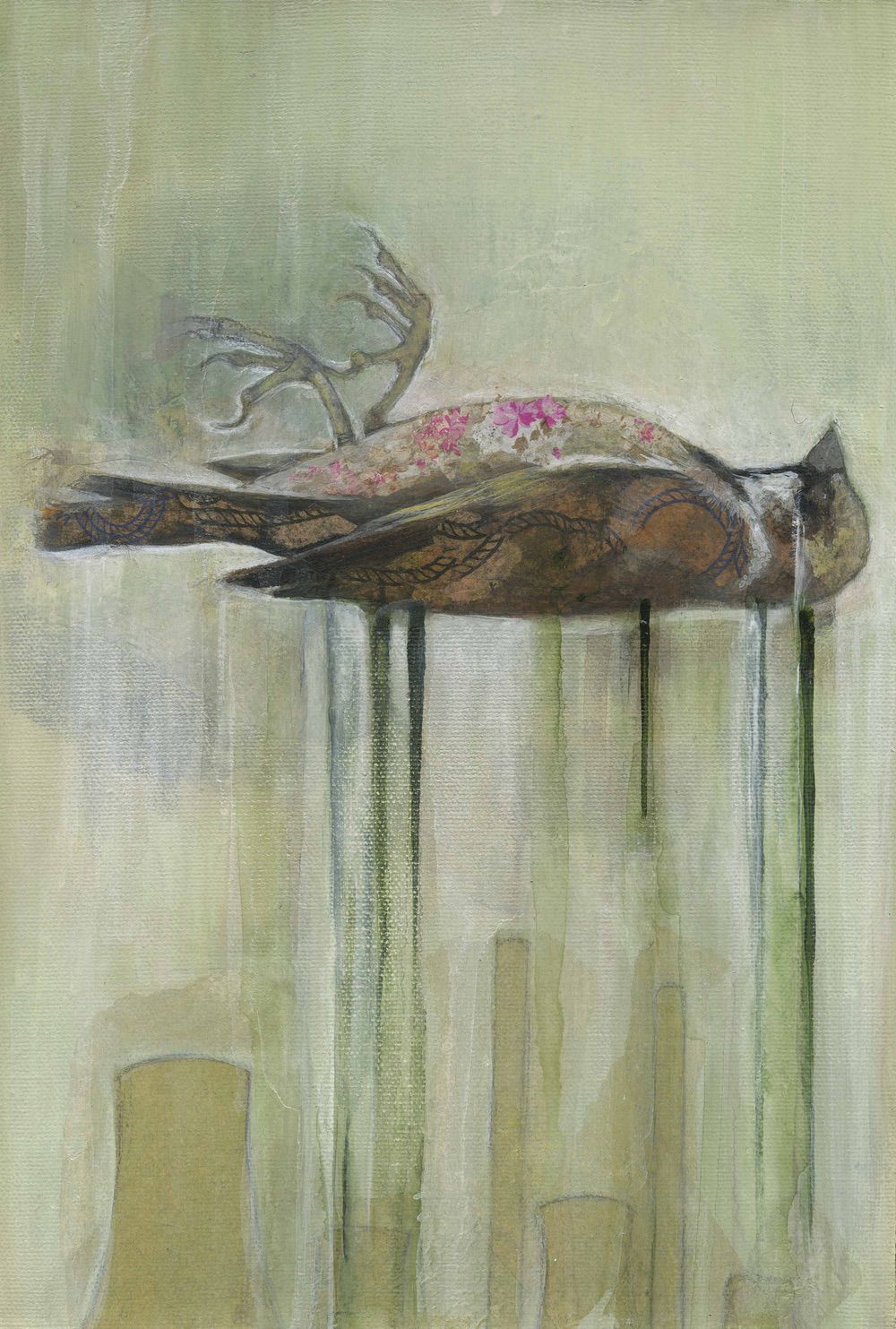
Illustrations by Tifenn Python
A landmark work of science fiction from Ursula K. Le Guin, The Lathe of Heaven imagines a future on the brink, where the dreams of one ordinary man hold the power to rewrite reality.
In a world scarred by war and environmental collapse, George Orr discovers his dreams change the future. Each time he sleeps, he awakens to a world altered, its history rewritten in ways only George can remember. Desperate to understand and control his extraordinary ability, he turns to psychiatrist Dr. William Haber. But what George feels is a burden, Haber sees as opportunity, and his attempts to harness this power set in motion dire consequences that pull at the very fabric of reality.
First serialized in the magazine Amazing Science Fiction Stories in 1971, The Lathe of Heaven won the Locus Award for Best Novel the following year. Garnering praise from critics and peers alike, Philip K. Dick once wrote, “One of the best novels most important to understanding of the nature of our world is Ursula Le Guin’s The Lathe of Heaven, in which the dream universe is articulated in such a striking and compelling way that I hesitate to add any further explanation to it; it requires none.” The New York Times commented, “The Lathe of Heaven is a rare and powerful synthesis of poetry and science, reason and emotion,” while Newsweek called it “gracefully developed and extremely inventive… what science fiction is supposed to do.”
Profound, imaginative, and deeply thought-provoking, Le Guin’s work of prescient genius examines the limits of human control and the unforeseen consequences of imposing order on a complex world. A cornerstone of modern science fiction, it remains as relevant today as when it was first published.
About the Editions
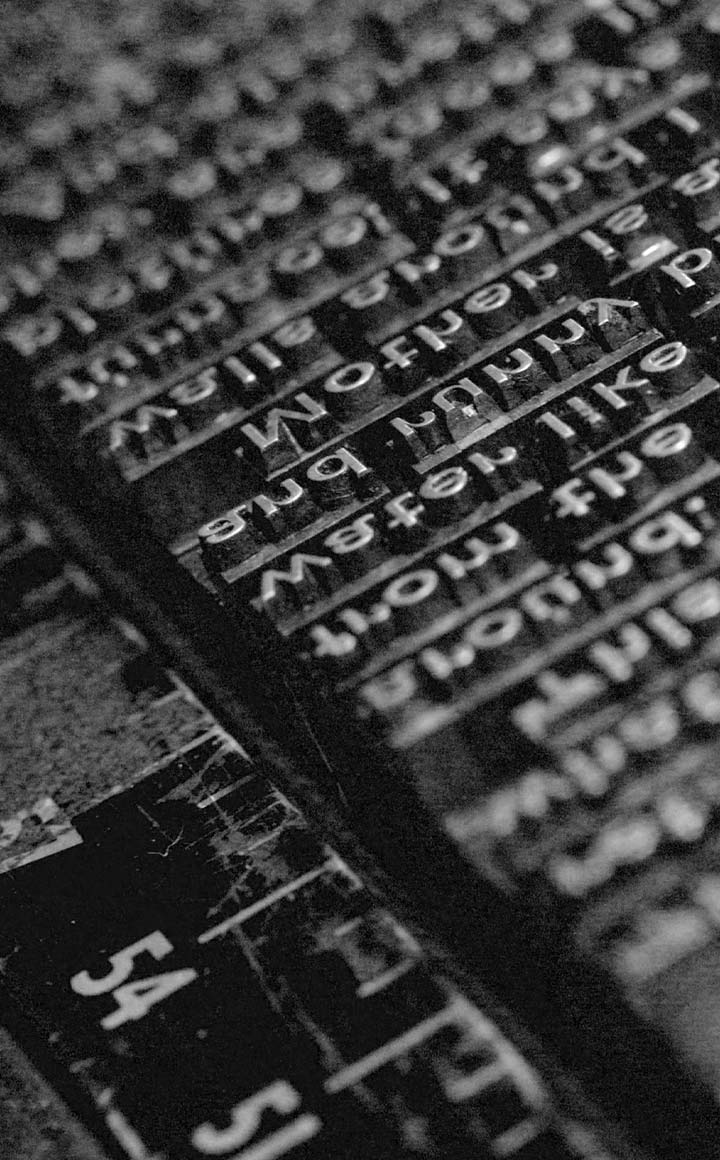
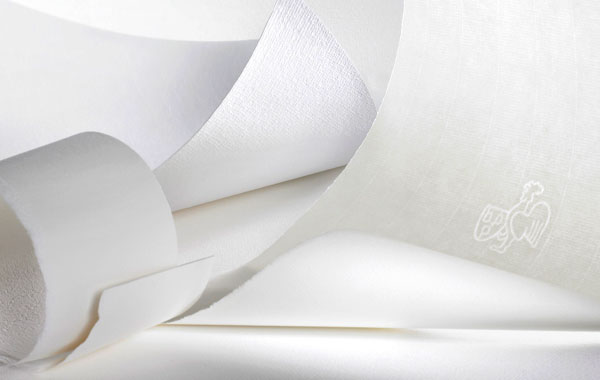
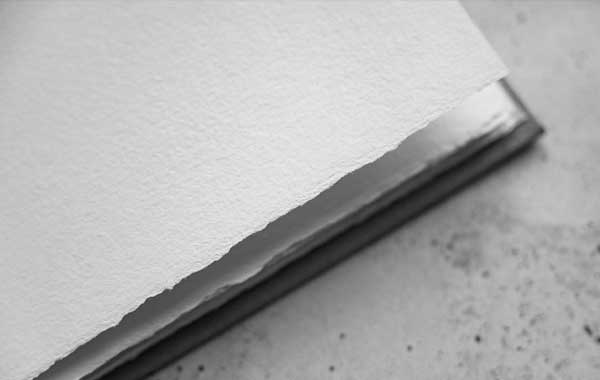
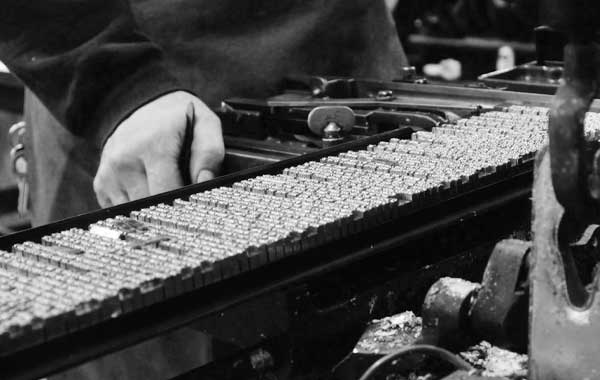
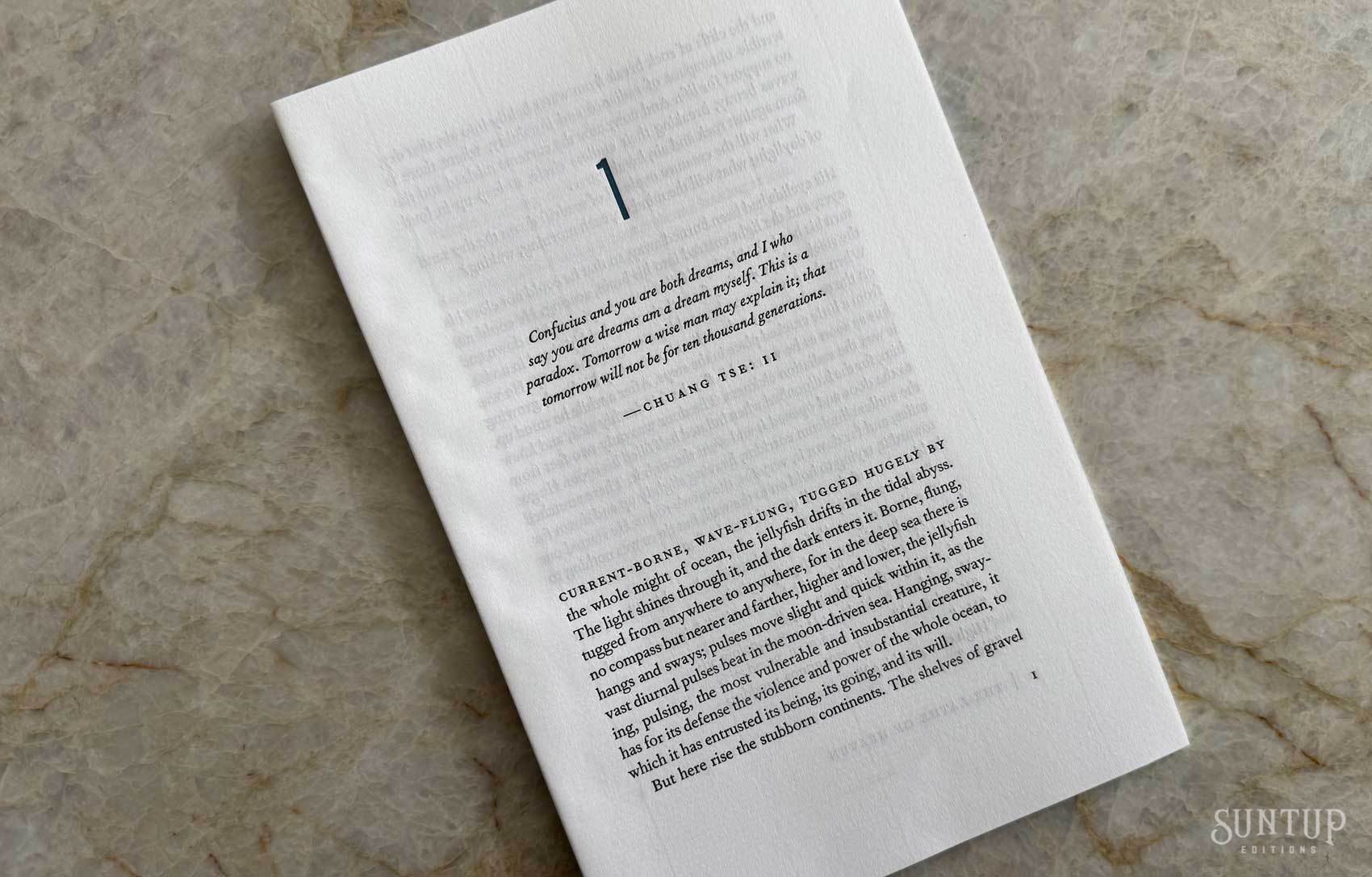
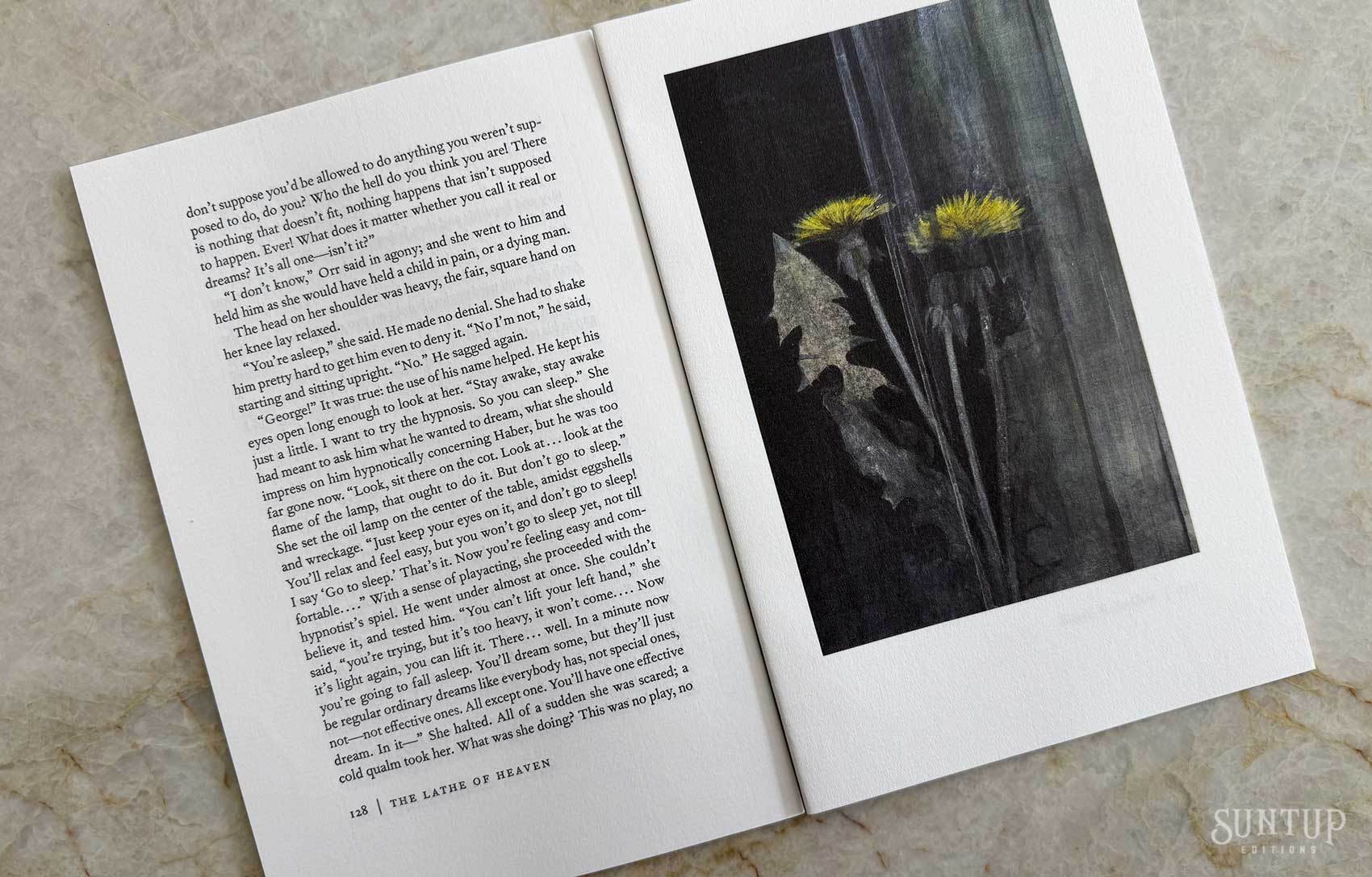
Our edition of The Lathe of Heaven by Ursula K. Le Guin is presented in two states. The editions measure 6” x 9” and feature eleven color illustrations by Tifenn Python, as well as a new foreword by Elisabeth Le Guin. The text pages are set in Monotype Fournier, and printed letterpress on Mohawk Via Laid and mouldmade Arches by Scott Vile on his Heidelberg cylinder press in Buxton, Maine. Interior design and typography by award-winning designer Jason Dewinetz.
A Note on the Typography
The text of The Lathe of Heaven is set in Monotype Fournier, chosen for its angular, prickly quality—which refuses to settle and be “invisible”. The novel twists through altered timelines and dream-conjured realities, and Fournier’s subtle irregularities answer that strangeness by keeping the reader ever slightly off-balance, as the narrative itself demands. Fournier was adapted by Monotype in 1924 from types cut by the French punch-cutter and typographic theorist Pierre-Simon Fournier around 1742, and it retains the transitional character of its source—precise yet restless, elegant yet unresolved.
Cinematographica, an ultra-condensed sans-serif designed by Francesco Canovaro, serves as the display face. Its extreme vertical compression carries the cadence of science fiction cinema—the tall, narrow letterforms long favored by genre poster artists. At the same time, its attenuated strokes echo the paint drips in the artist’s paintings for this edition, drawing the typographic and the painterly into an unexpected accord.
Numbered Edition
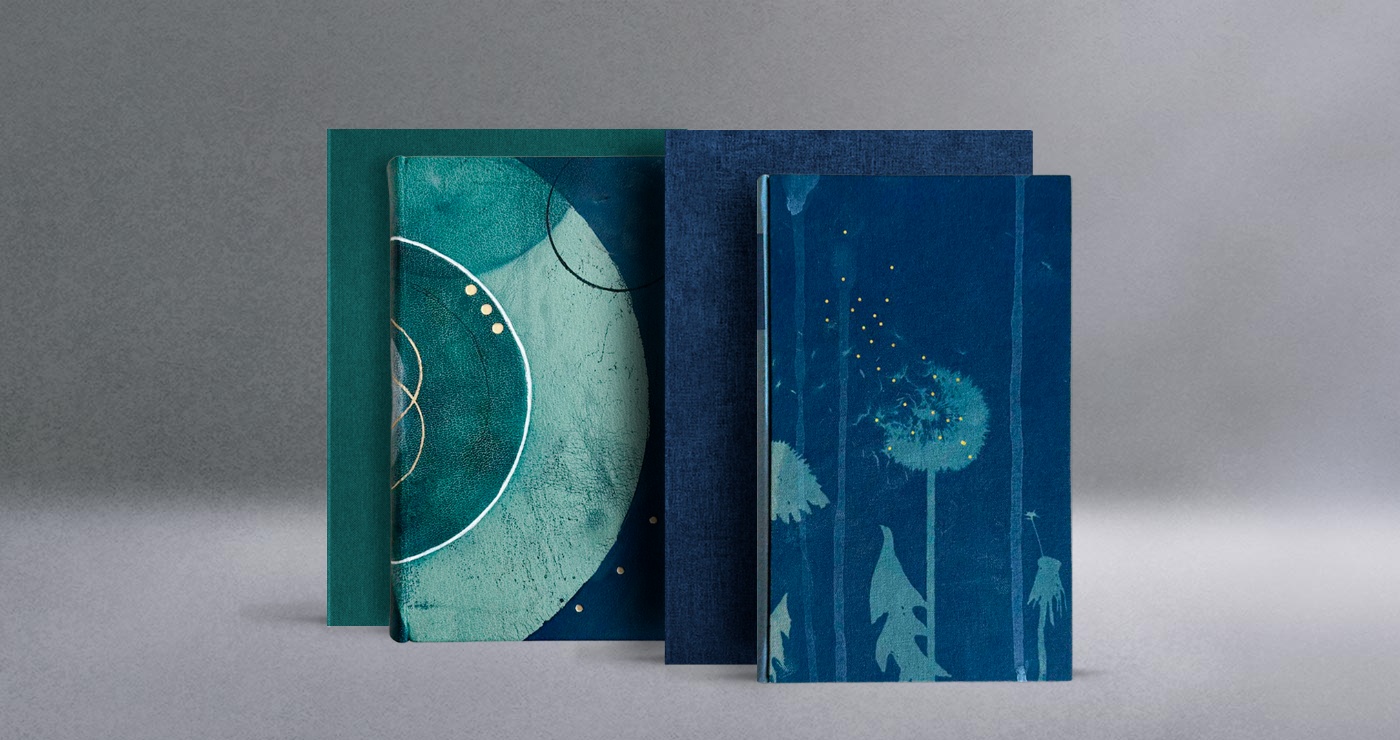
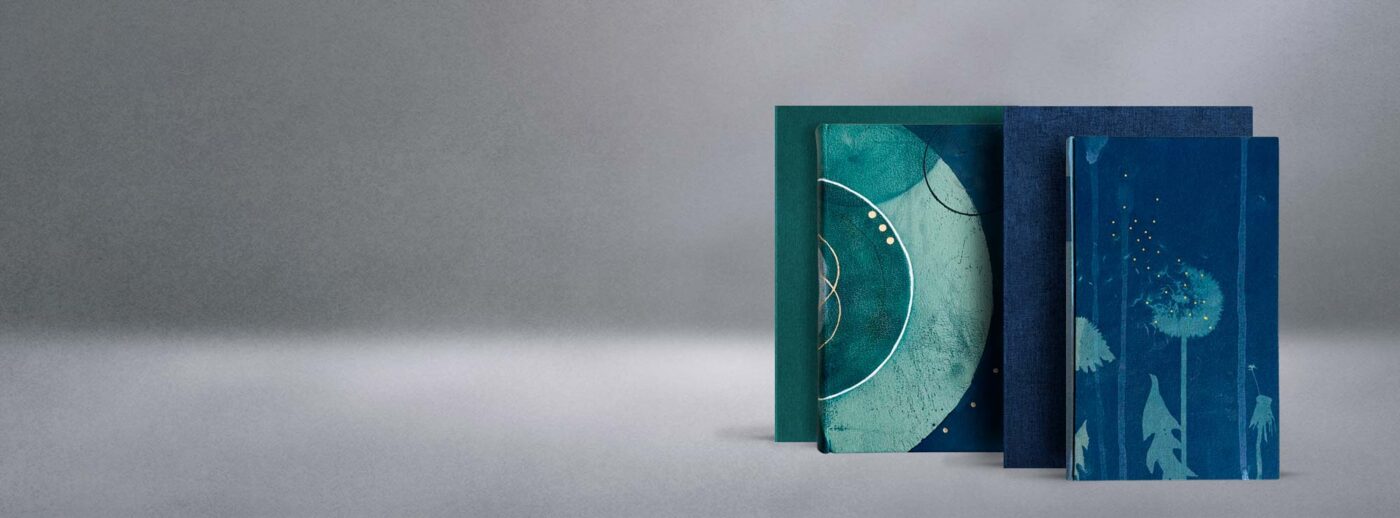
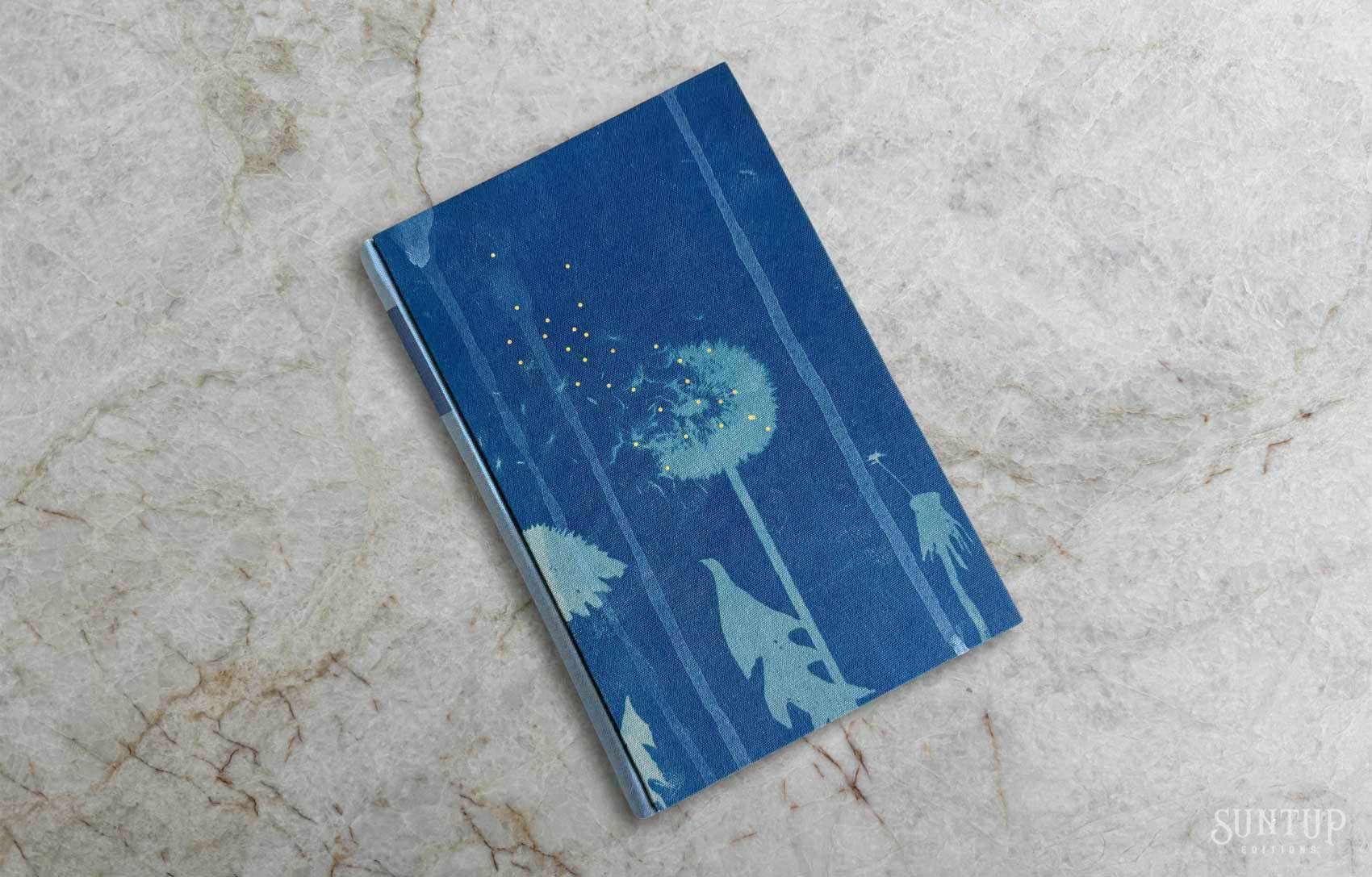
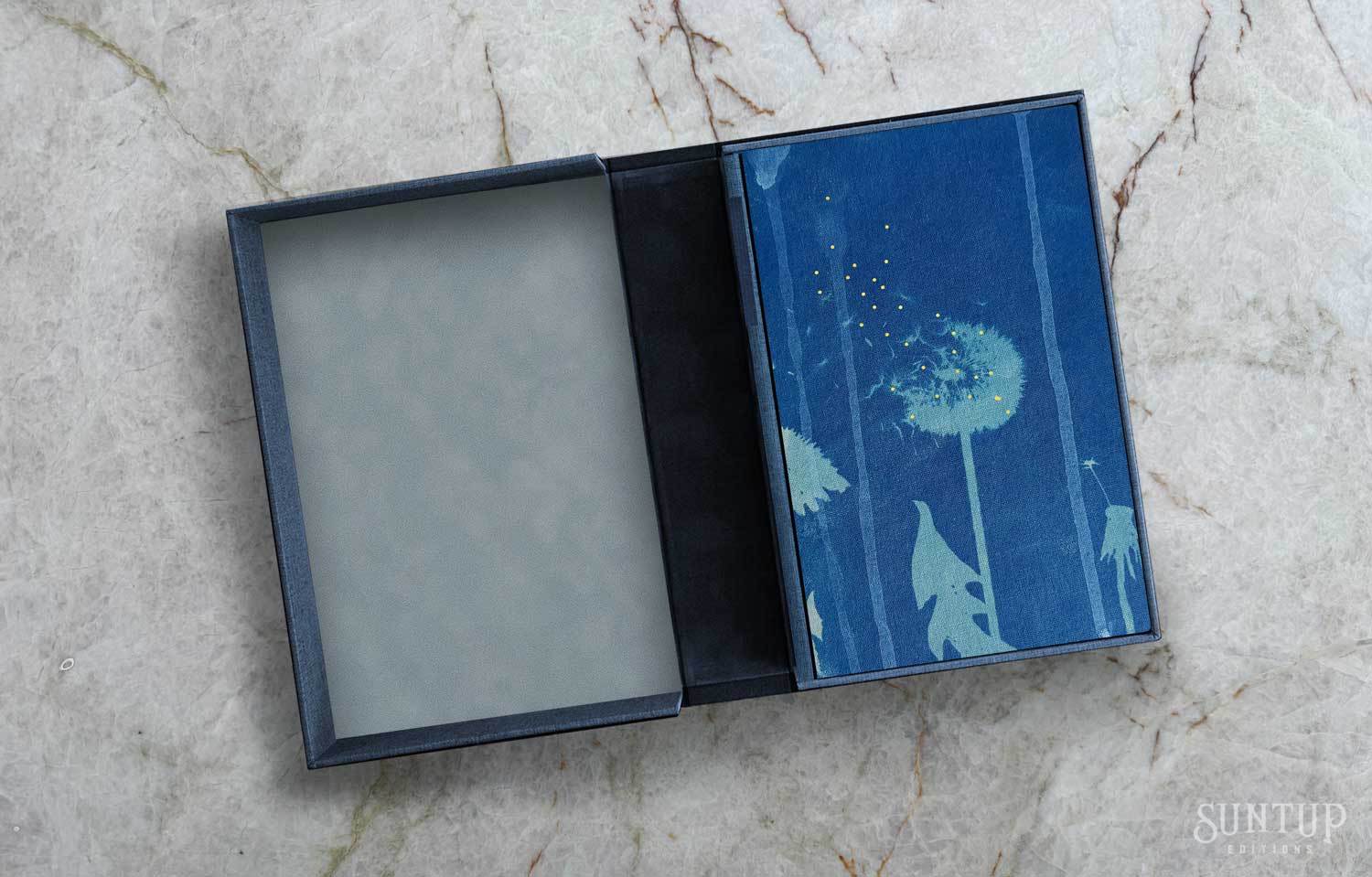
The Numbered edition of two hundred fifty copies is a Bradel binding with cyanotype-printed cloth covering the boards and a cloth covered spine featuring a letterpress printed label. Head & tail bands are handmade and endsheets are Hahnemühle Bugra.
Cyanotype is an analogue photographic process dating back to the 1800s. Each piece of cloth is hand-painted in several layers to build a deep, even print, then exposed to strong light. The light turns the cloth blue, while the dandelion forms shield it and leave those areas white. The seeds drifting loose on the wind are tooled in gold, catching the light against the blue. Because every sheet is painted and printed by hand, slight variations occur, and no two are exactly alike. The Cyanotype covers are created by by Gillian Stewart in Glasgow, United Kingdom.
The edition is housed in a clamshell enclosure with velour-lined trays and is printed letterpress on Mohawk Via Laid. This state is signed by Elisabeth Le Guin and Tifenn Python.
Lettered Edition
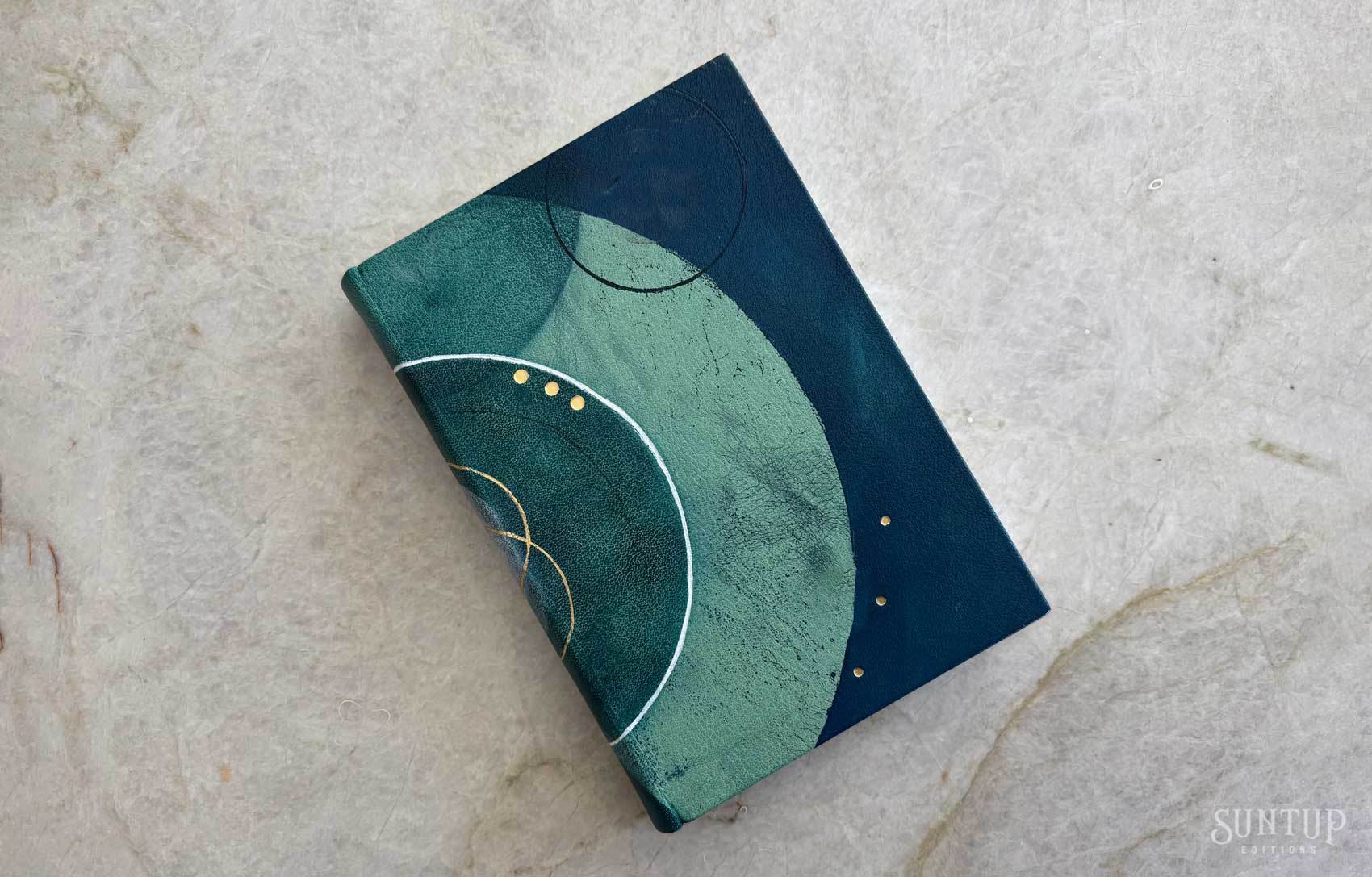
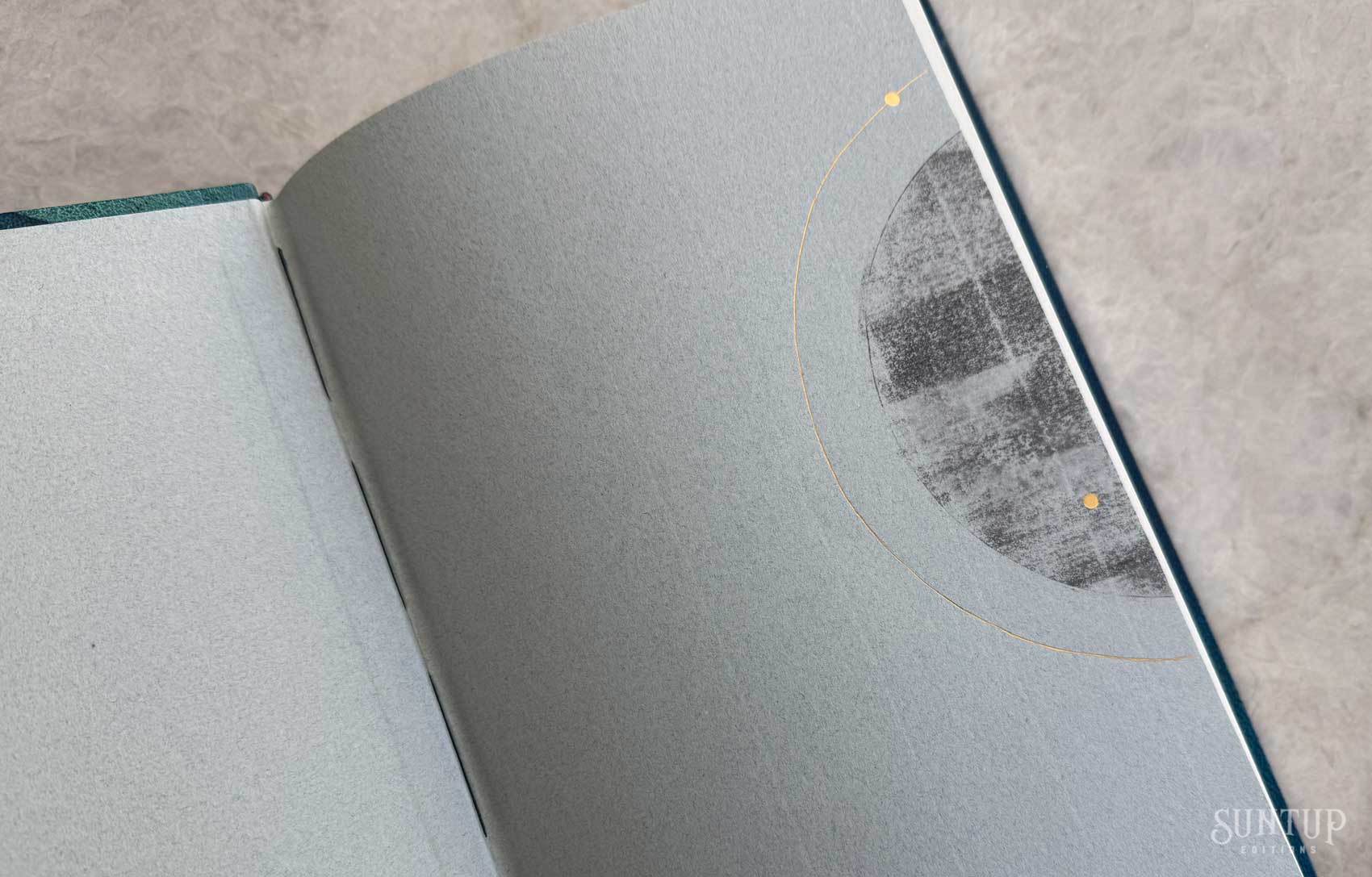
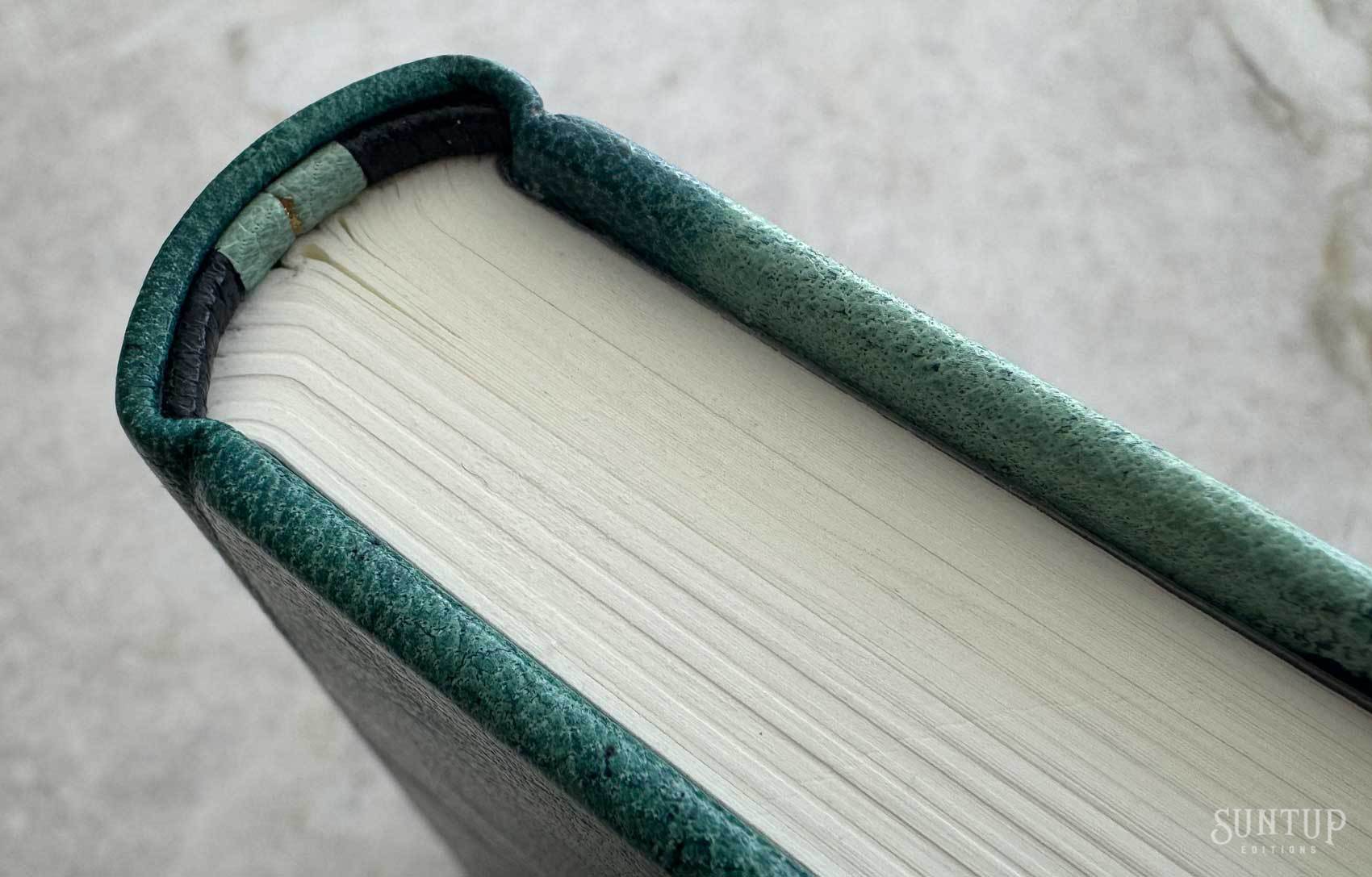
The Lettered state is limited to twenty-six copies and is bound in full goatskin. The design takes up the novel’s overlapping timelines represented by concentric circles which ripple across the covers, while its colors are drawn from the book’s illustrations. The leather is printed in several passes and worked with transfer printing, airbrushing and screenprinting, then hand-tooled in genuine gold; in places a fine craquelle breaks the surface. The head & tail bands are crafted in two colors of leather, and the Hahnemühle endpapers feature a transfer print finished with hand tooling.
The edition is housed in a clamshell enclosure with velour-lined trays and is printed letterpress on 120 gsm mouldmade Arches paper. This state is signed by Elisabeth Le Guin and Tifenn Python, and is handbound by Gillian Stewart in Glasgow, United Kingdom.
About the Author
About the Collaborators

Elisabeth Le Guin
The daughter of science fiction author Ursula K. Le Guin and historian Charles Le Guin, Elisabeth Le Guin was born July 25, 1957. A professor of Musicology at UCLA from 1997-2022, when she became Emerita, Le Guin’s academic research has journeyed from Italy (Boccherini’s Body, UC Press, 2008) to Spain (The Tonadilla in Performance, UC Press, 2014) to the Gulf of Mexico (current research), asking questions about the historiographies of embodied performance along the way. She has received awards from the ACLU and the American Musicological Society, and is a member of the American Academy of Arts & Sciences. A 2019 Guggenheim Fellowship funded her bilingual, community-based podcast/radio show “Si yo fuera una canción,” in which ordinary people in Santa Ana, California, tell us about the songs they love.

Tifenn Python
Tifenn Python was born in France, but shortly after moved to the South Pacific island of Tahiti, where she grew up. She completed her studies in Fine Arts / Illustration at the Ontario College of Art and Design in Toronto, Canada. In 1999, Tifenn moved to New York City to work as an illustrator where her work has been included in various shows and accepted into juried publications which include American Illustration,Communication Arts, and Print magazine. Her clients include The New York Times, the Los Angeles Times, Harper’s, Nylon,The Washington Post, Utne, Playboy, Elektra Records and Random House Publishing among others as well as private collectors.
Matching Numbers & Letters
A Matching Pre-Order email is sent to owners of our previous publication (The Colour out of Space ) at 9:00 A.M. PT on the day of announcement. If you did not receive the email, contact us here. If your order is not received before the deadline, your designated number or letter will be assigned to the new owner.
Illustrations by Tifenn Python
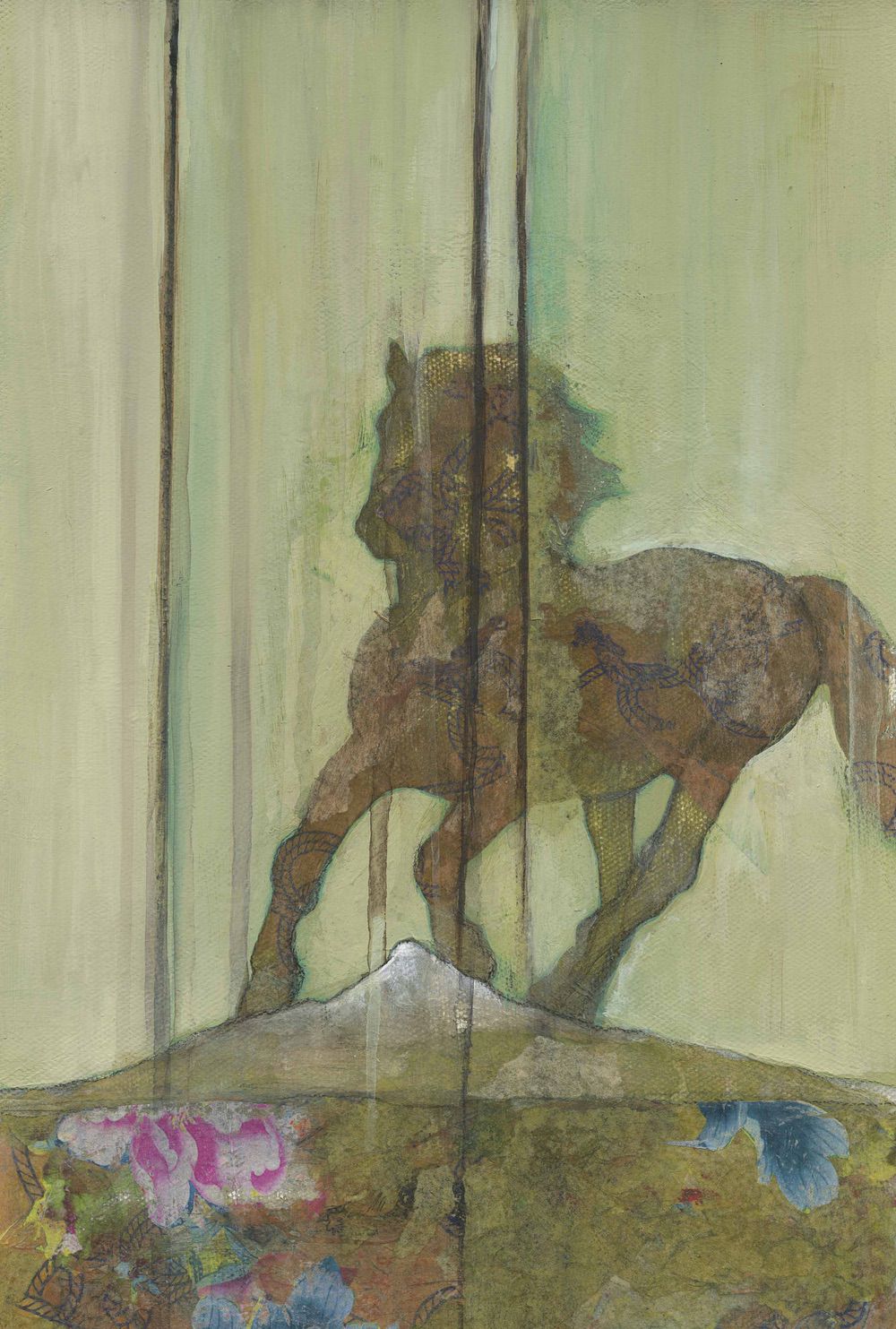
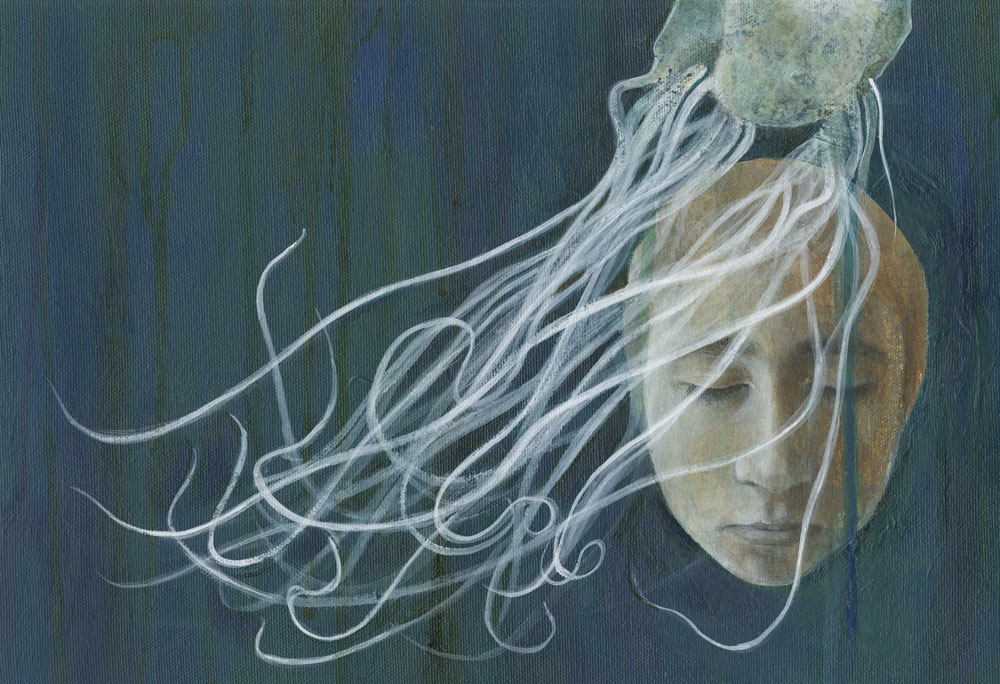
Published editions may differ slightly from mockups and prototype designs.
Illustrations © 2024 by Tifenn Python