
Under the Volcano Malcolm Lowry
Illustrations by Sara Tyson
Introduction by Michael Schmidt
Afterword by Chris Ackerley
One of the greatest novels of the 20th century, Under the Volcano is Malcolm Lowry’s powerful and lyrical statement on the human condition, and a brilliant portrayal of one man’s constant struggle against the forces that threaten to destroy him.
Geoffrey Firmin, a former British consul, has come to Quauhnahuac, Mexico. His debilitating malaise is drinking, an activity that has overshadowed his life. On the most fateful day of the consul’s life—the Day of the Dead, 1938—his wife, Yvonne, arrives in Quauhnahuac, inspired by a vision of life together away from Mexico and the circumstances that have driven their relationship to the brink of collapse. She is determined to rescue Firmin and their failing marriage, but her mission is further complicated by the presence of Hugh, the consul’s half brother, and Jacques, a childhood friend. The events of this one significant day unfold against an unforgettable backdrop of a Mexico at once magical and diabolical.
First conceived during Malcolm Lowry’s turbulent years in Mexico, the earliest manuscript for Under the Volcano faced repeated rejection before Lowry devoted himself entirely to four years of rewrites between 1940 and 1944. The work was then nearly lost in a devastating fire at the Lowry’s cabin in Dollarton before being completed. Lowry’s second wife, Margerie Bonner, rescued the unfinished novel, but all of Lowry’s other works in progress were lost in the blaze.
The novel was finished in 1945, and ultimately published in 1947 in both the United States and the United Kingdom after Lowry’s impassioned defense of its form and intent. When UK publisher Jonathan Cape expressed his reservations about publishing it without further edits, Lowry responded: “Whether it sells or not seems to me either way a risk. But there is something about the destiny of the creation of the book that seems to tell me it just might go on selling a very long time.”
The book was met with a modest initial reception, and fell out of print before Lowry’s death in 1957. Since then, the novel has risen to canonical status, ranked among the greatest works of the twentieth century by the Modern Library and included in Time’s list of the 100 best English-language novels. Alfred Kazin hailed it as “Lowry’s masterpiece… one of the ten most consequential works of fiction produced in this century,” while the The New York Times described it as “one of the towering novels of this century.”
Few novels descend so completely into the fragile, flickering consciousness of a man unraveling as Under the Volcano, where Malcolm Lowry transforms a single day into an odyssey of memory, regret, and quiet, inescapable ruin.
About The Edition
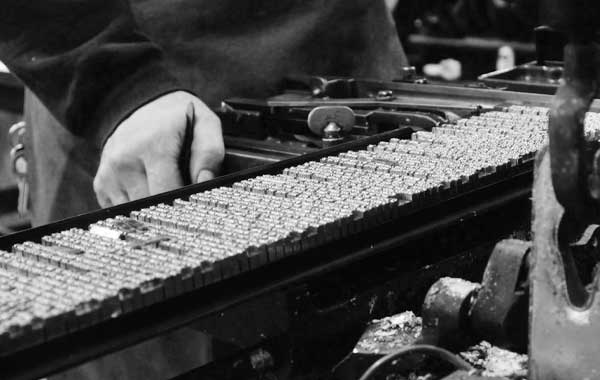
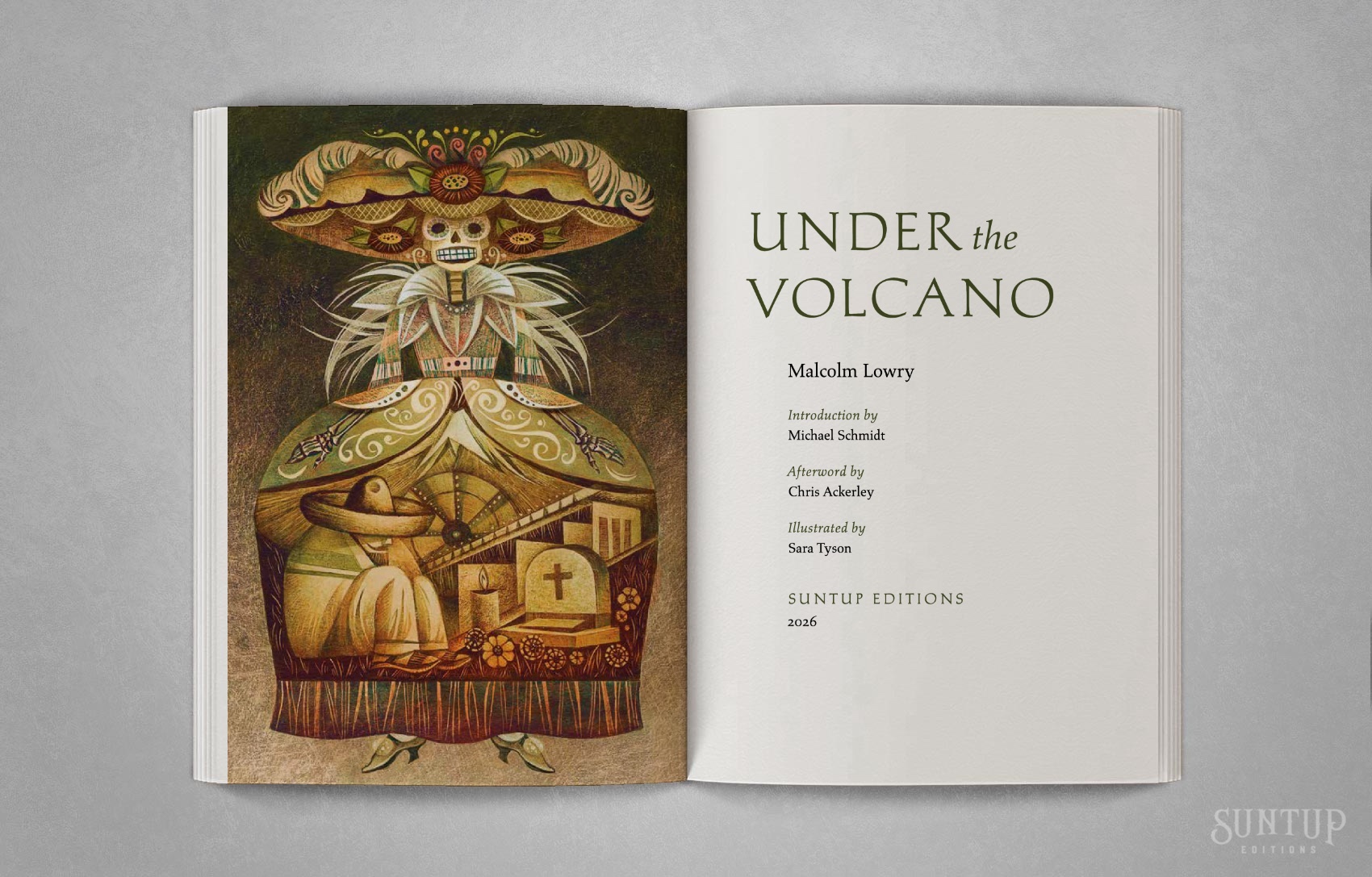
Our edition of Under the Volcano by Malcolm Lowry is presented in two states. The edition measures 6” x 9” and features seven color illustrations by award-winning artist Sara Tyson, an introduction by Michael Schmidt and an afterword by Chris Ackerley. The text pages are set in Linotype Aldus, with Michelangelo for display, both designed by Hermann Zapf. The edition is printed by offset lithography and is designed by award-winning designer Jason Dewinetz. All copies are signed by Michael Schmidt, Chris Ackerley, and Sara Tyson.
A Note on the Typography
The chaos at the heart of Under the Volcano is as much Lowry’s as it is his protagonist’s — both men sharing the same gravitational pull toward dissolution, the novel bearing that weight on every page. In designing the book, we wanted a type that offered, by contrast, some dignity and clarity.
Zapf’s types are nothing if not elegant, almost to a fault, and Aldus seemed a stark counterpoint to the atmosphere of the novel. The calligraphic temperament and readability of Aldus bring both the clarity and poise that the Consul has more or less abandoned — simultaneously amplifying his ruin and, in some measure, restoring him. It was important to us that the typography hold its composure where the novel refuses to.
For the titling type, Michelangelo is in many ways an amplification of the traits found in Aldus. The capitals carry a rare elegance, but also slightly unusual proportions — the high-waisted A and R lend a quiet, quirky tension to the otherwise stately Roman inscriptional quality of the face. We were drawn to the way these odd characters disrupt the overall strength and grace of the title, much as the Consul’s dissolution disrupts the world around him. There is also the imposing presence of the volcano itself, and Michelangelo has the stark strength that demands.
As a happy complement to these choices, the calligraphic curves and proportions of both Aldus and Michelangelo play beautifully with the curves and proportions of the Mexican-inspired illustrations, resulting in an organic unity between image and type.
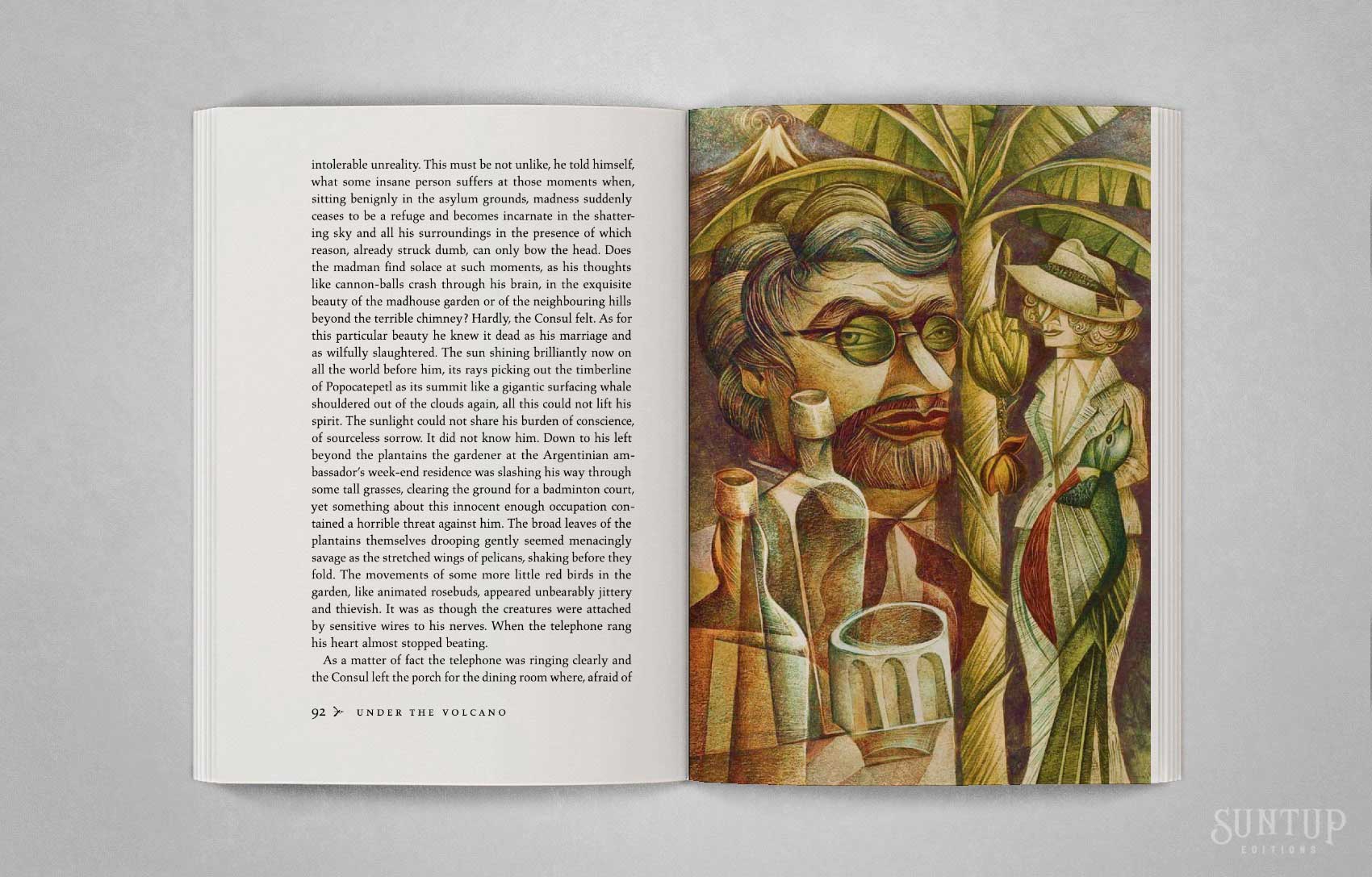
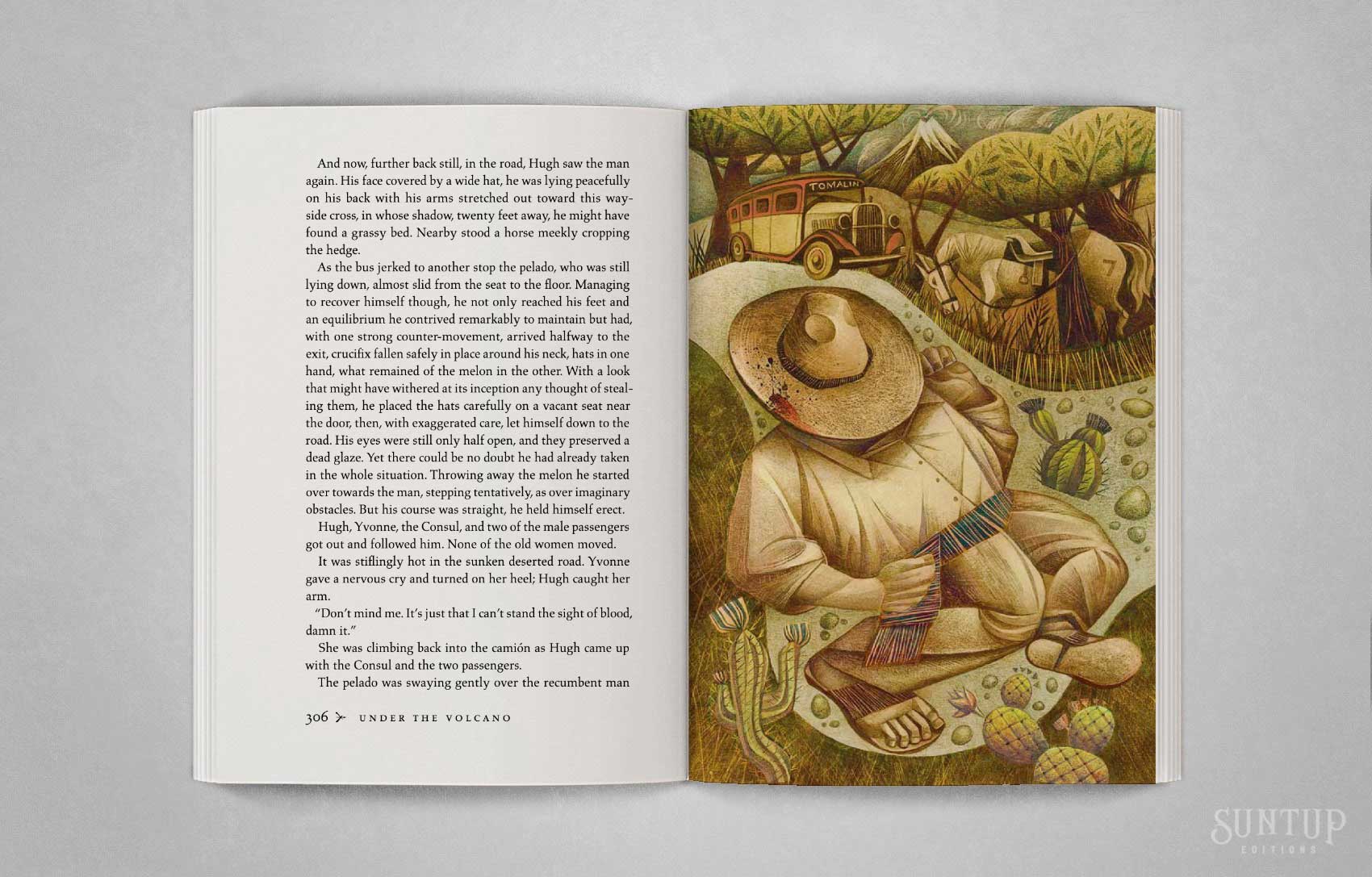
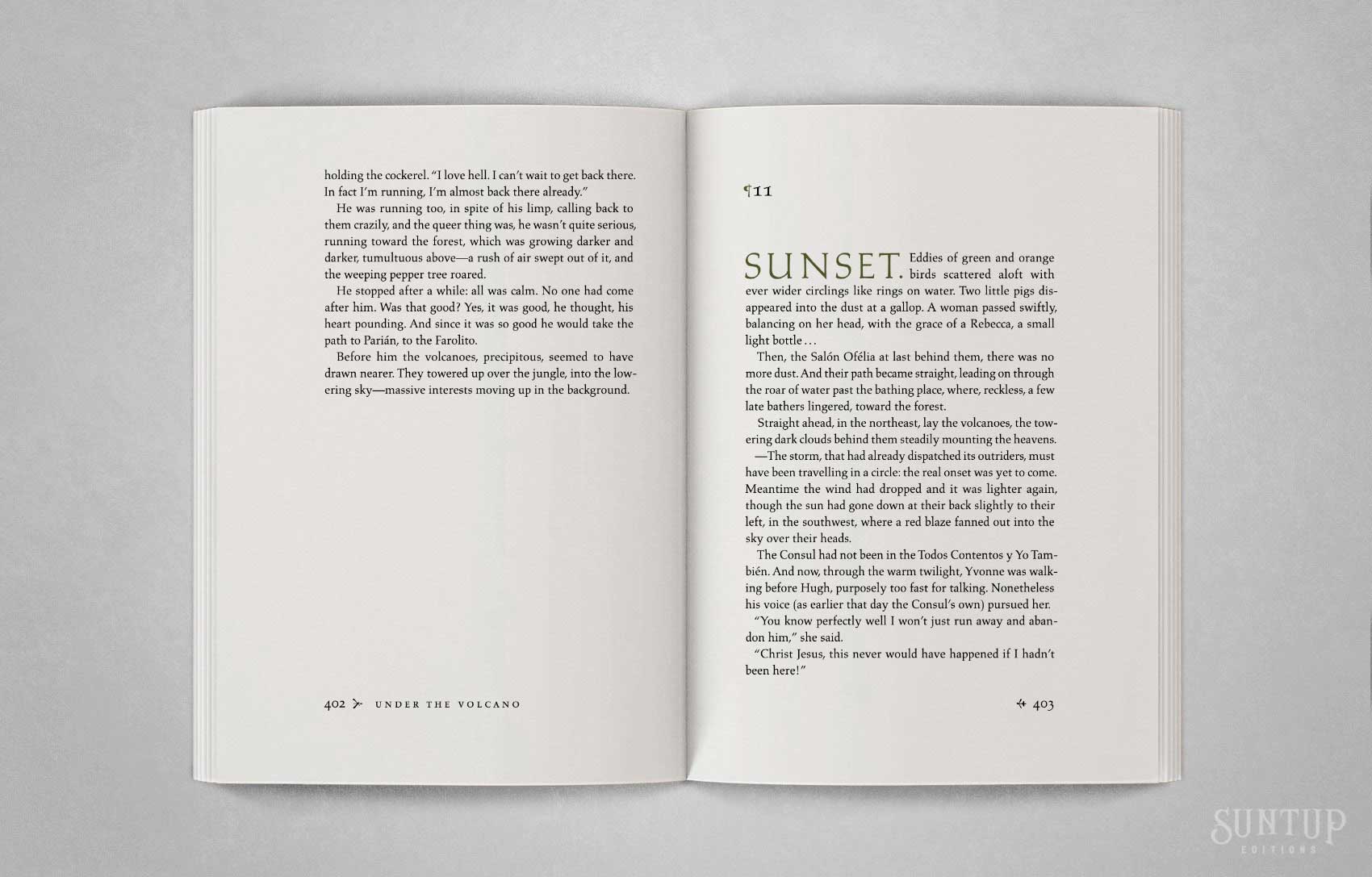
Numbered Edition
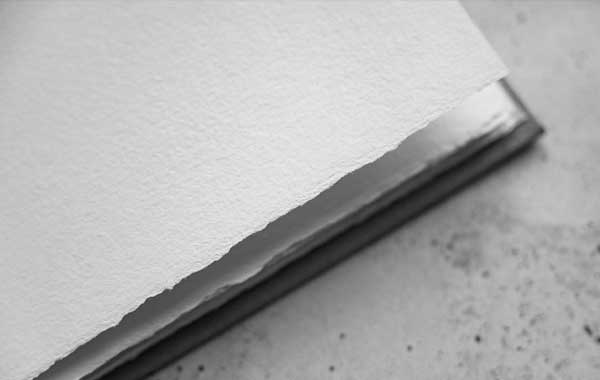
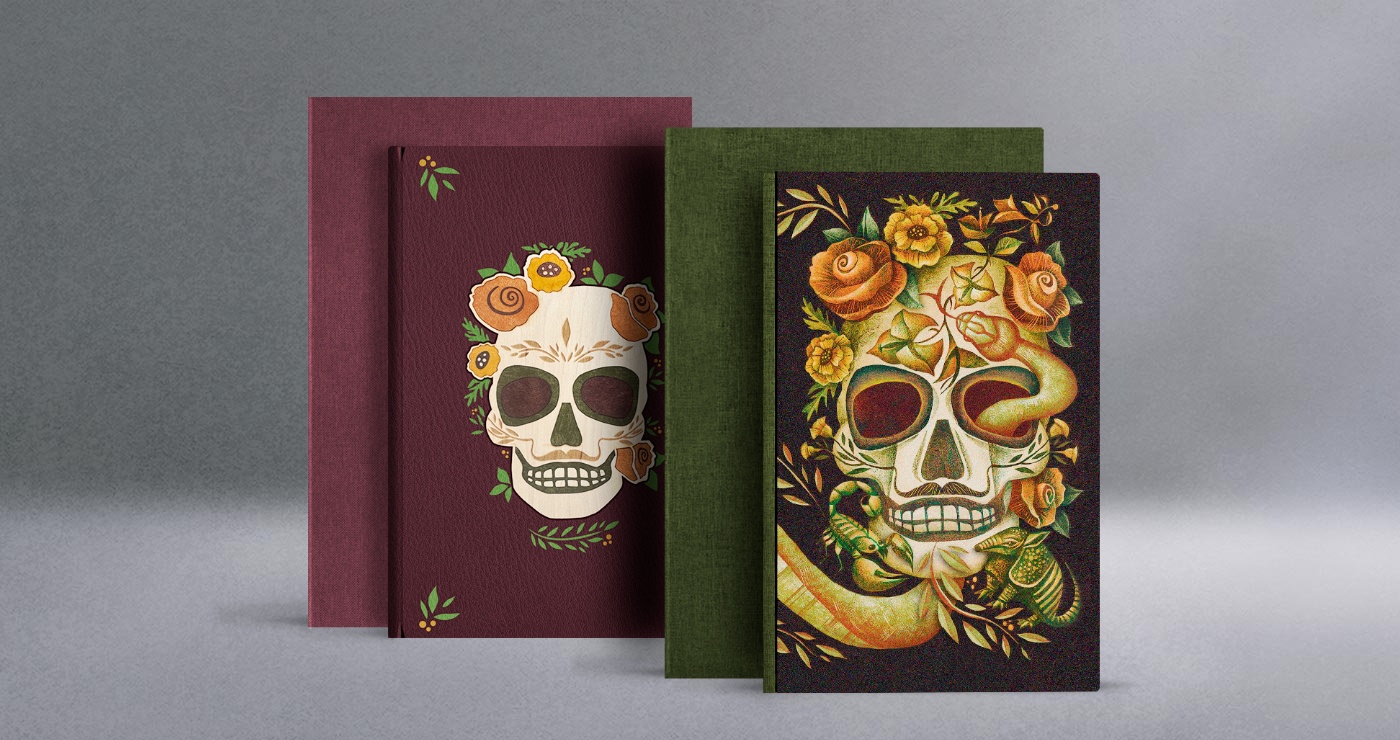
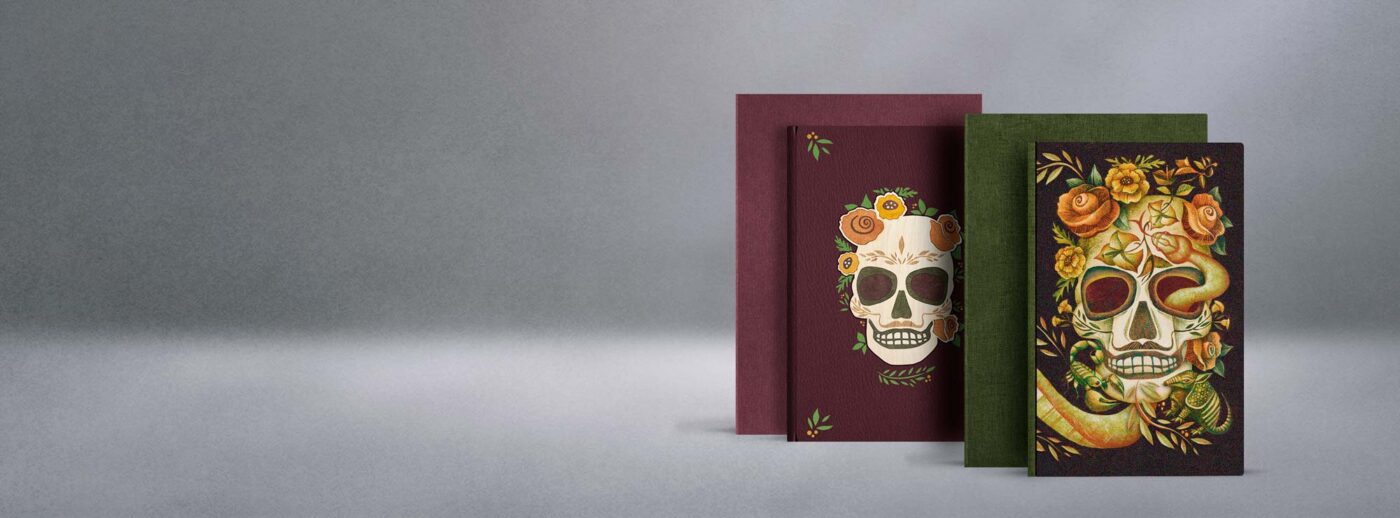
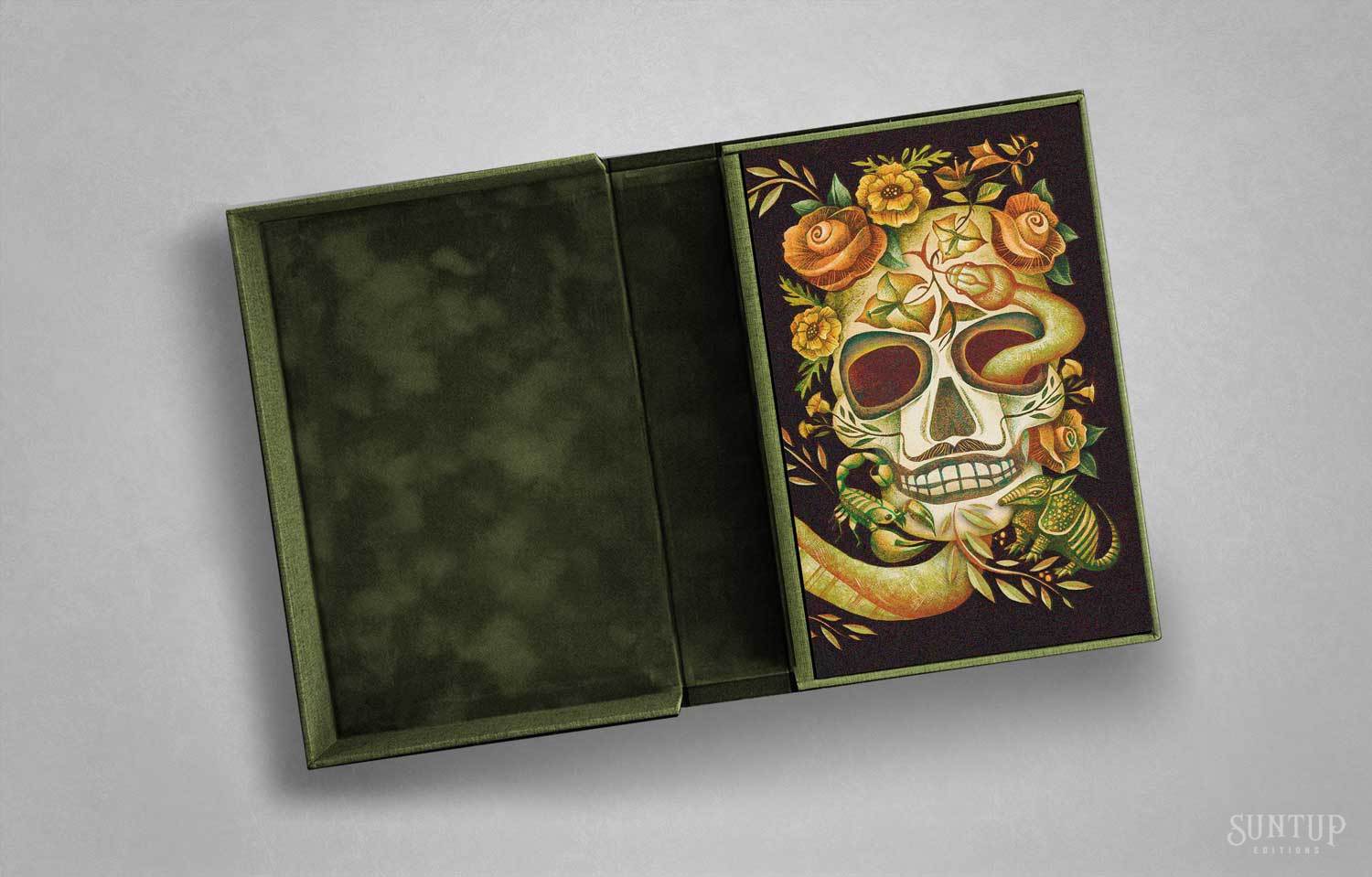
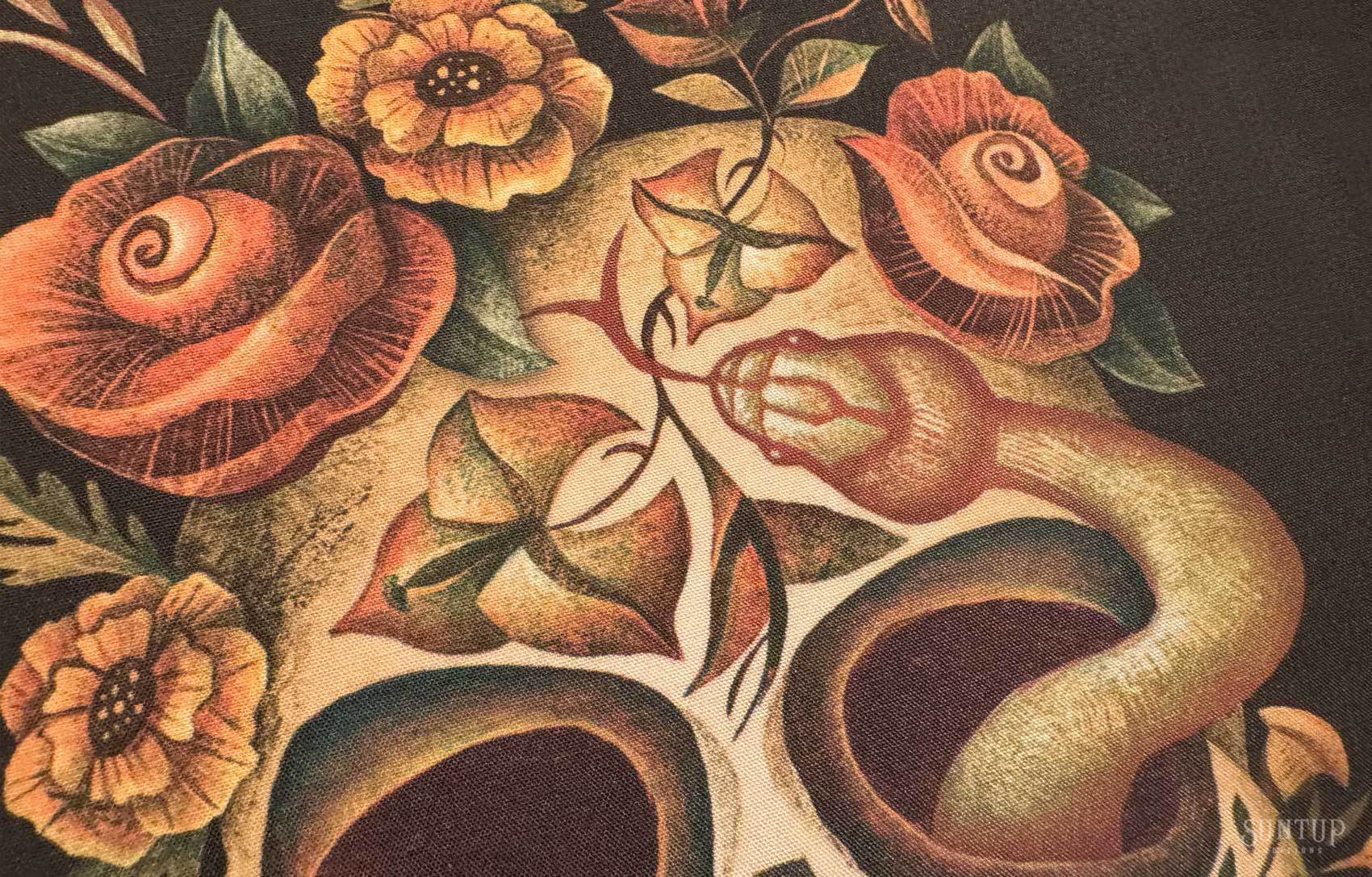
The Numbered edition is limited to two hundred fifty copies, and is handbound in a Bradel structure with a cloth spine and printed cloth boards featuring an illustration by Sara Tyson spanning both covers. Handmade head and tail bands, Hahnemühle Bugra endsheets, and a foil-blocked Hahnemühle Bugra spine label complete the binding. Each volume is housed in a clamshell enclosure with cloth-covered boards and velour-lined trays. The text is printed by offset lithography on Mohawk Via Laid paper and is signed by Michael Schmidt, Chris Ackerley, and Sara Tyson.
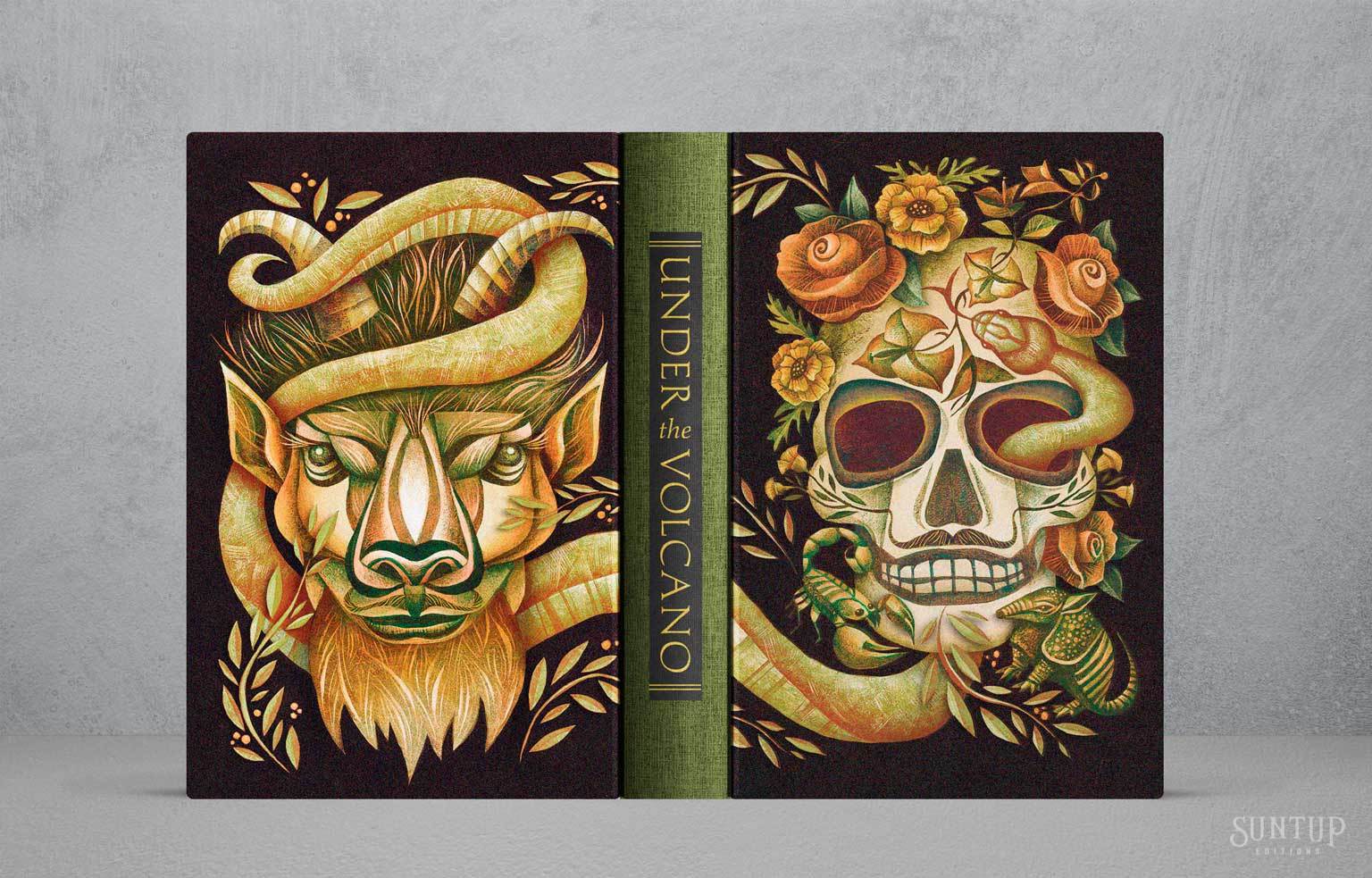
Lettered Edition
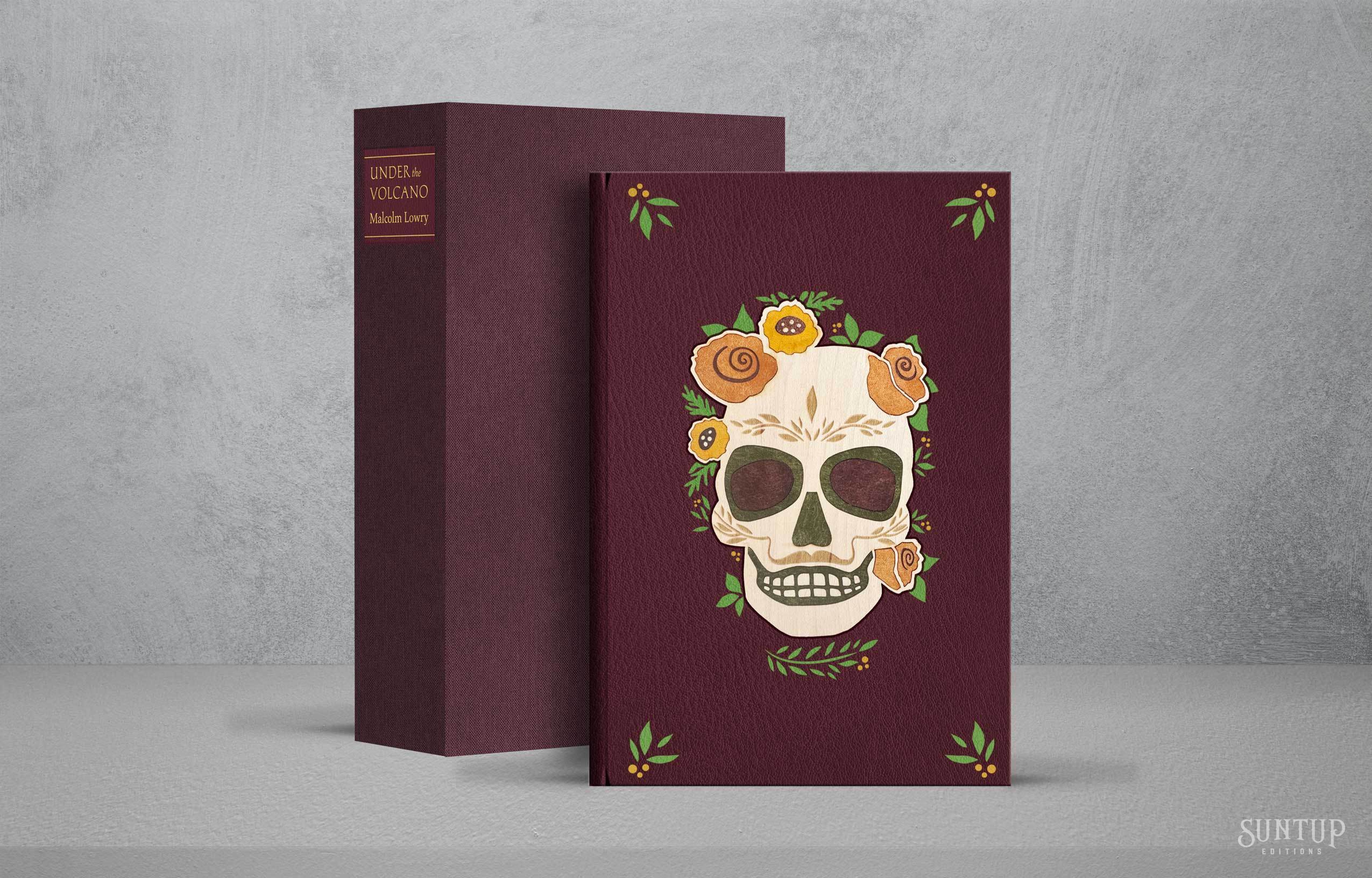
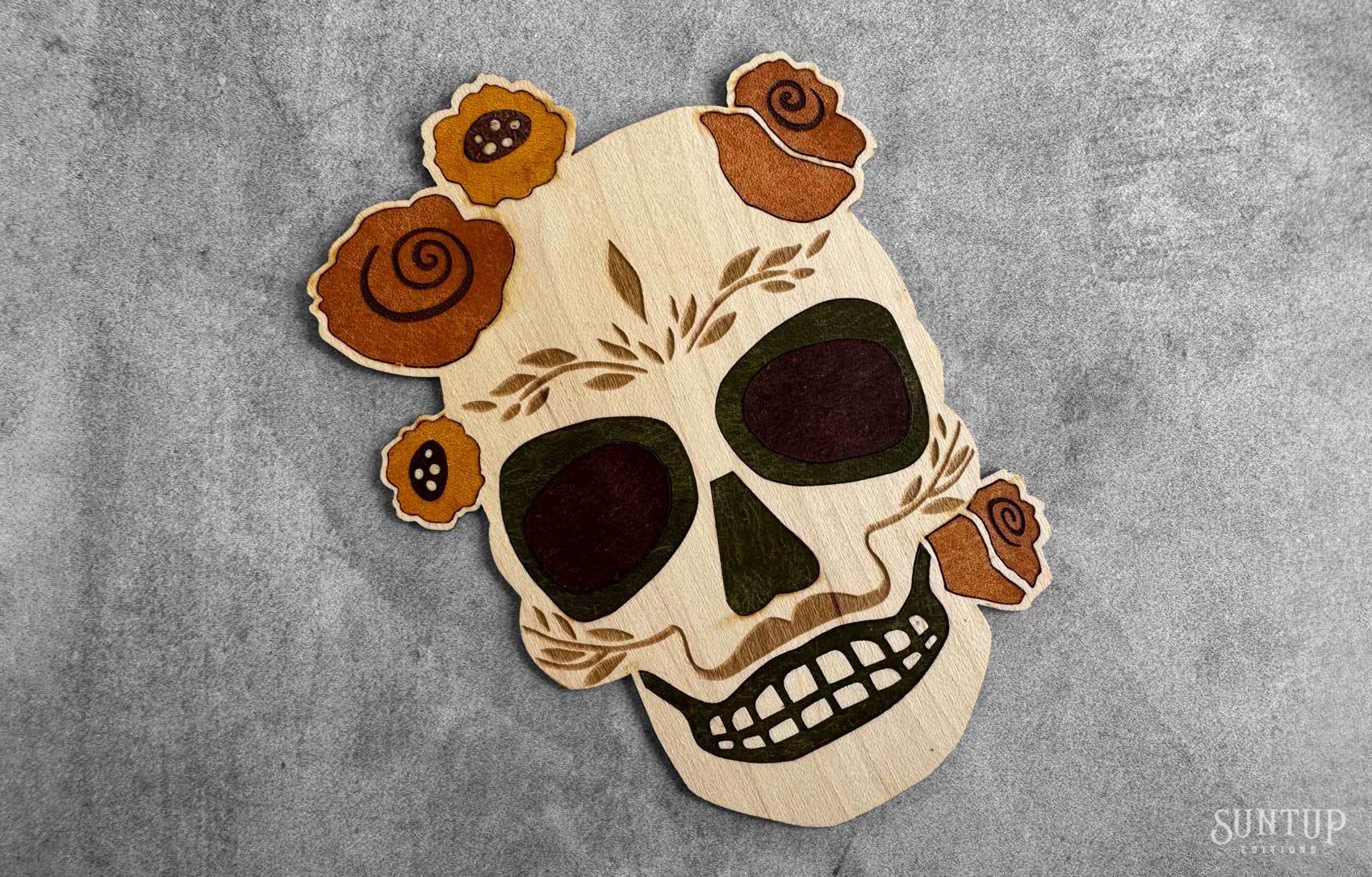
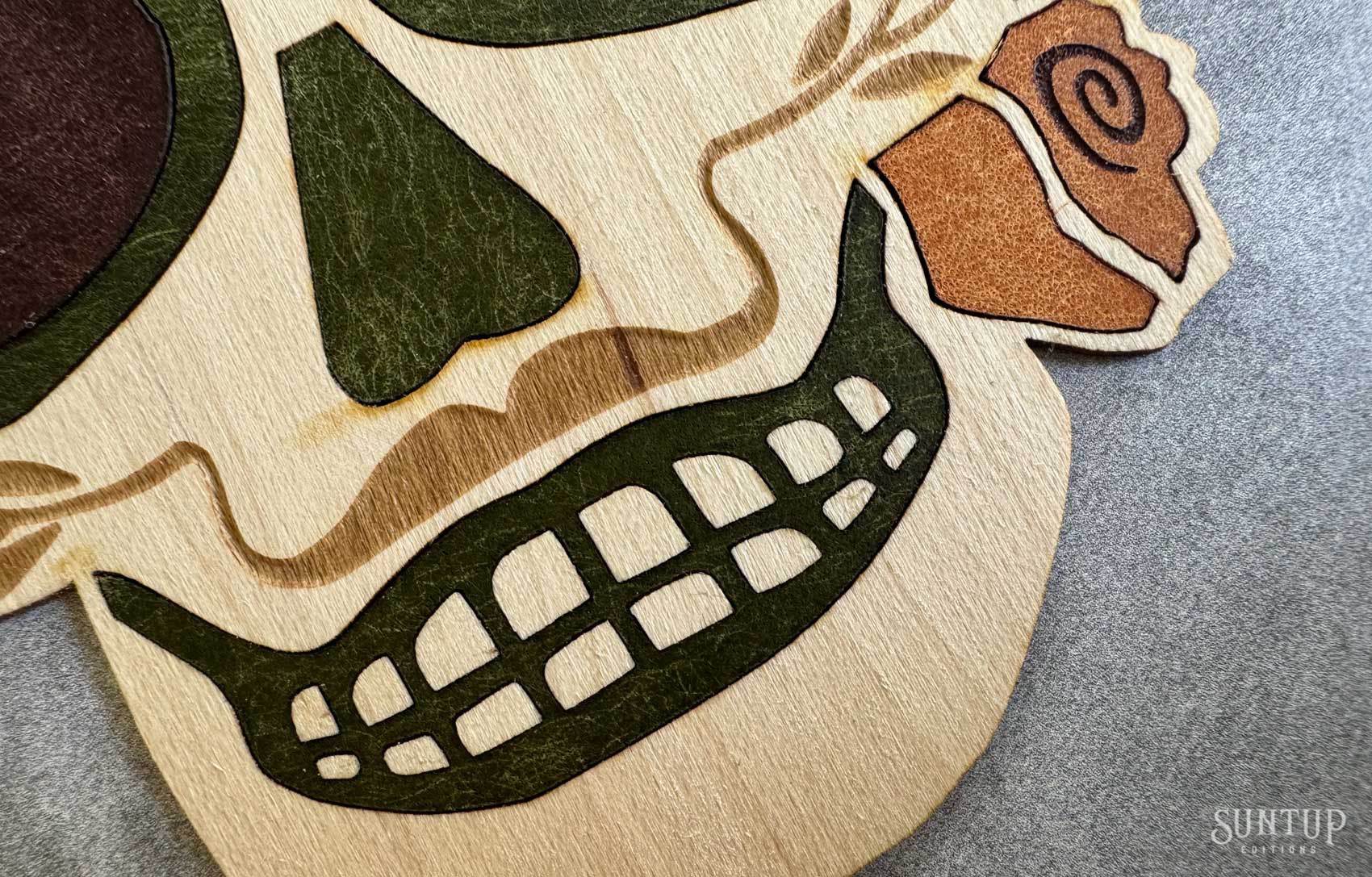
The Lettered edition, limited to twenty-six copies, is bound in full goatskin and features a striking central inlay inspired by the Día de los Muertos imagery that permeates the novel. The inlay, composed of wood and leather, takes the form of a skull—an homage to the Mexican Day of the Dead—its surface intricately laser-engraved with leather inlays. Surrounding the skull, the cover is further enriched with foil blocking, creating a subtle interplay between material depth and reflective detail.
The endsheets are Hahnemühle Bugra, and the head and tail bands are handmade with leather. Each volume is housed in a cloth-covered clamshell enclosure. The text is printed by offset lithography on Mohawk Via Laid paper and is signed by Michael Schmidt, Chris Ackerley, and Sara Tyson.
About the Author
About the Collaborators

Michael Schmidt
Michael Schmidt is a Mexican-born British writer and literary historian, author of Lives of the Poets (Knopf, 1998), The Novel: a Biography (Harvard University Press, 2014) and most recently of Gilgamesh: The Life of a Poem (Princeton University Press, 2019). He is Honorary Professor of Poetry at the University of Manchester, after many years as a teacher and critic. He is a poet and has published fiction. A longtime admirer of Malcolm Lowry, Schmidt also shares a personal connection to Under the Volcano, having grown up among the same Mexican streets that shape the novel’s setting.

Chris Ackerley
Emeritus Professor Chris Ackerley was previously Chair of the Department of English and Linguistics at the University of Otago, Dunedin, New Zealand. His area of research is literary Modernism, with a specialist interest in the art and science of annotation. He has published annotative studies of James Joyce and T.S. Eliot, but his major recent work has been on Samuel Beckett. A first love, however, was Malcolm Lowry, many of whose works he has documented, and to whose masterpiece, Under the Volcano, he has dedicated a website.

Sara Tyson
Sara Tyson is an award-winning Canadian illustrator, educated at OCAD University in Toronto. She has been recognized by Communication Arts, Society of Illustrators – New York and The Society of Illustrators of Los Angeles. Her work has appeared in publications throughout North America, including Harvard Business Review, National Endowment for the Humanities and Smithsonian Magazine. The abundance of symbolism and rich, layered imagery in Under the Volcano lends itself perfectly to Sara‘s style of storytelling. She is inspired by Early Christian and Byzantine art, historical relief sculpture, Cubism, Fauvism, Art Deco and other modern art movements. Away from her studio, Sara enjoys canoeing, swimming, cooking, film and big cities.
Matching Numbers & Letters
A Matching Pre-Order email is sent to owners of our previous publication, The Dragon Masters & The Last Castle at 9:00 A.M. PT on the day of announcement. If you did not receive the email, contact us here. If your order is not received before the deadline, your designated number or letter will be assigned to the new owner.
Illustrations by Sara Tyson
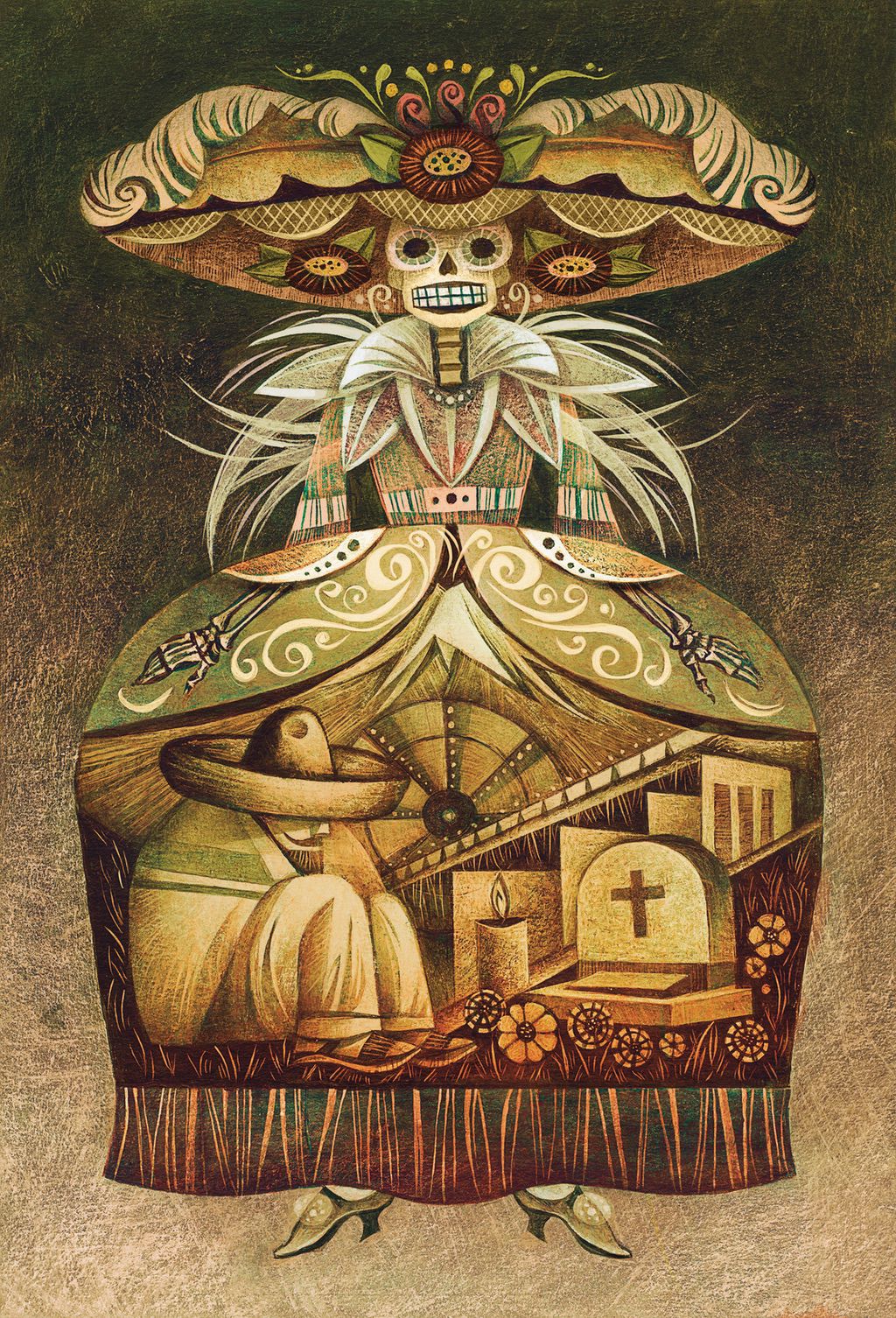
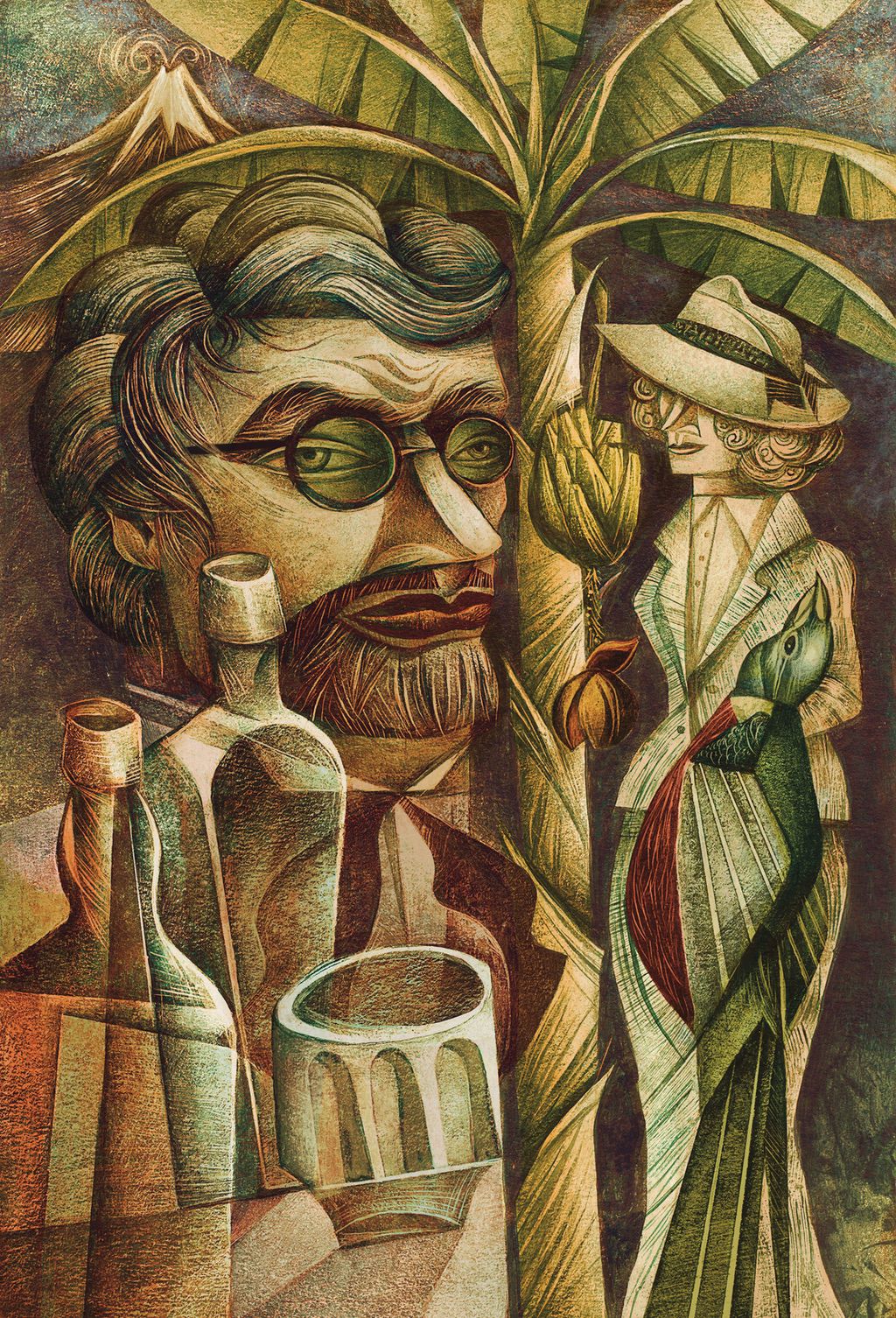
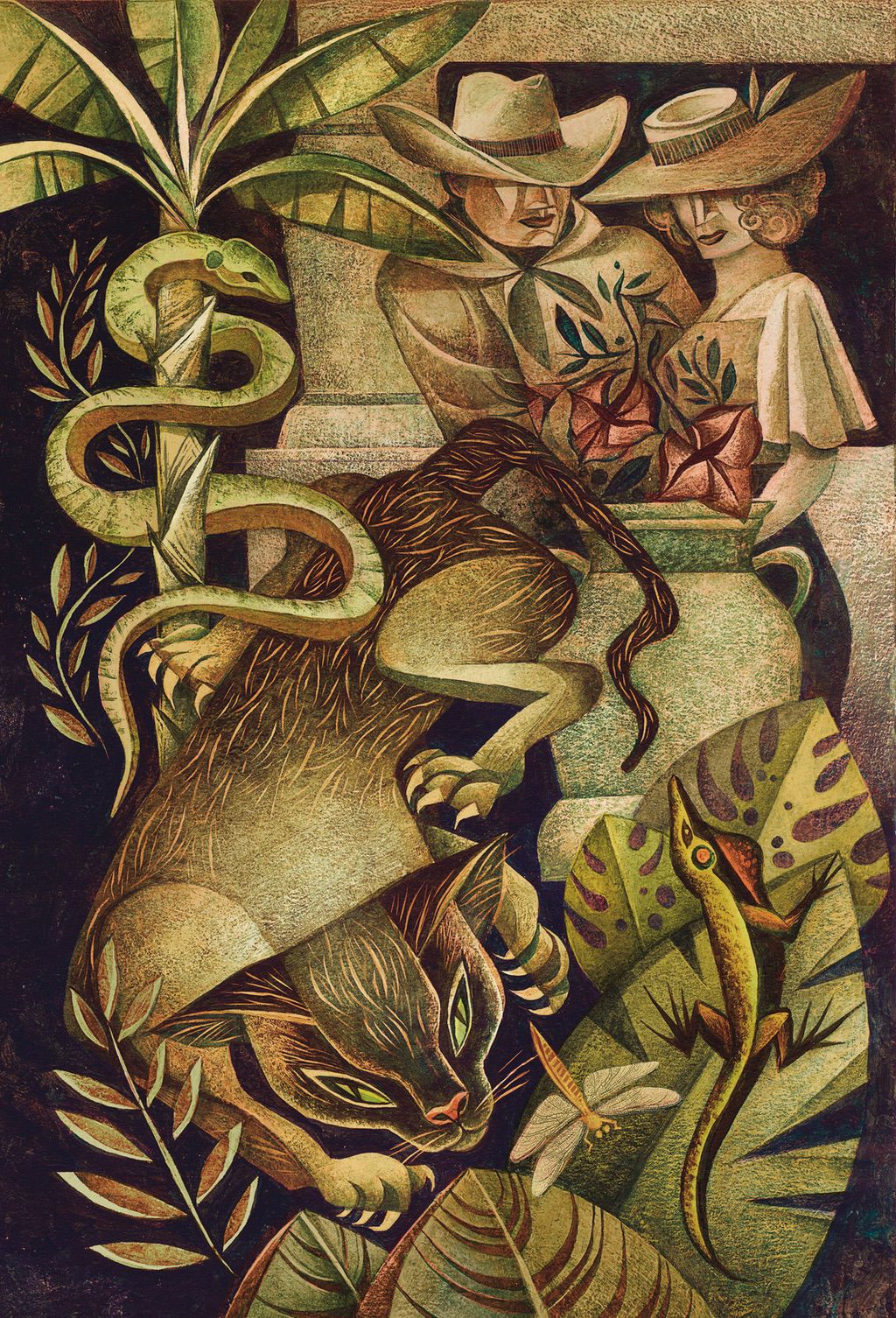
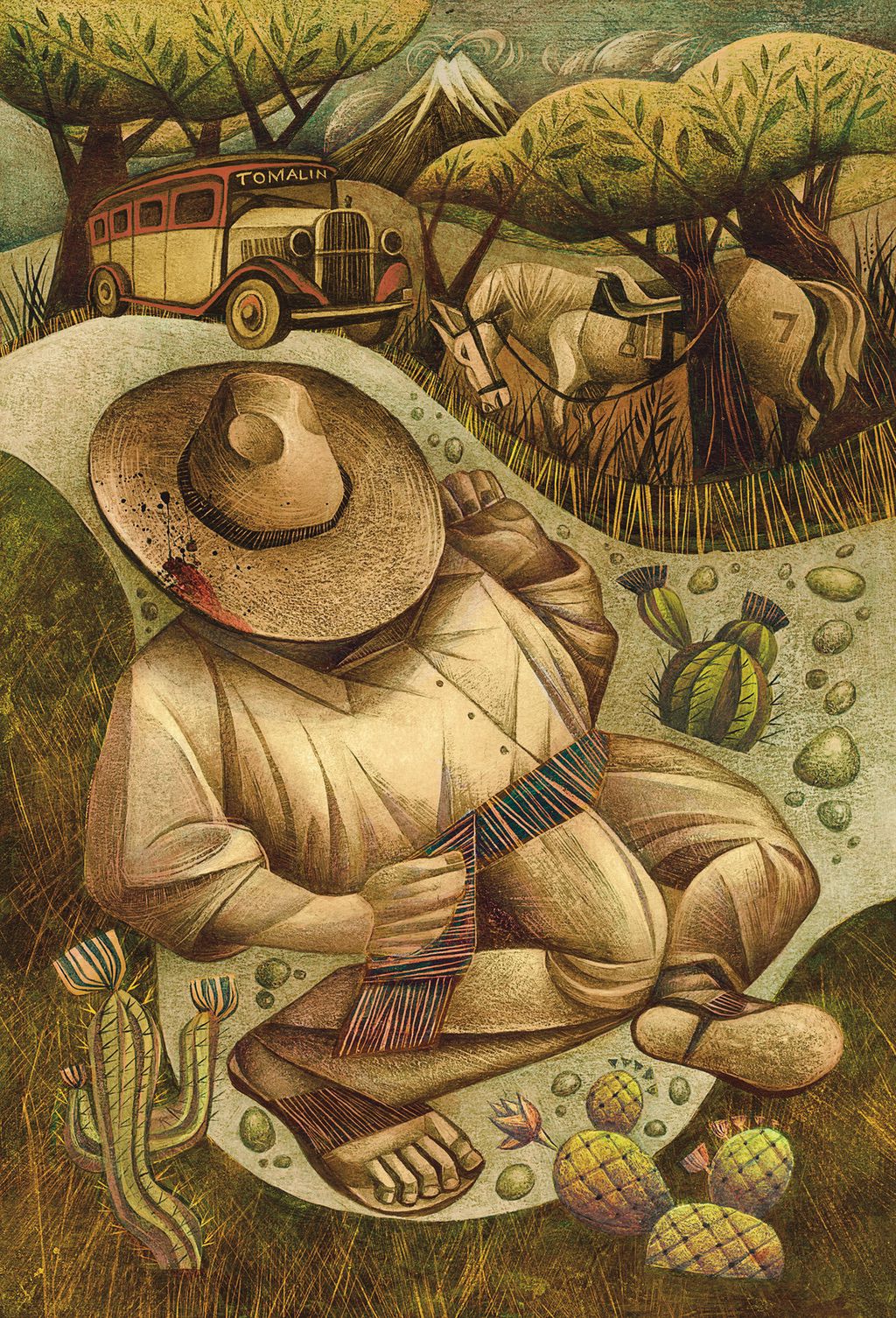
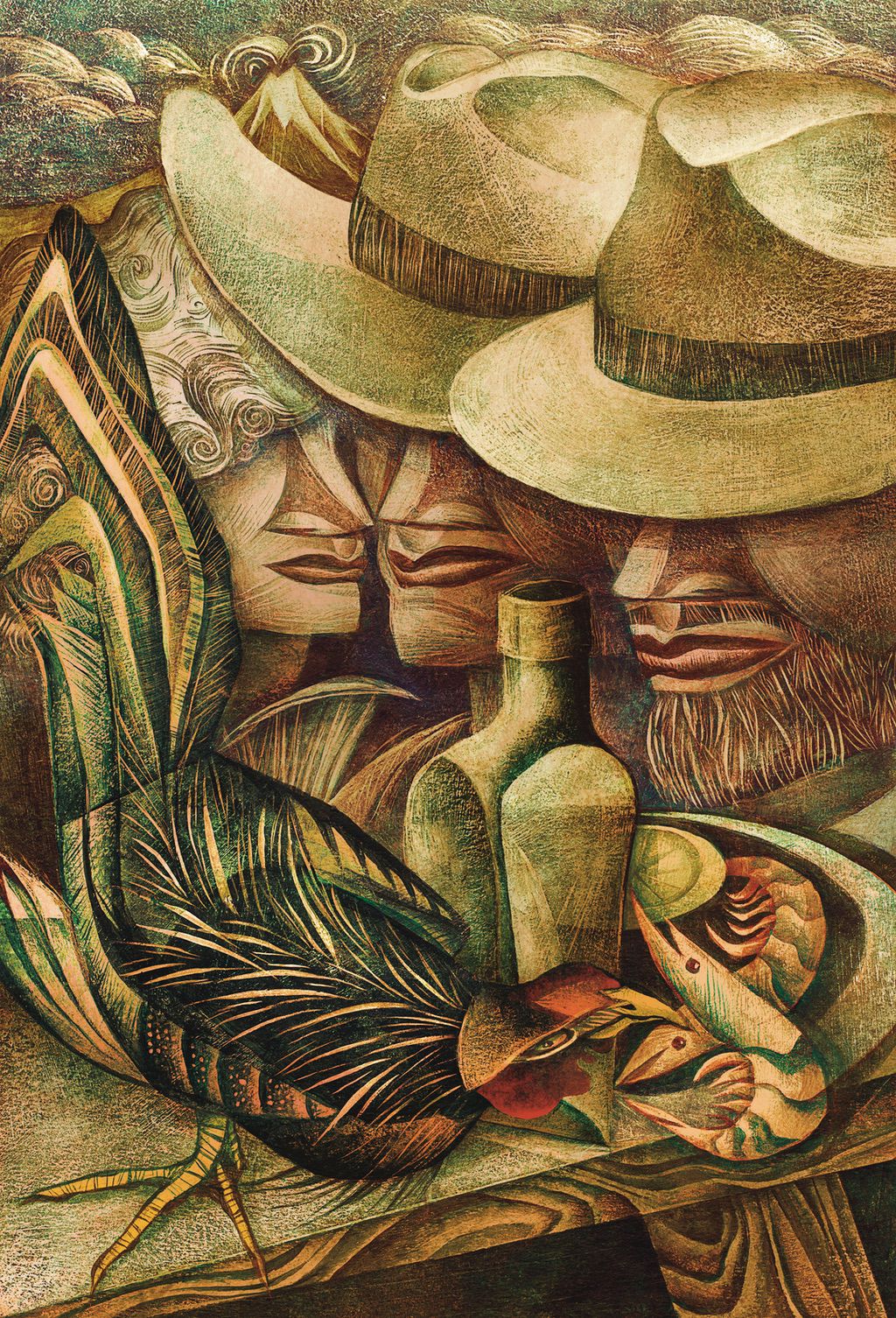
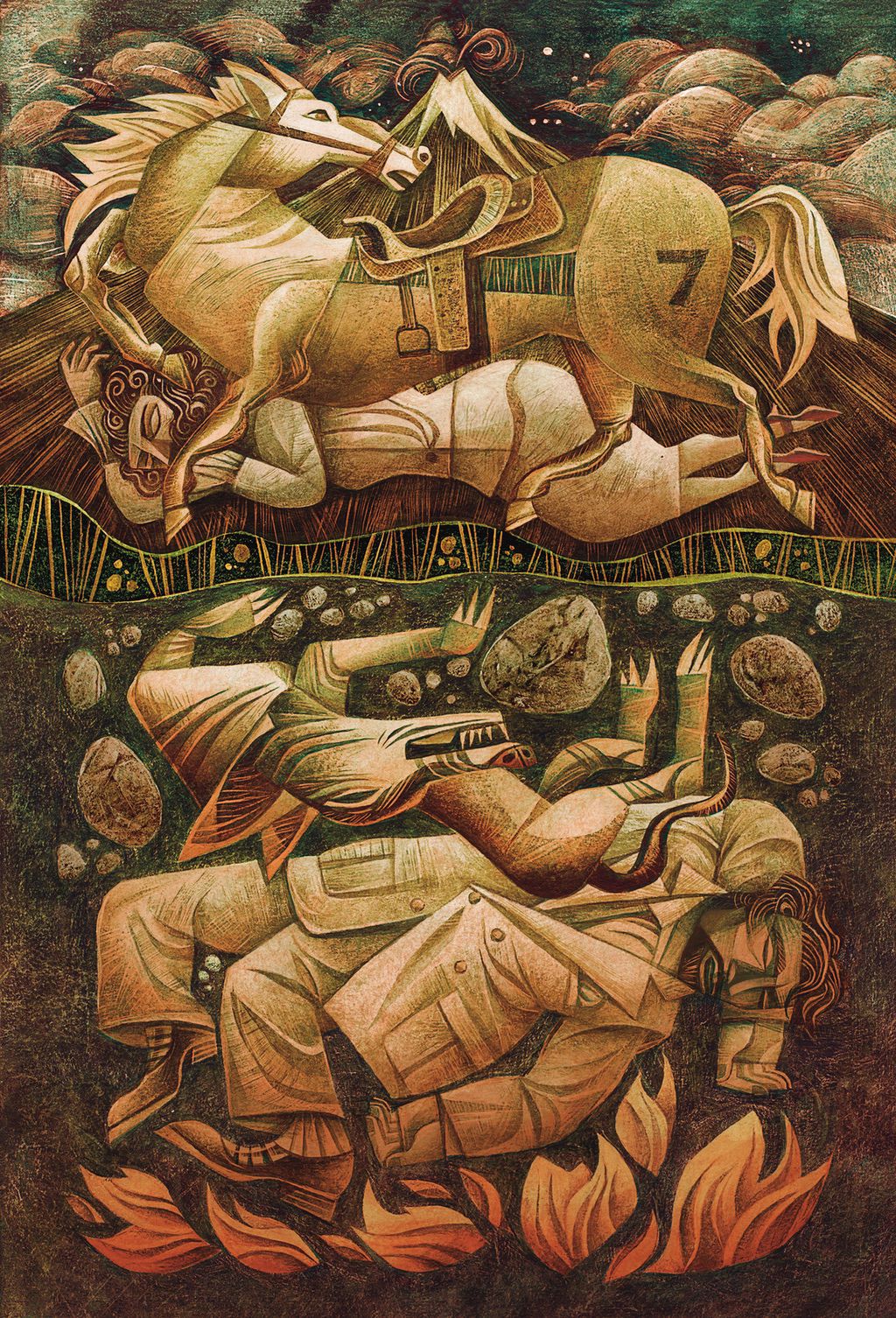
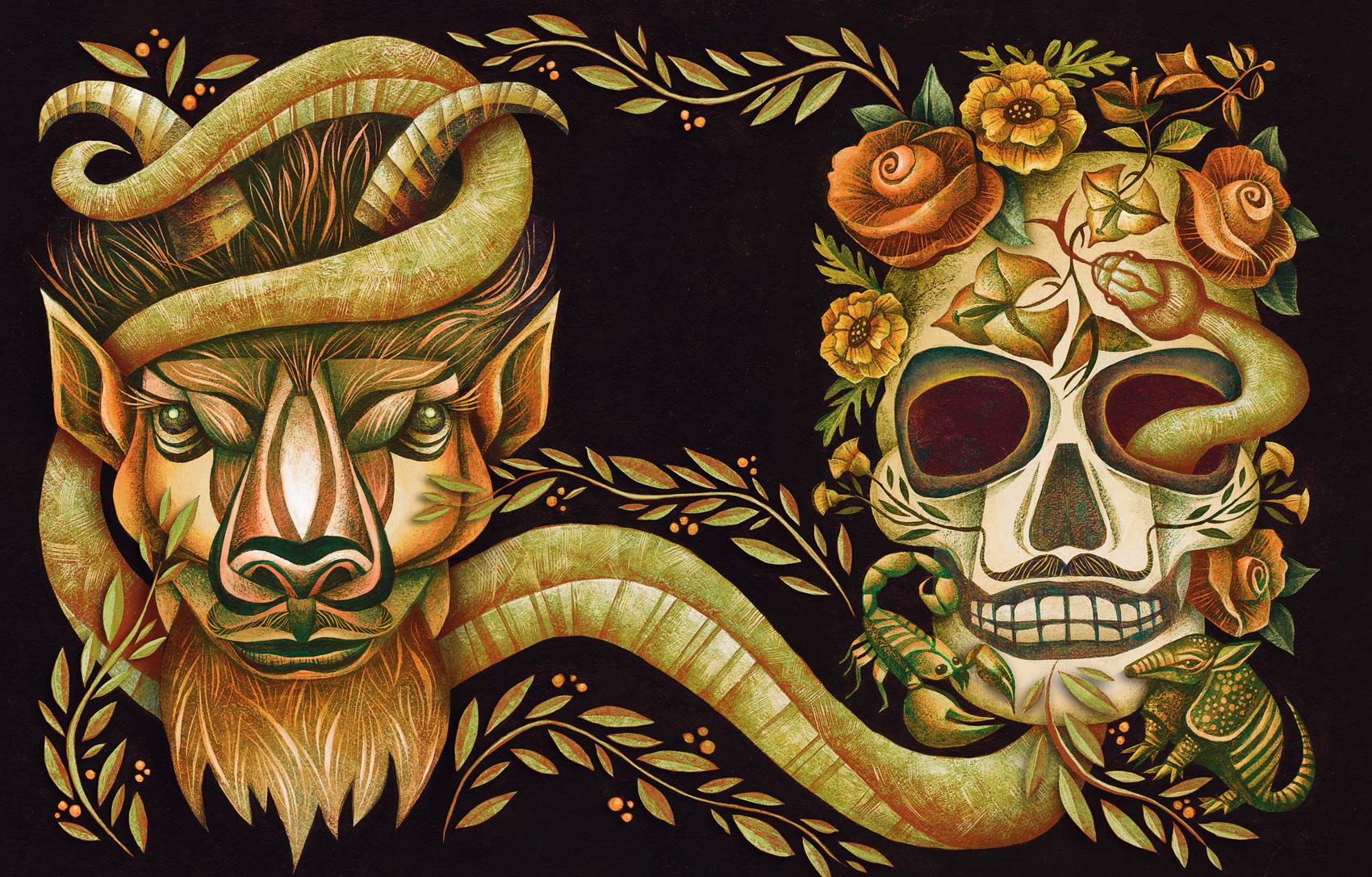
Published editions may differ slightly from mockups and prototype designs.
Illustrations © 2024 by Sara Tyson