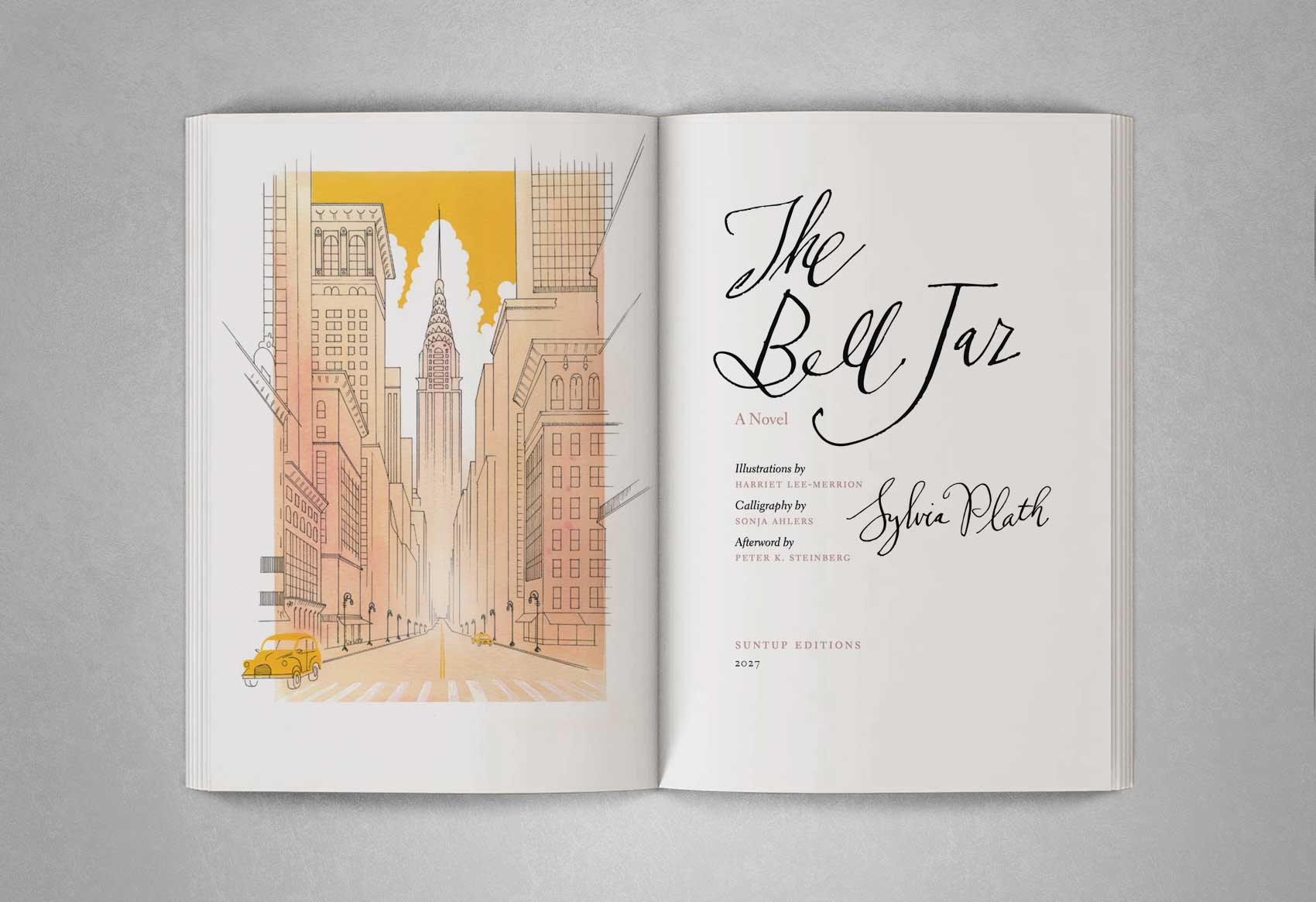
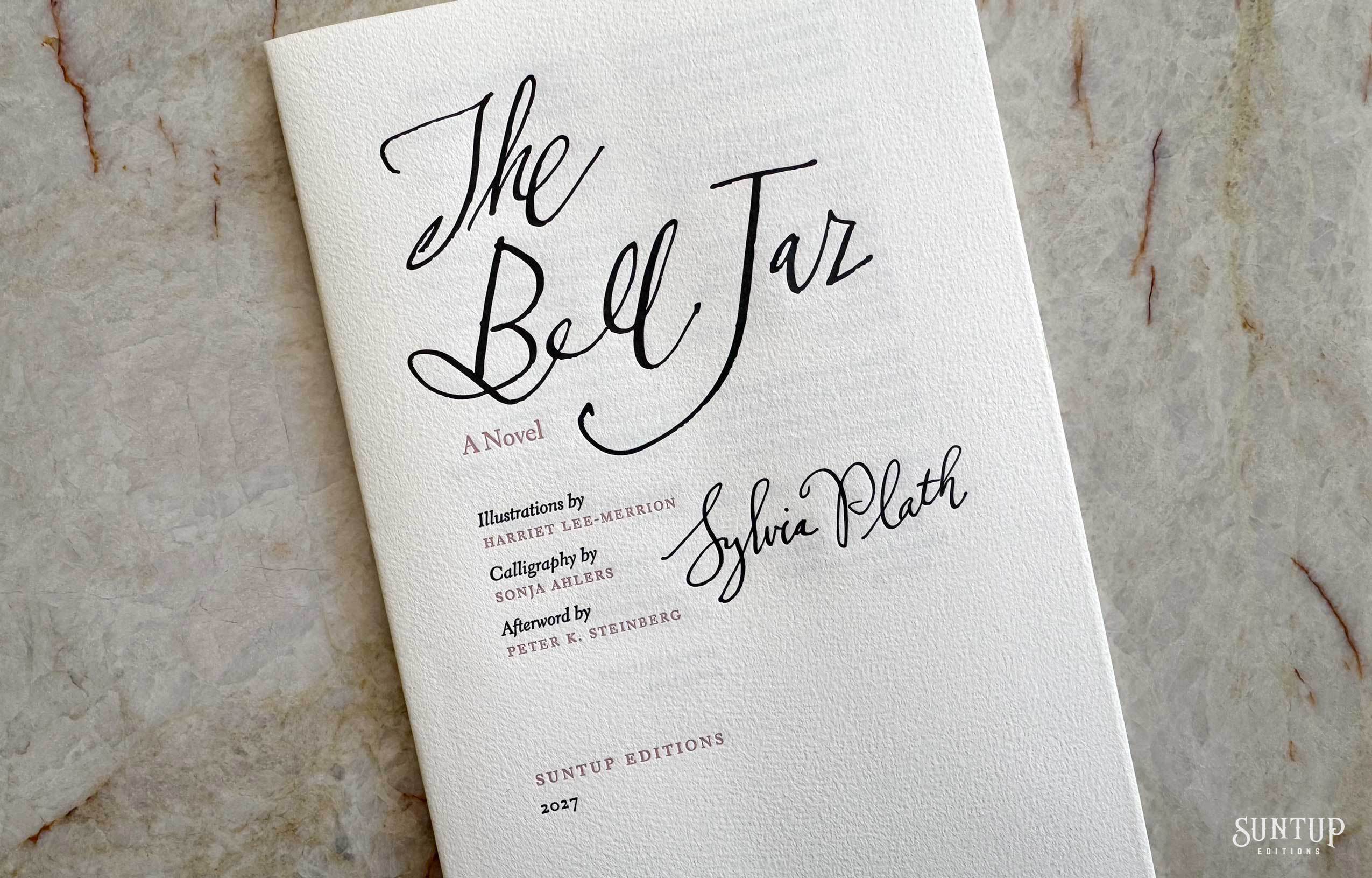
The Bell Jar Sylvia Plath
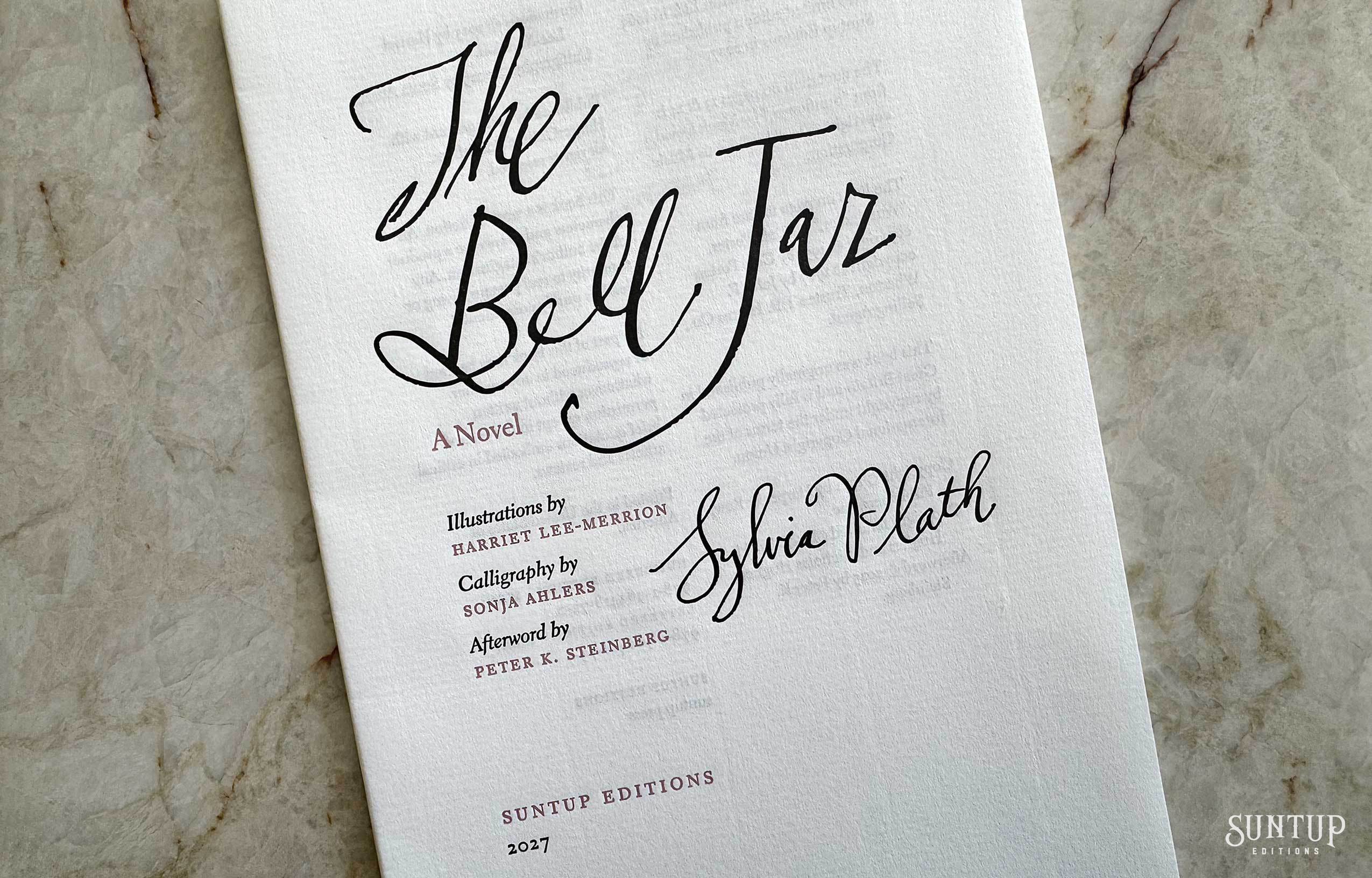
Illustrations by Harriet Lee-Merrion
Calligraphy by Sonja Ahlers
Afterword by Peter K. Steinberg
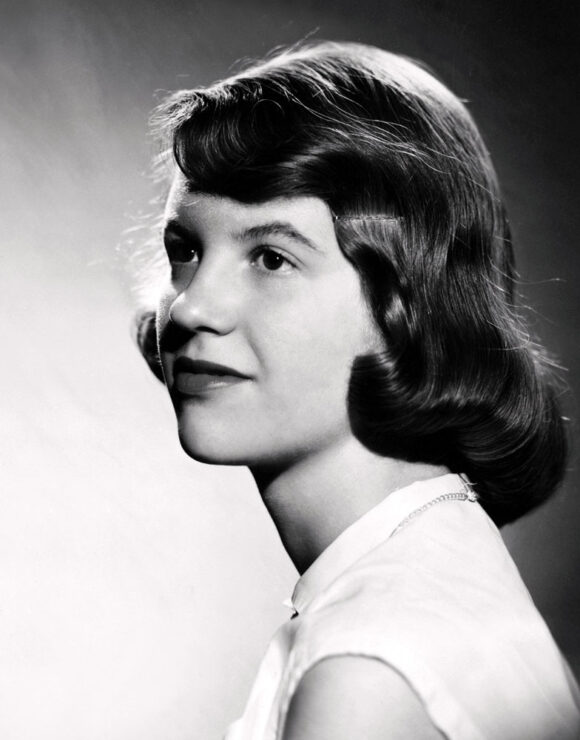
A searing portrait of a young woman’s struggle for identity and of the world that closes around her, The Bell Jar is Sylvia Plath’s only novel, and one of the most widely read books in American literature.
The story chronicles the slow unraveling of Esther Greenwood, a brilliant college student facing a profound identity crisis while coming of age in 1950s America, as she navigates the pressures of society along with her own ambitions. After earning a coveted summer position at a prestigious New York City magazine, Esther finds herself struggling with the looming expectations of marriage, motherhood, and giving up on her dreams to achieve them. As she grows increasingly disillusioned with the life laid out for her, her mental health deteriorates, ultimately leading to hospitalization and psychiatric treatment.
First published in the United Kingdom under the pseudonym Victoria Lucas in 1963, The Bell Jar is considered to be in part autobiographical, mirroring the author’s own descent into mental illness. Plath died by suicide a month after the novel’s UK publication. Scholars suggest the author began writing the novel in the spring of 1961 after publishing her first collection of poetry, and may have finished in August of the same year, though subsequent changes were made throughout the editing process.
Plath had applied for the Eugene F. Saxton Fellowship, affiliated with publisher Harper & Row, and was awarded the grant late in 1961. It required her to submit the finished manuscript to the Saxton committee; the editors who read it found the novel “disappointing, juvenile and overwrought,” and the book was turned down. Early working titles included Diary of a Suicide and The Girl in the Mirror. When it was published in the United States eight years later, The Bell Jar, as it had come to be known, became an instant success. While praised by critics and peers alike, The New York Times perhaps said it best in their review: “Esther Greenwood’s account of her year in the bell jar is as clear and readable as it is witty and disturbing… not a pot-boiler, nor a series of ungrateful caricatures; it is literature.”
Deeply intimate and universally resonant, The Bell Jar remains one of the twentieth century’s most powerful literary achievements—a novel whose honesty, beauty, and emotional force continue to captivate readers more than sixty years after its publication.
About the Editions
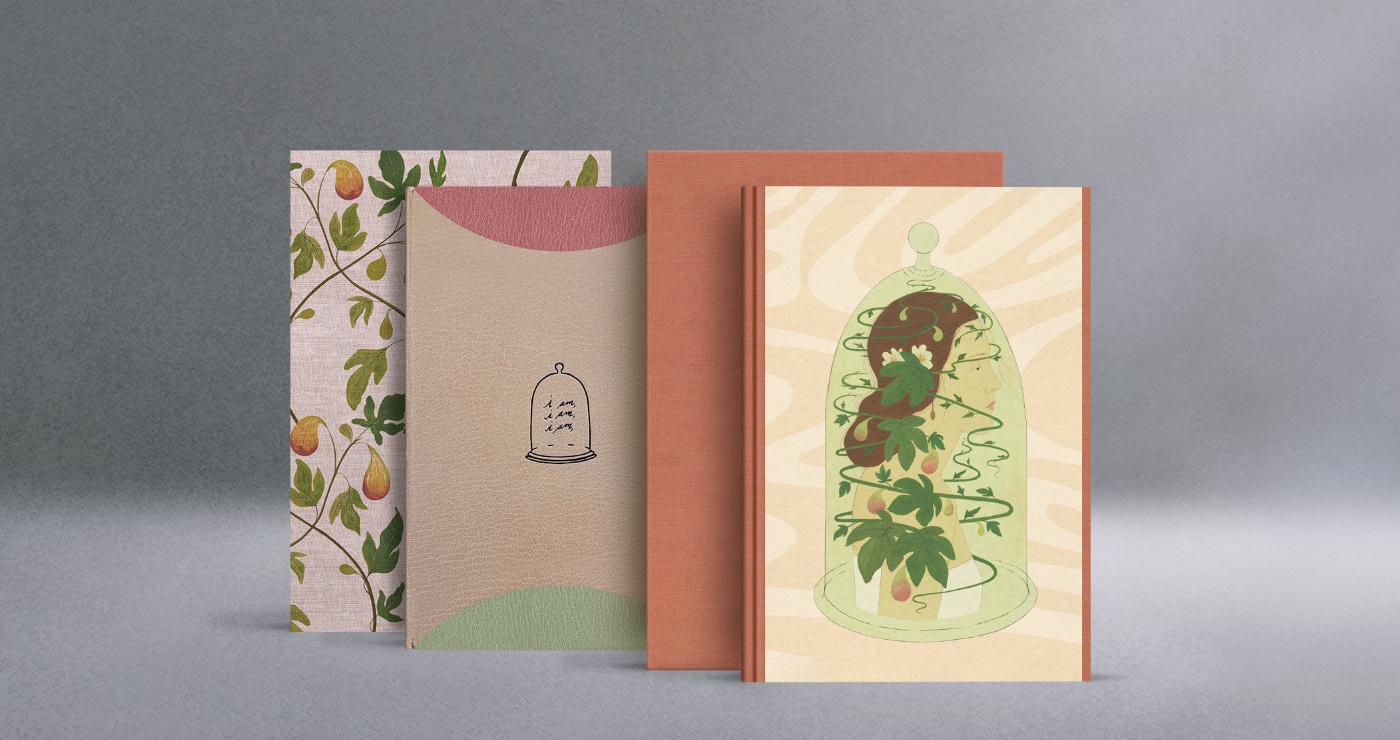
Our edition of The Bell Jar by Sylvia Plath is presented in three states (Numbered, Lettered and Designer’s), and includes a new afterword by Peter K. Steinberg. It is set in a reduced trim of 5½” x 8¼”, near the scale of the novel’s early printings. The smaller format follows the story, in which Esther’s world steadily closes in on her.
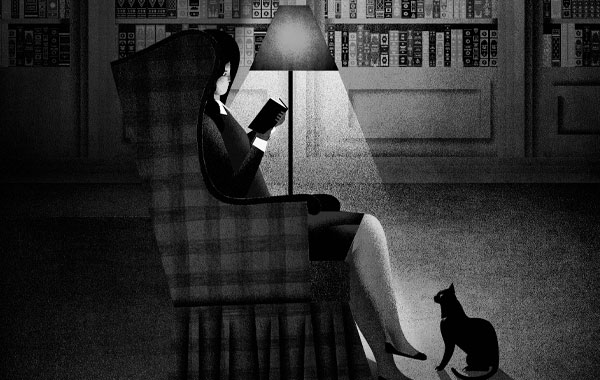
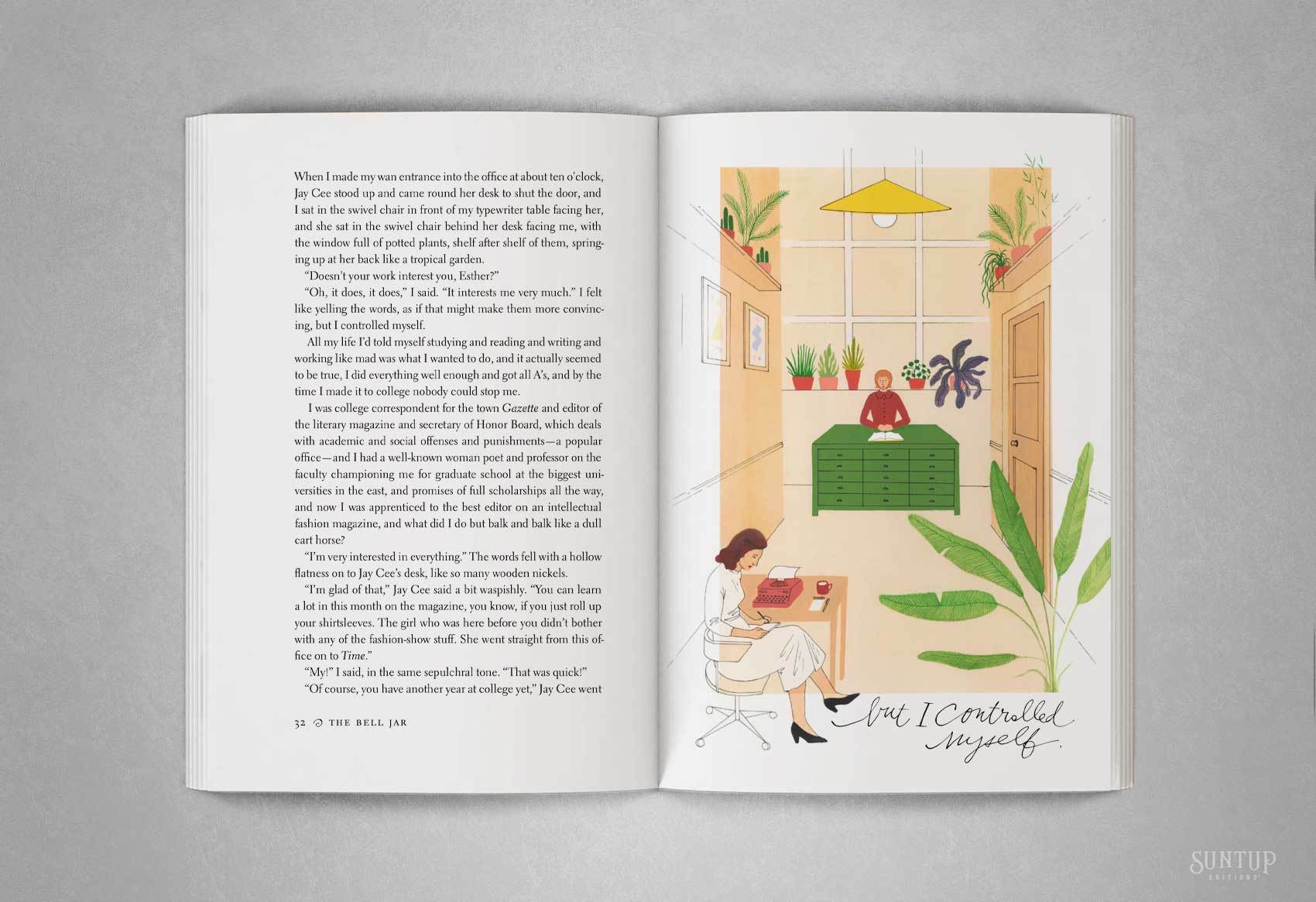
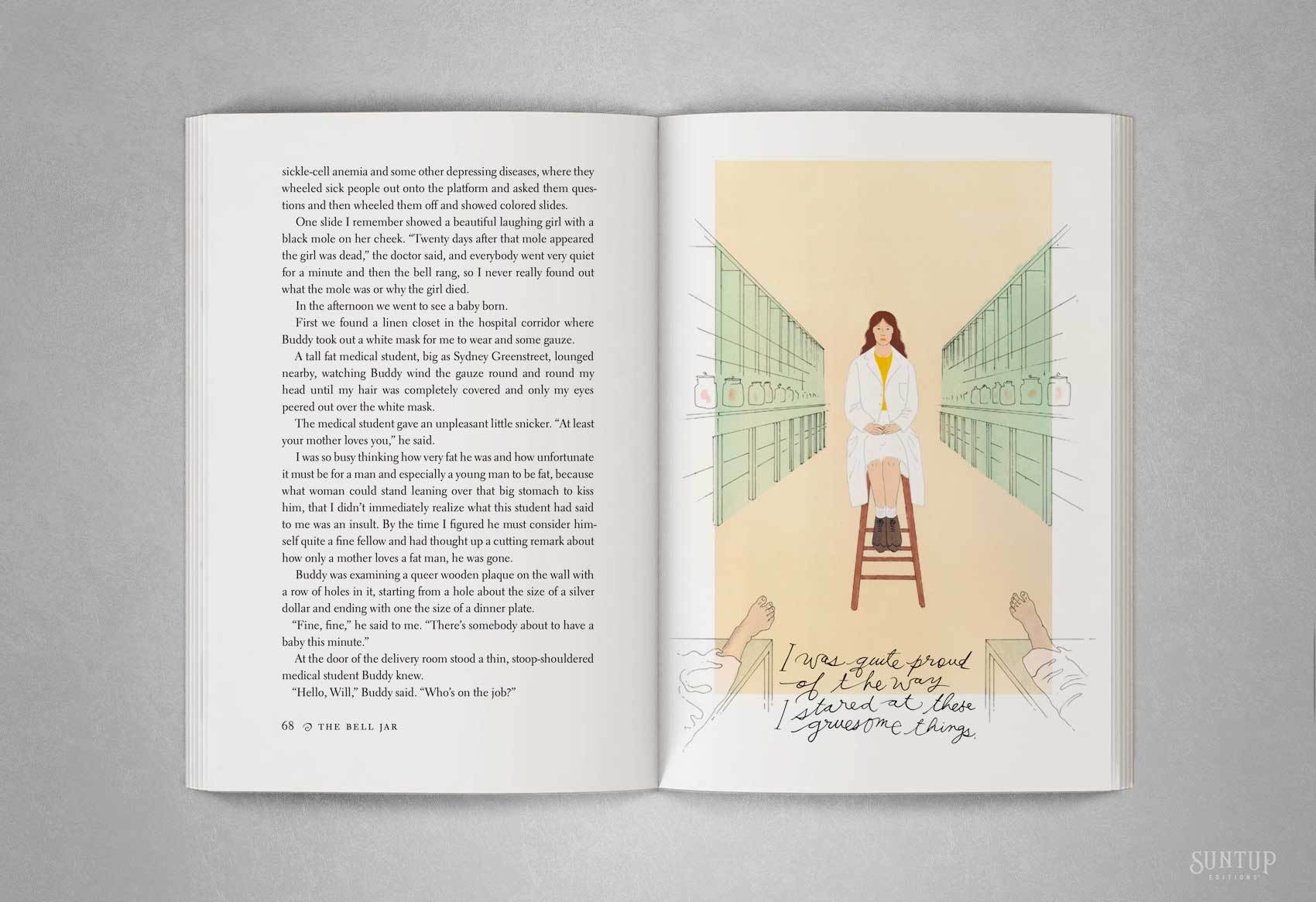
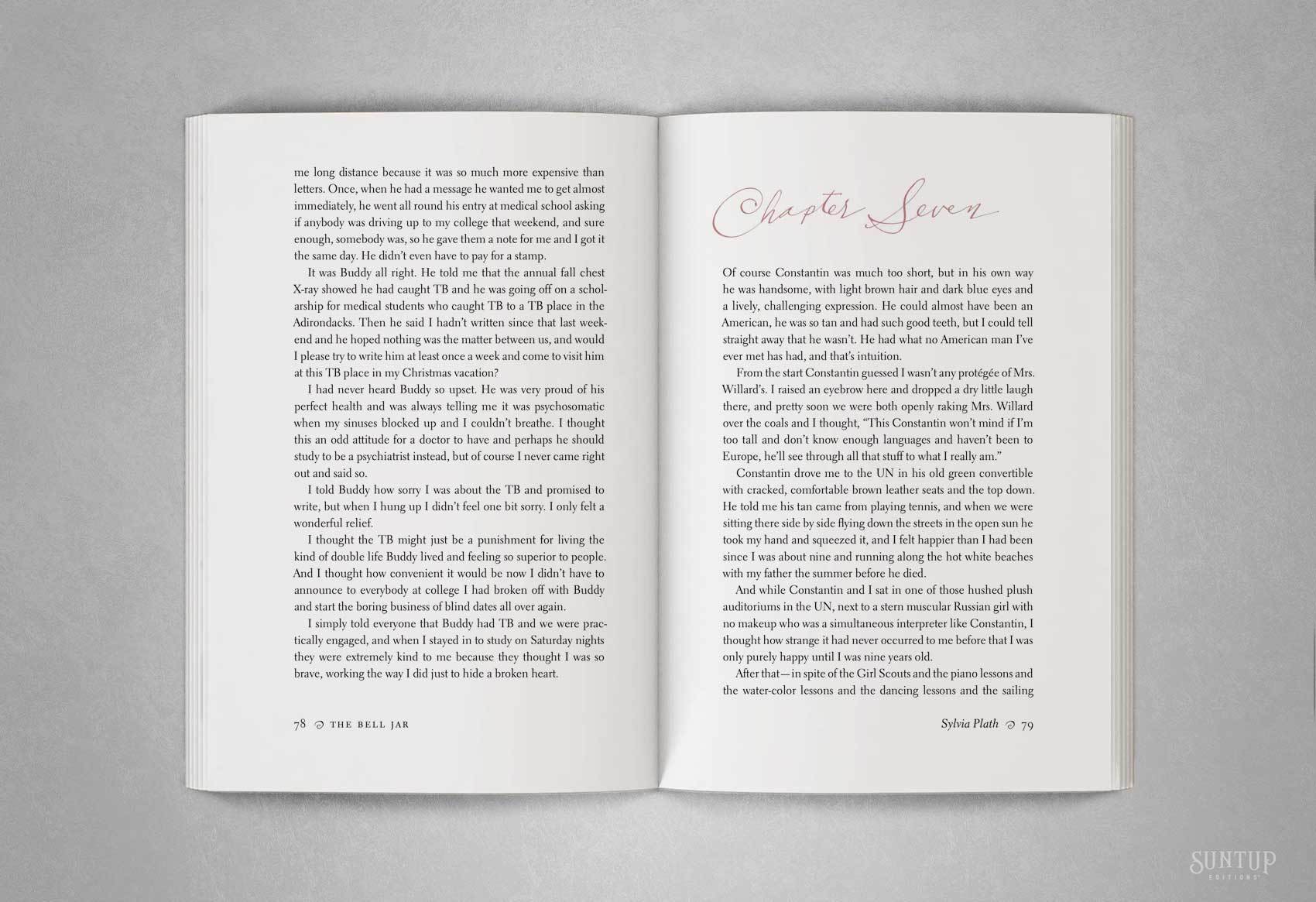
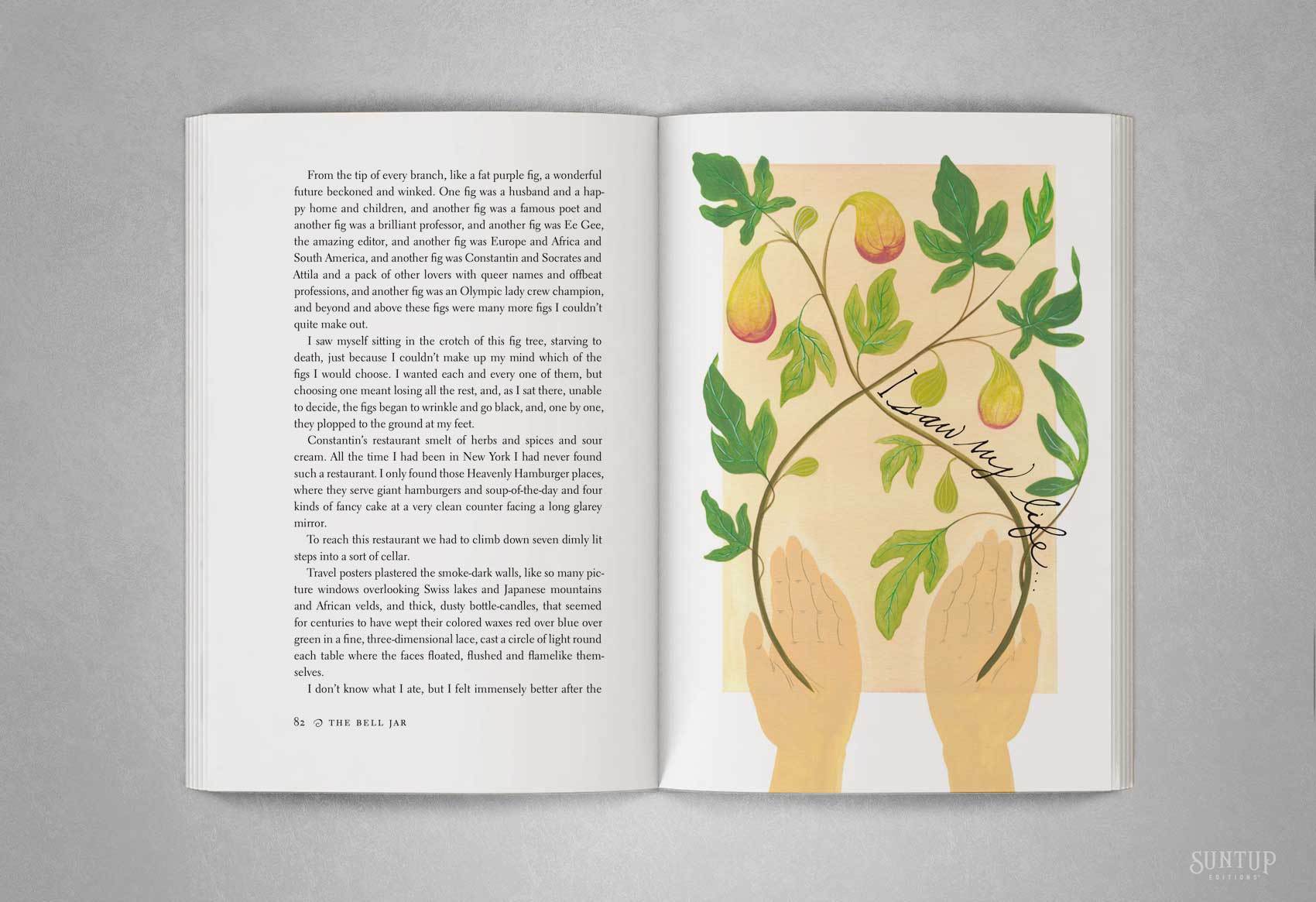
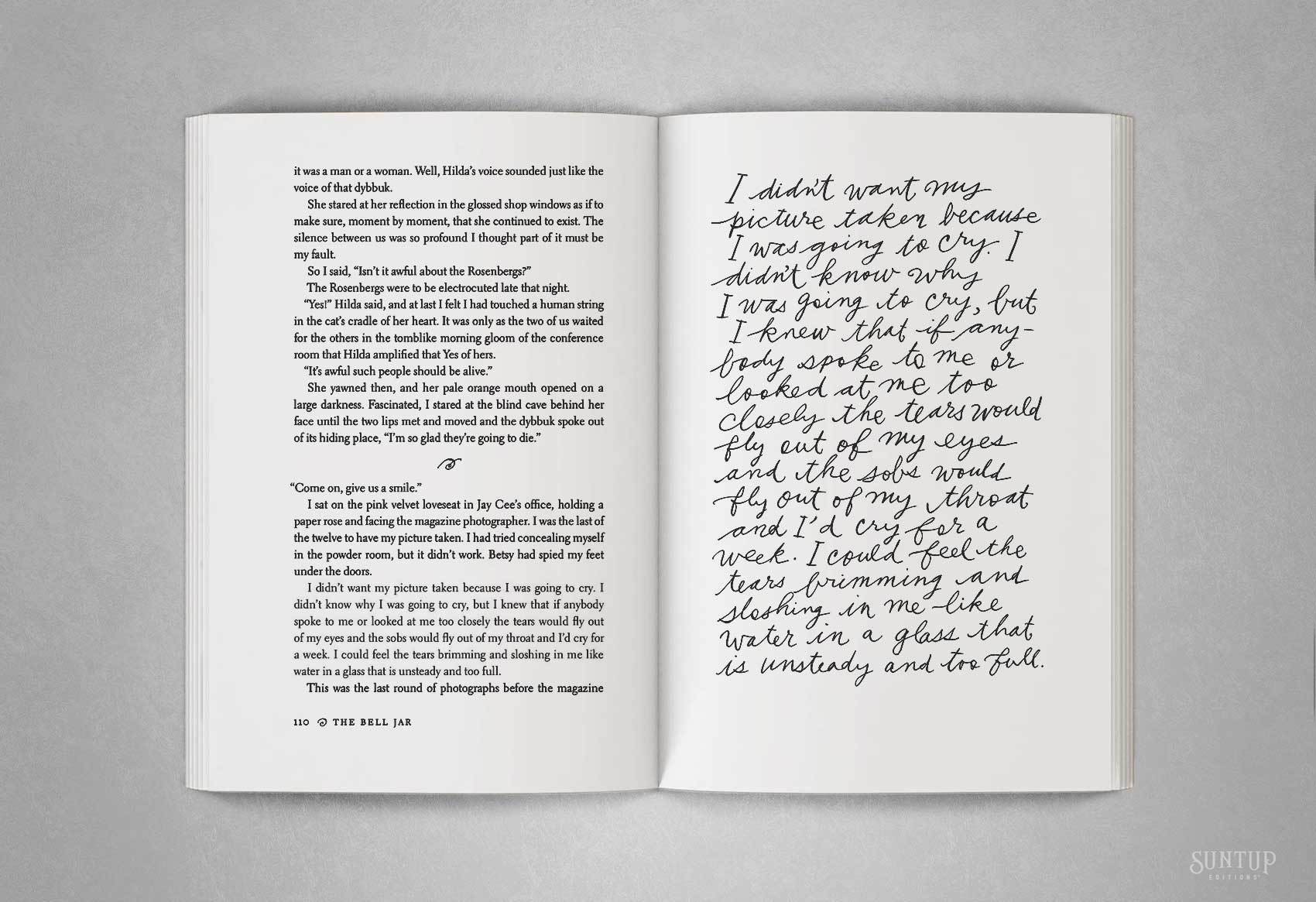
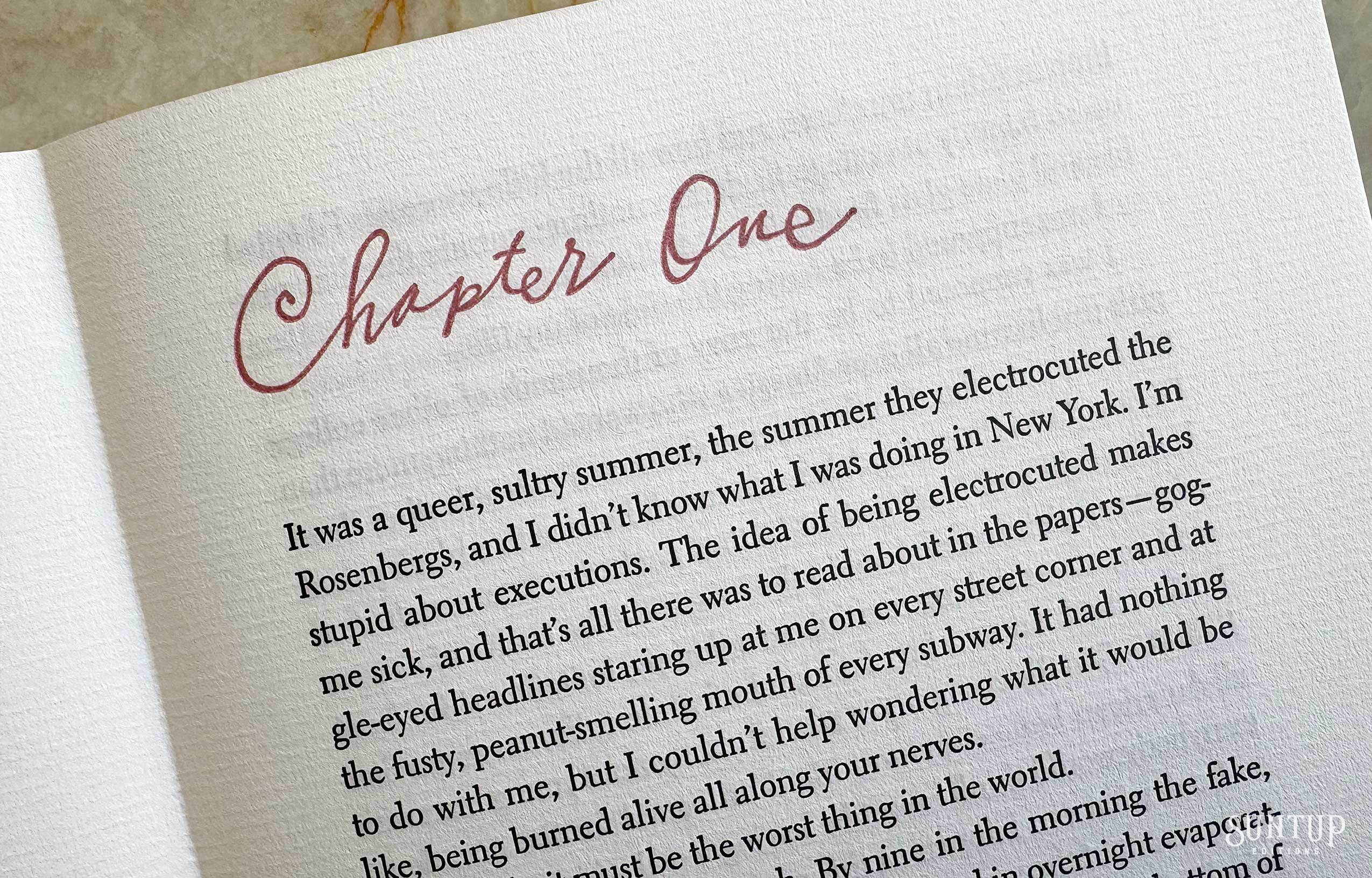
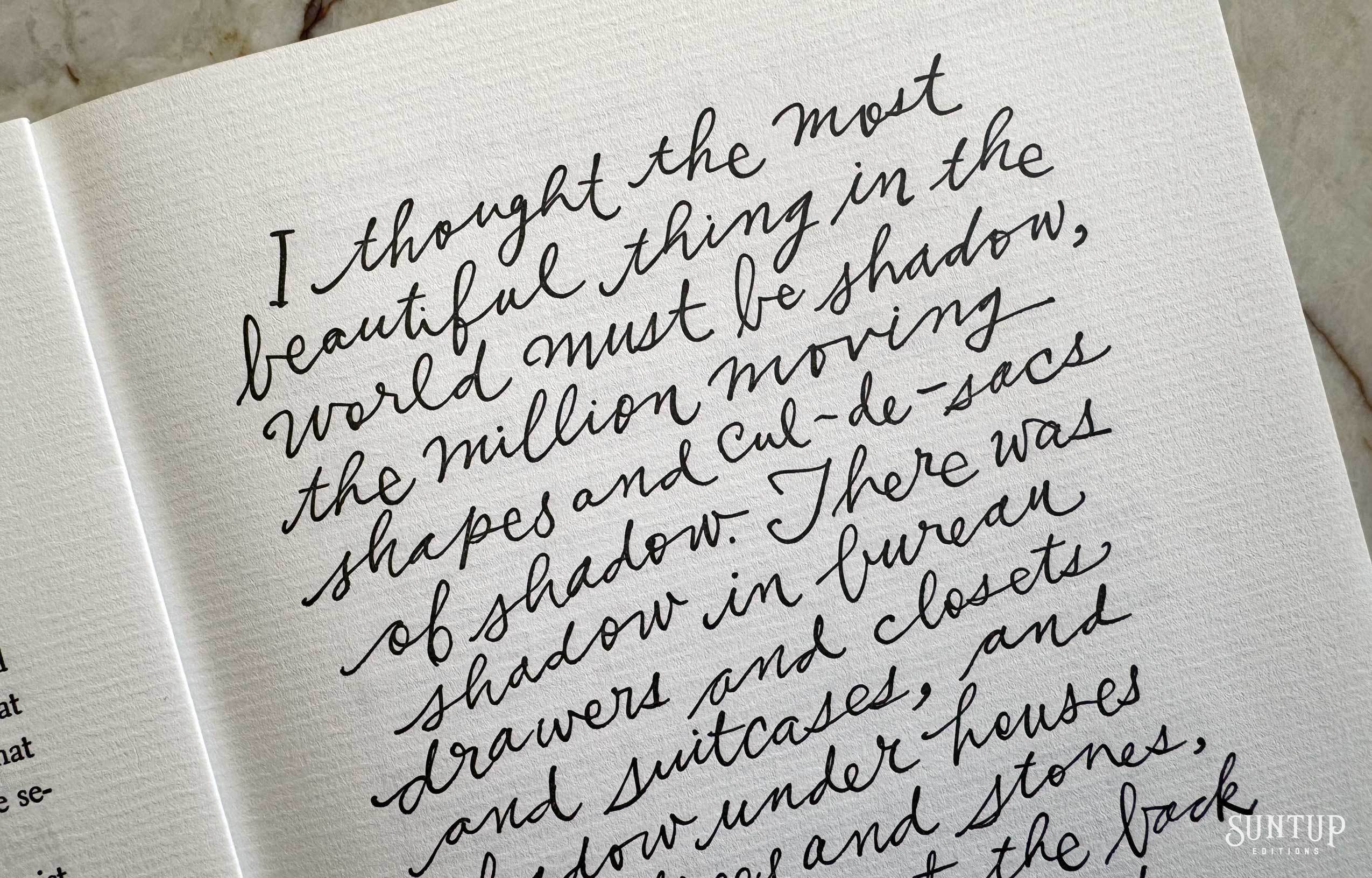
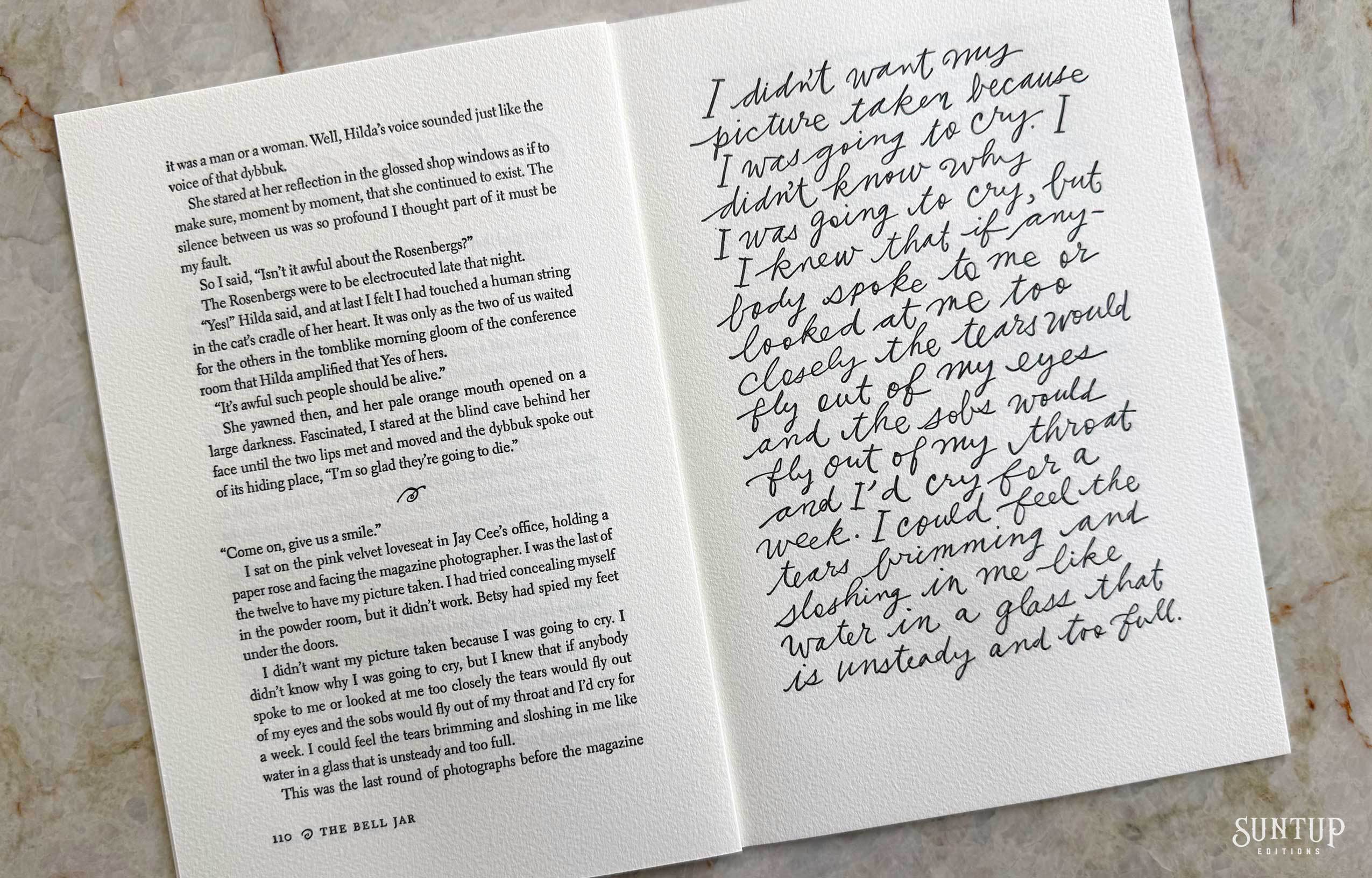
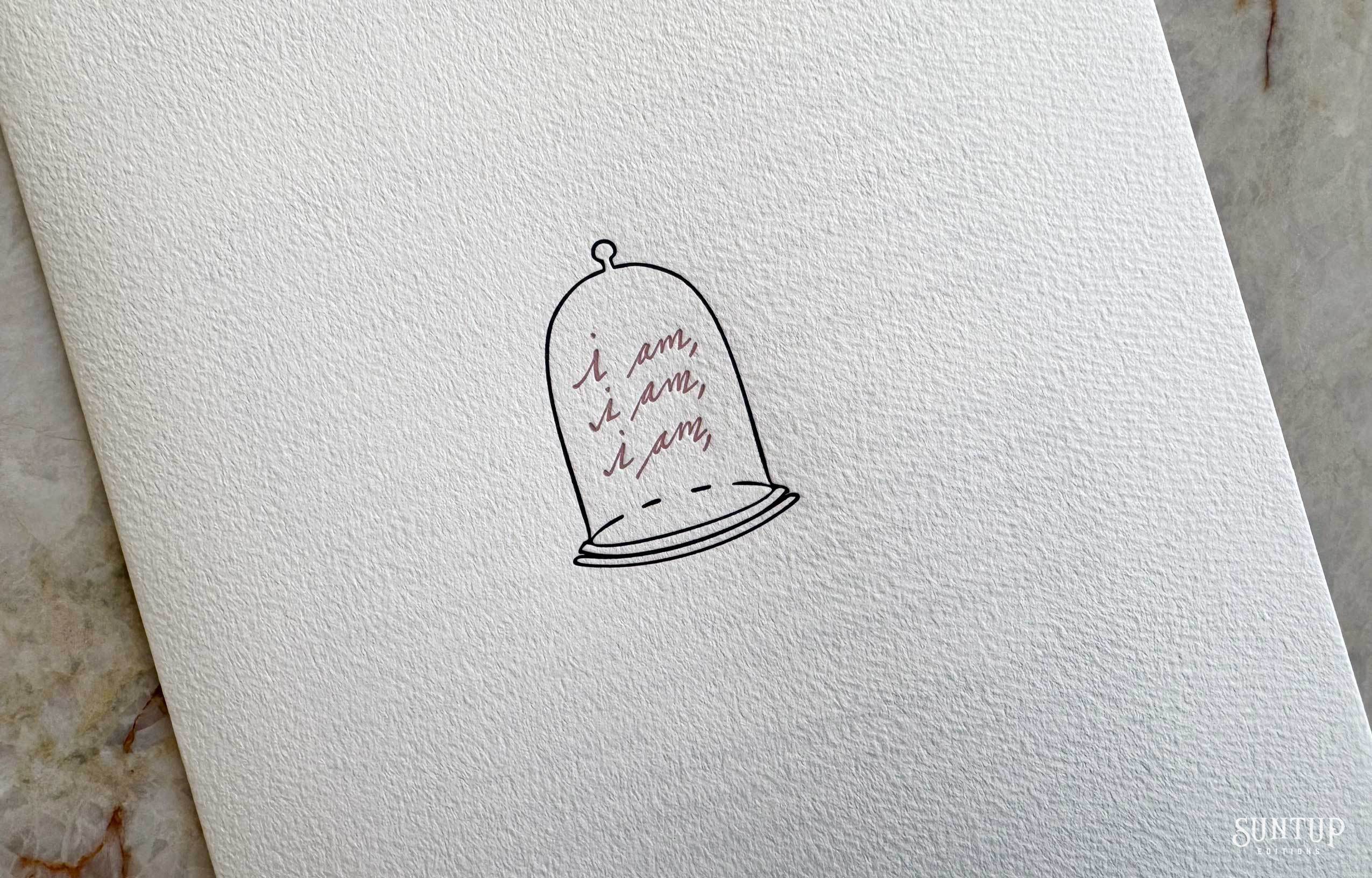
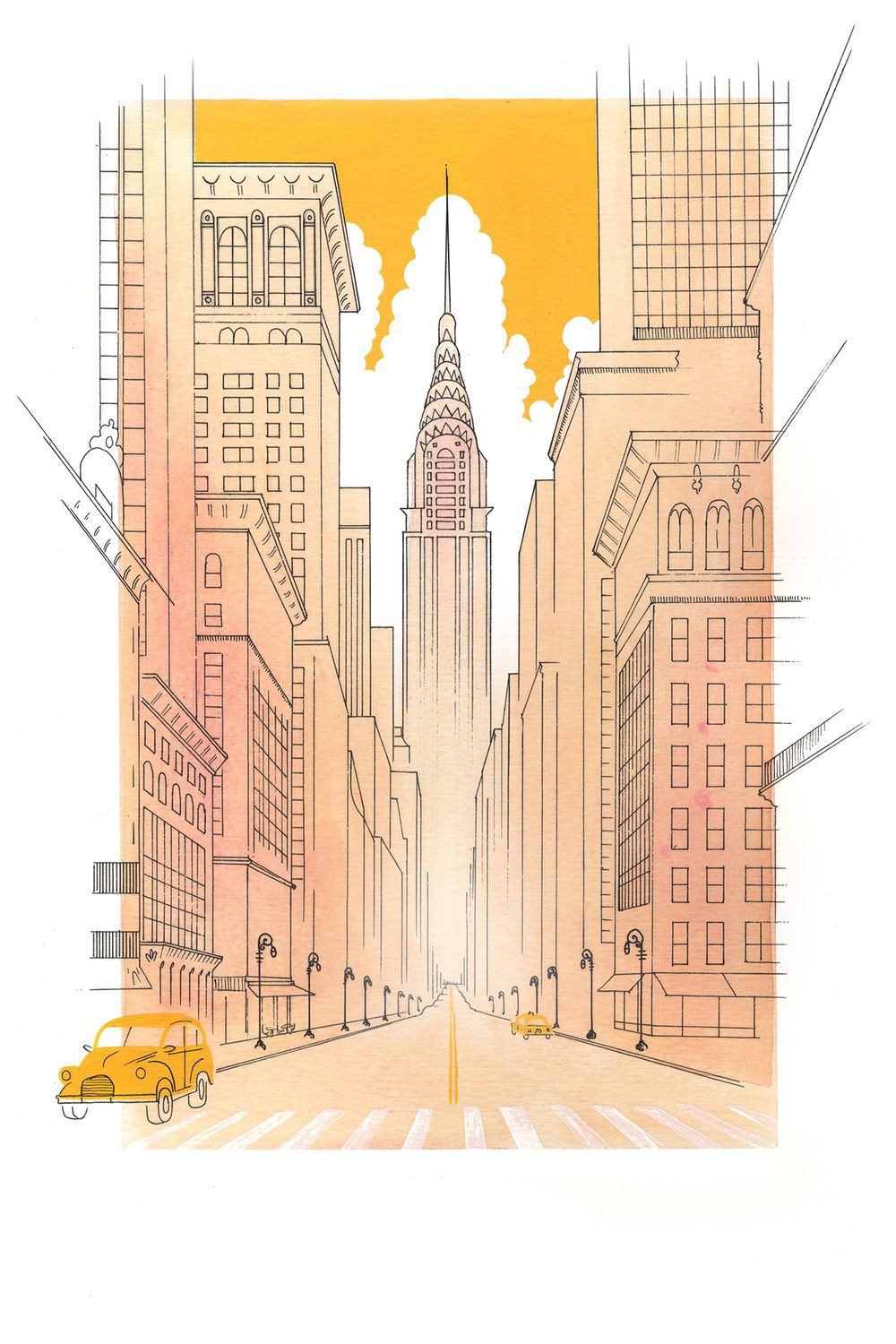
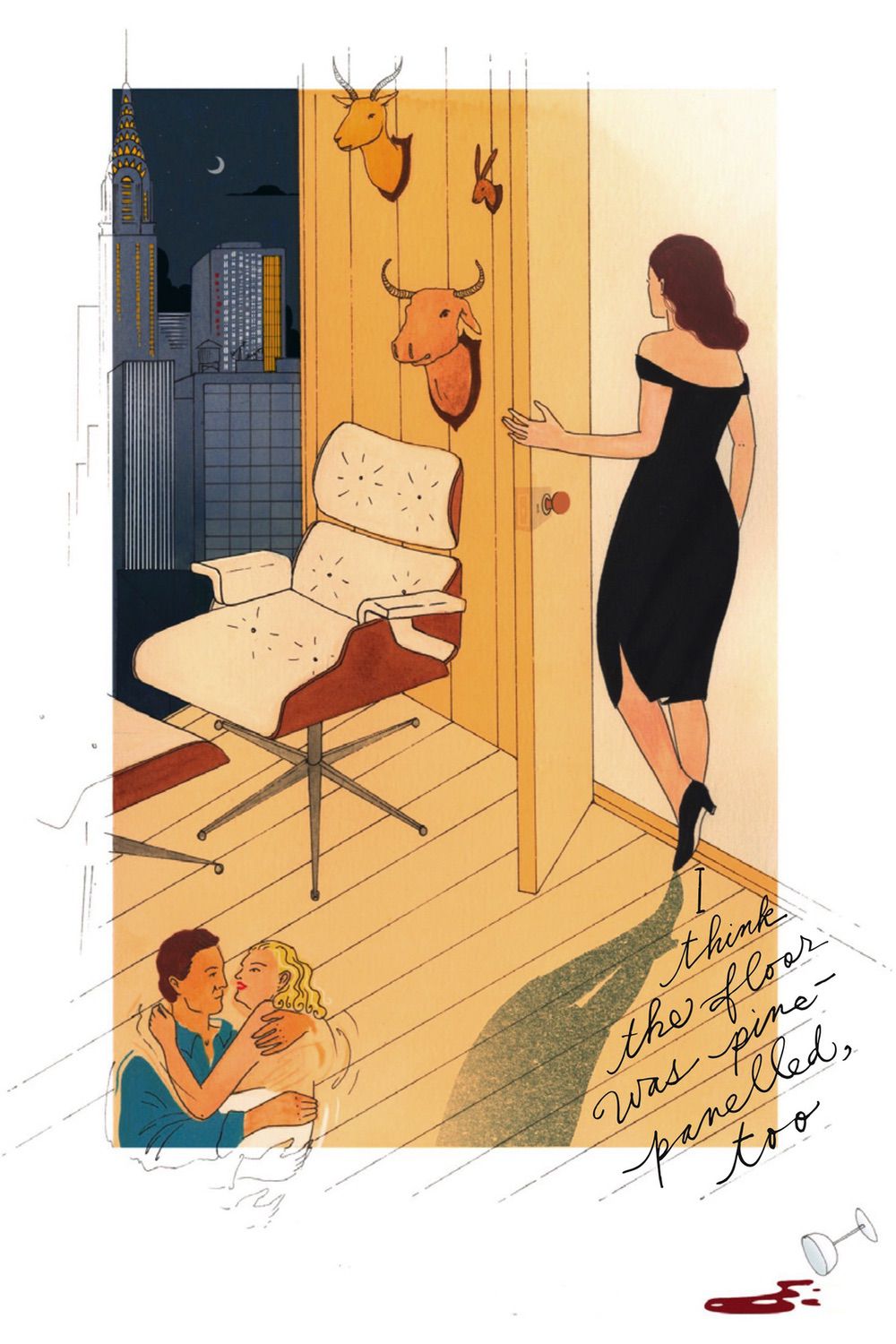
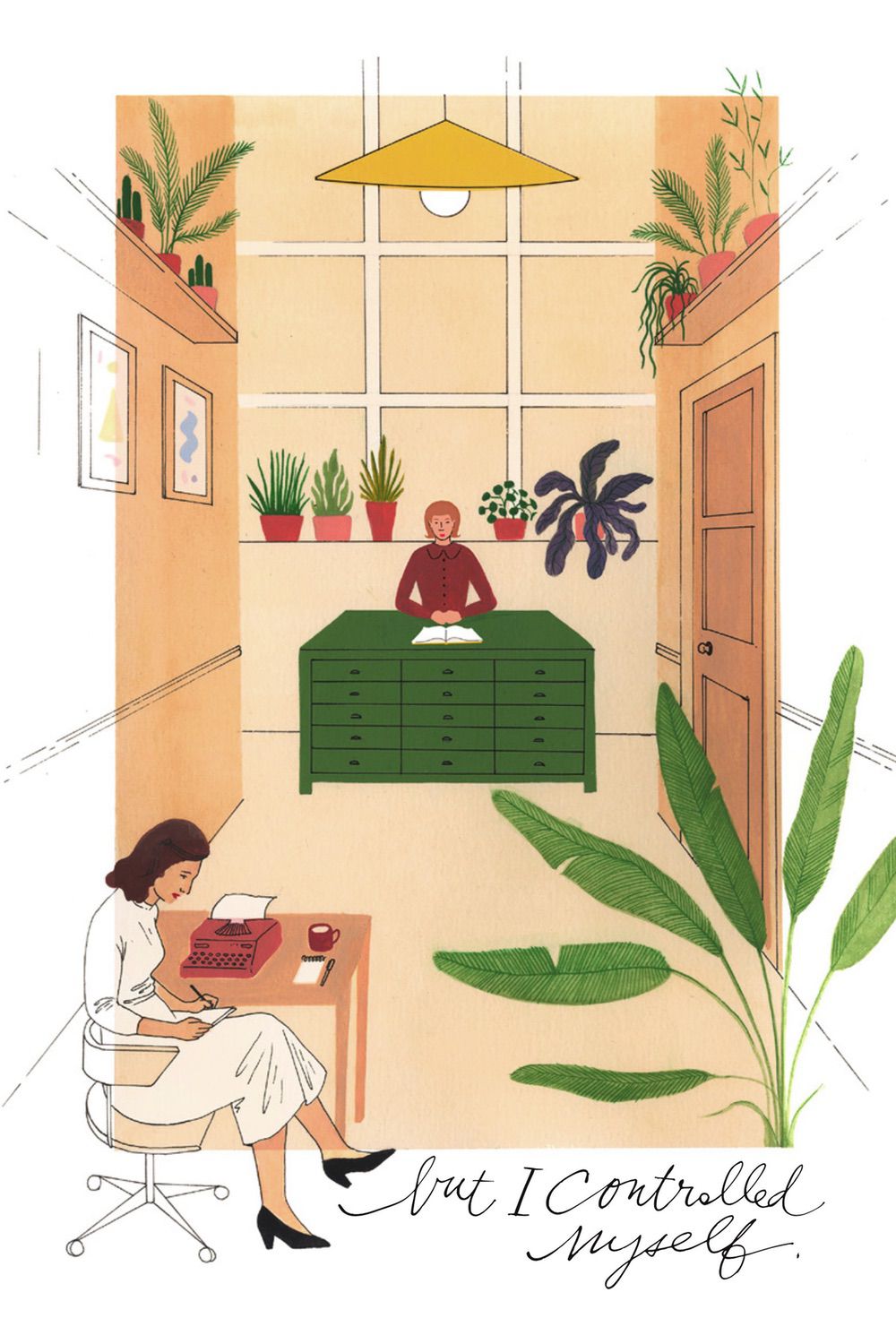
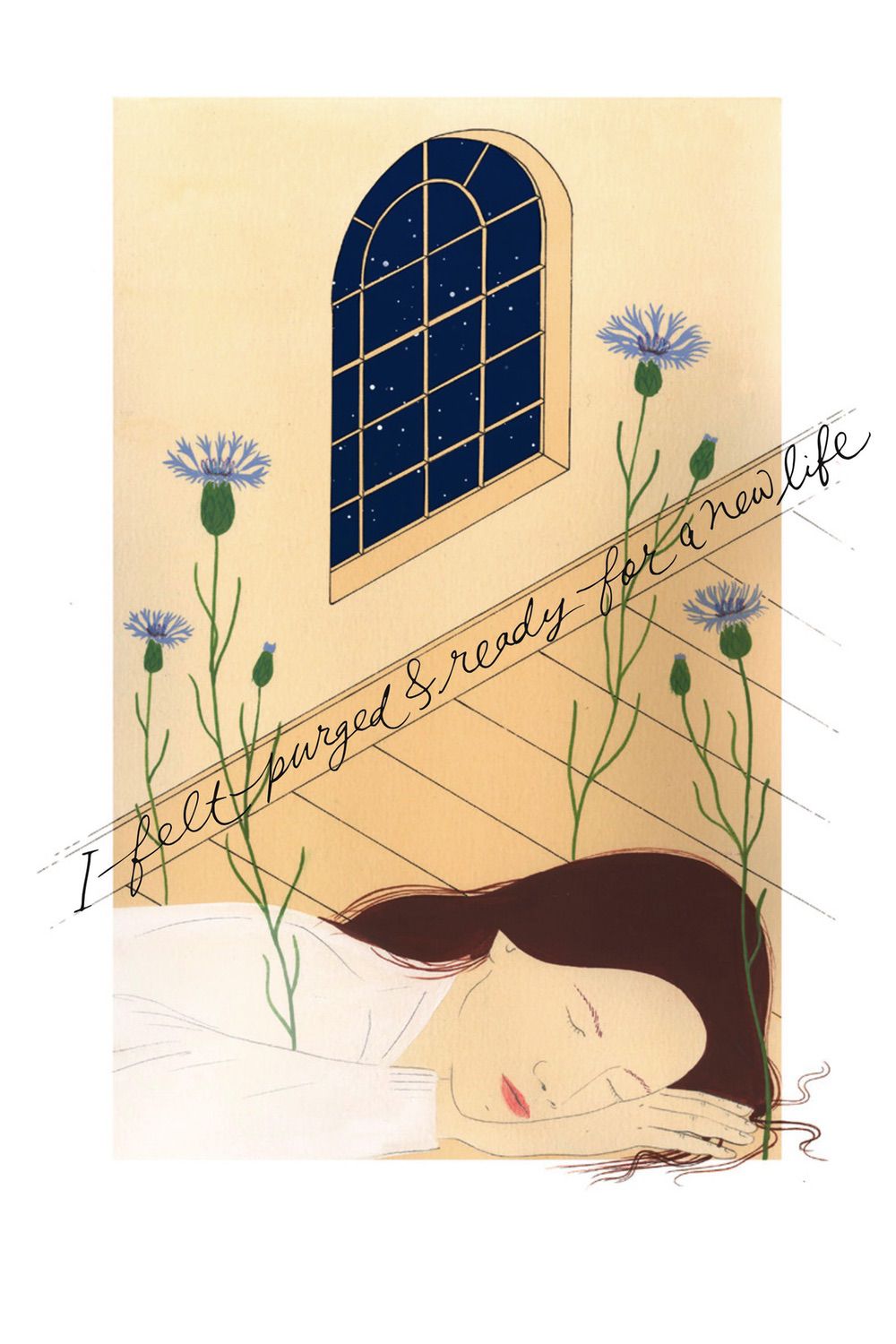
The edition brings together two artists: Sonja Ahlers, contributing original calligraphy throughout — including the title, the chapter openings, and standalone passages printed letterpress — and Harriet Lee-Merrion, contributing twelve illustrations. In places the two are layered directly, the calligraphy set into the artwork on the same page, creating a mixed-media relationship between image and text.
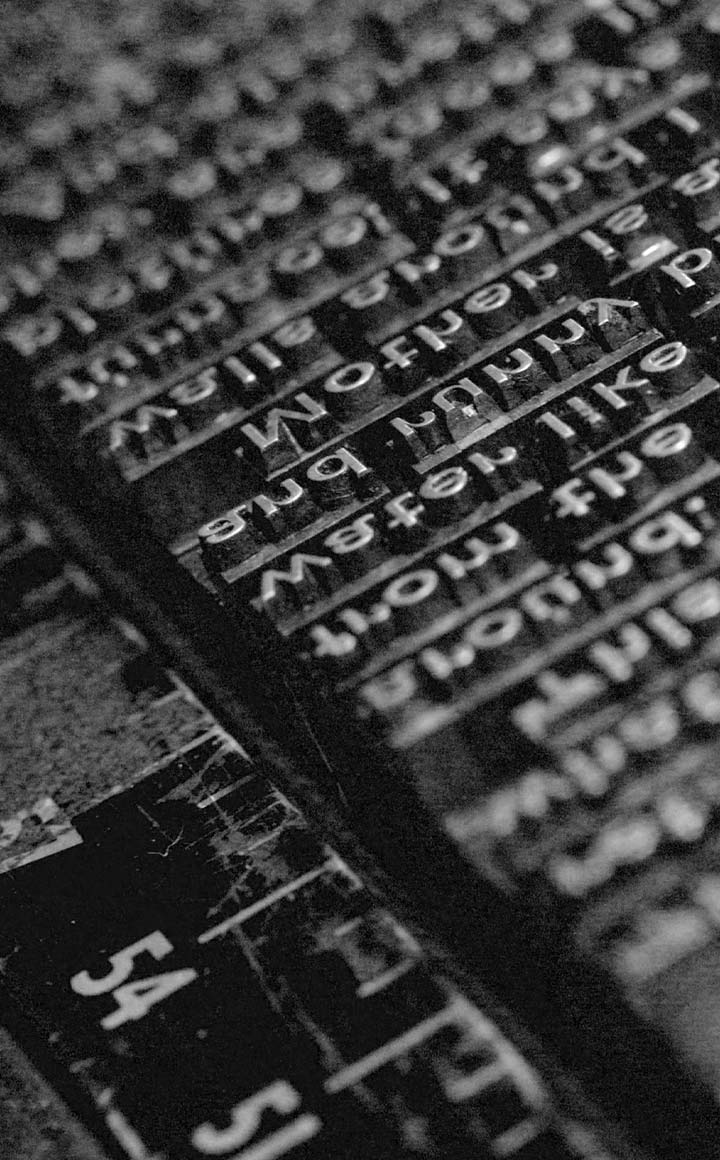
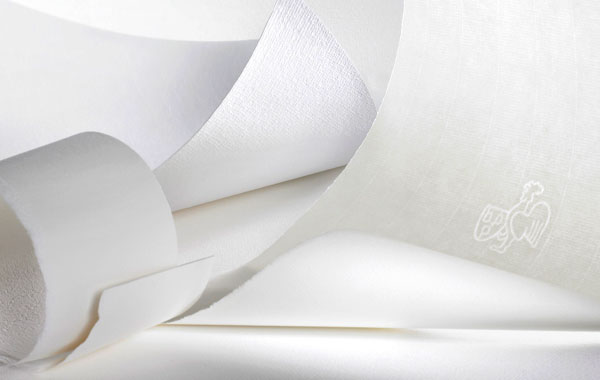
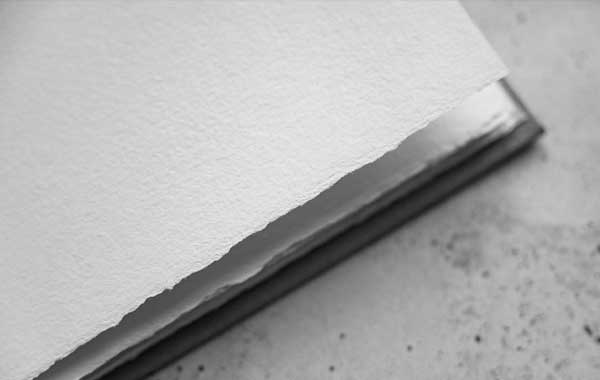
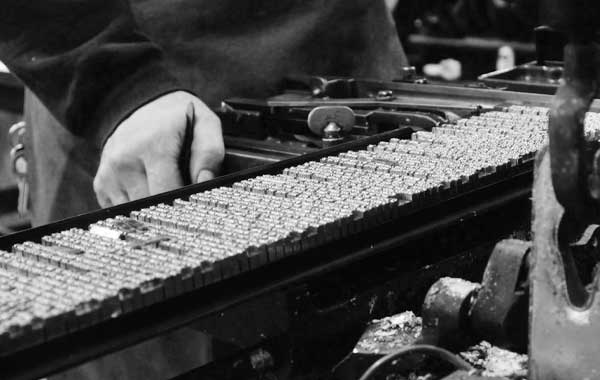
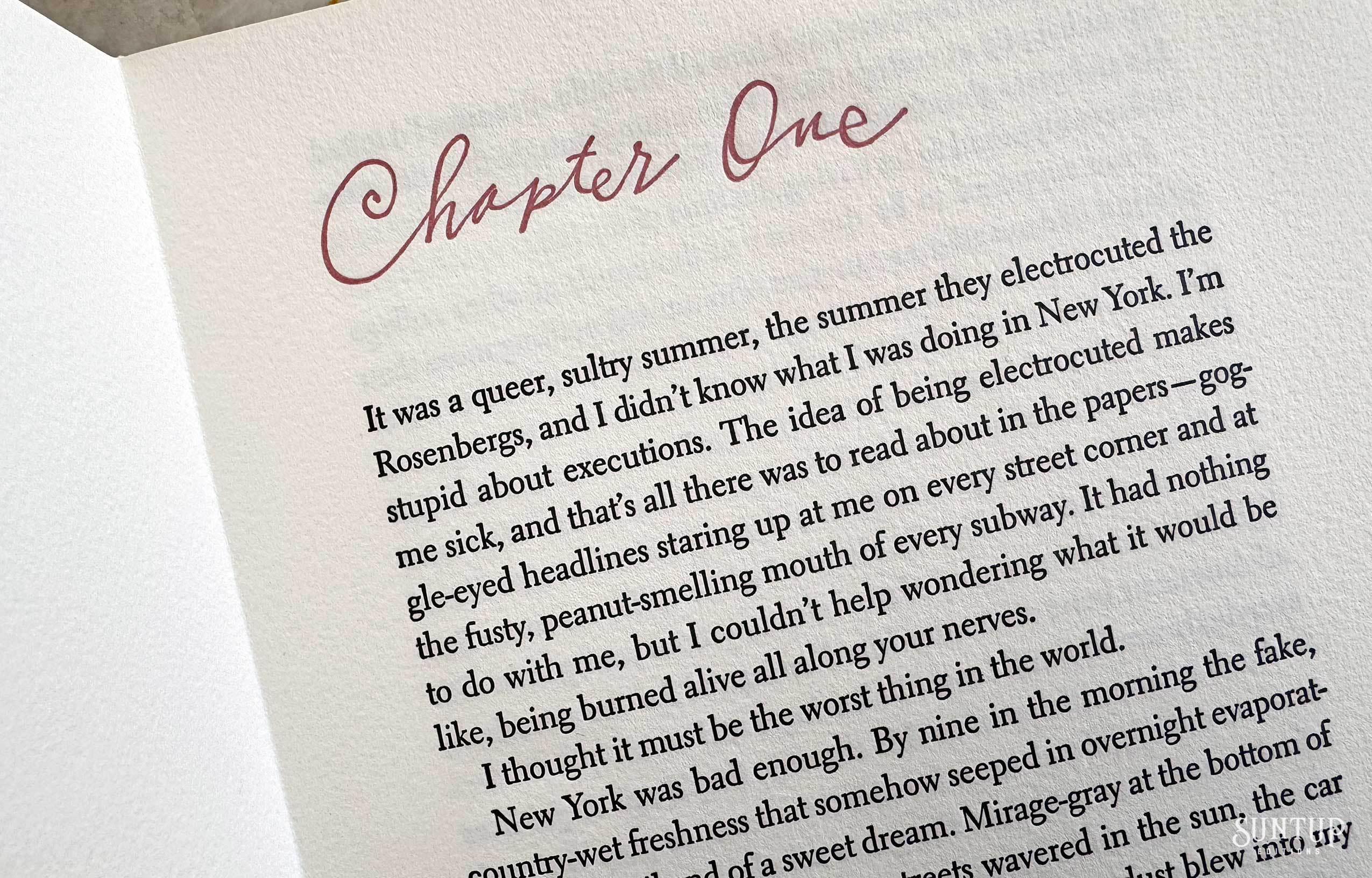
The text is set in Linotype Electra and is printed letterpress on Mohawk Via Laid and mouldmade Arches by Scott Vile on a Heidelberg cylinder press in Buxton, Maine. The title page and chapter openings are printed in a second color, requiring an additional pass through the press. Design and typography by award-winning designer Jason Dewinetz.
A Note on the Typography
Linotype Electra is a book type designed by William Addison Dwiggins and released by the Mergenthaler Linotype Company in 1935. Dwiggins drew it as a modern roman with a character of its own, not a revival of any earlier face, and named it Electra for the charge of electricity and energy he wanted the letters to carry. It is an upright, formal face, a little strict — chosen for the rigid, proper world pressing on Esther. Set against it is the rougher, more human hand of Sonja Ahlers’s calligraphy. The type holds the order; the lettering works against it.
Interior Design
A glimpse into the interior design of The Bell Jar, where typography, illustration, and calligraphy work in concert to reflect the novel’s emotional and psychological terrain. Harriet Lee-Merrion’s illustrations appear throughout the text, accompanied by Sonja Ahlers’ hand-lettering.
Numbered Edition
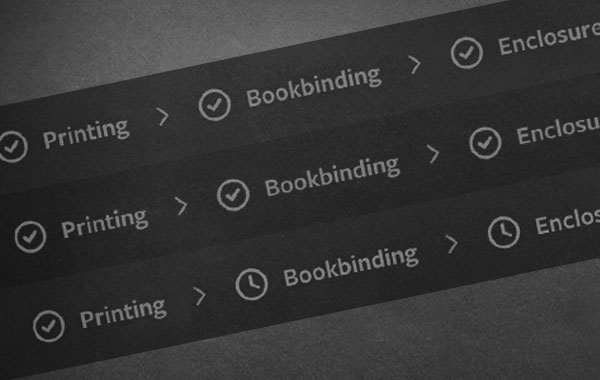
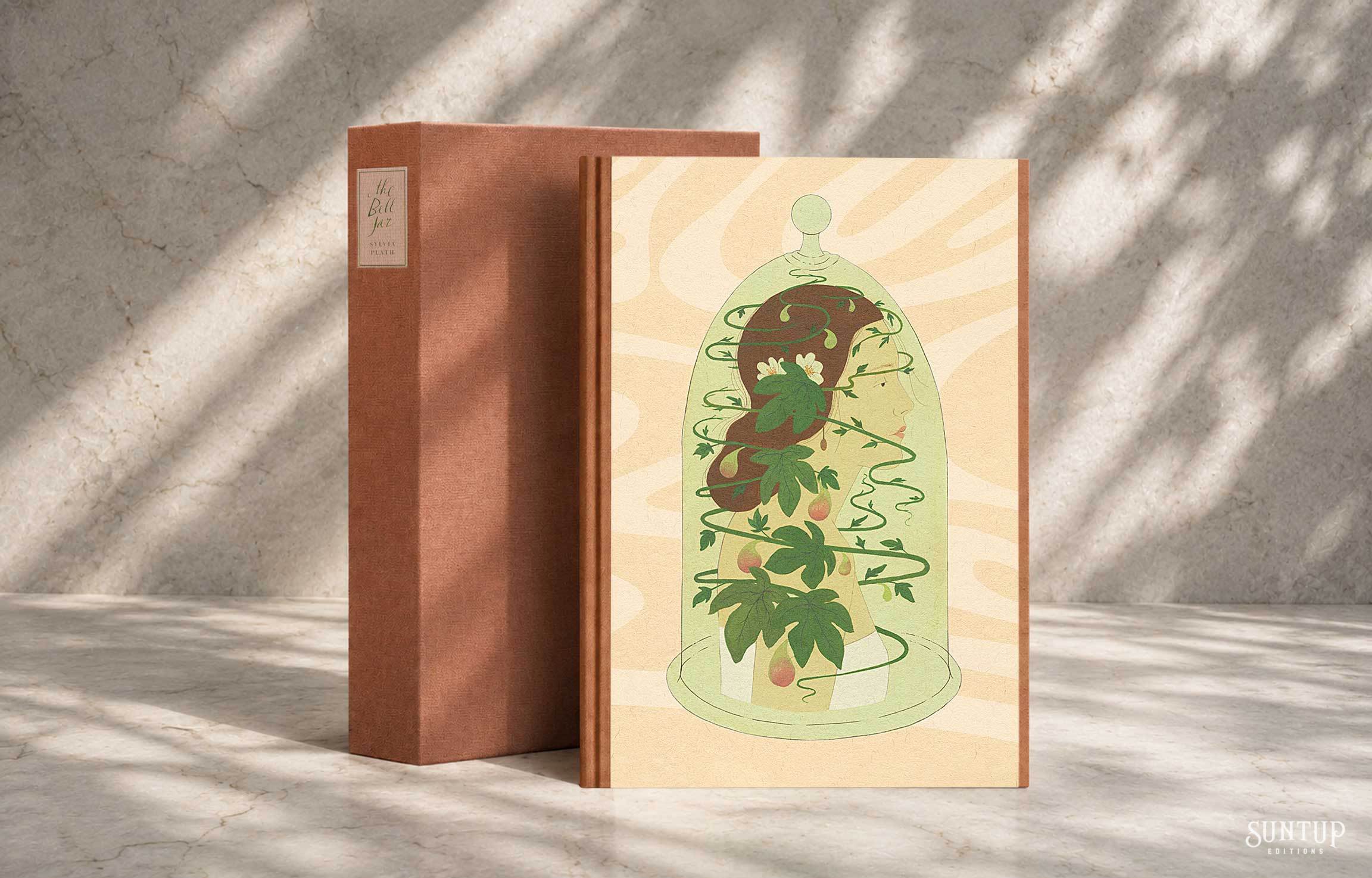
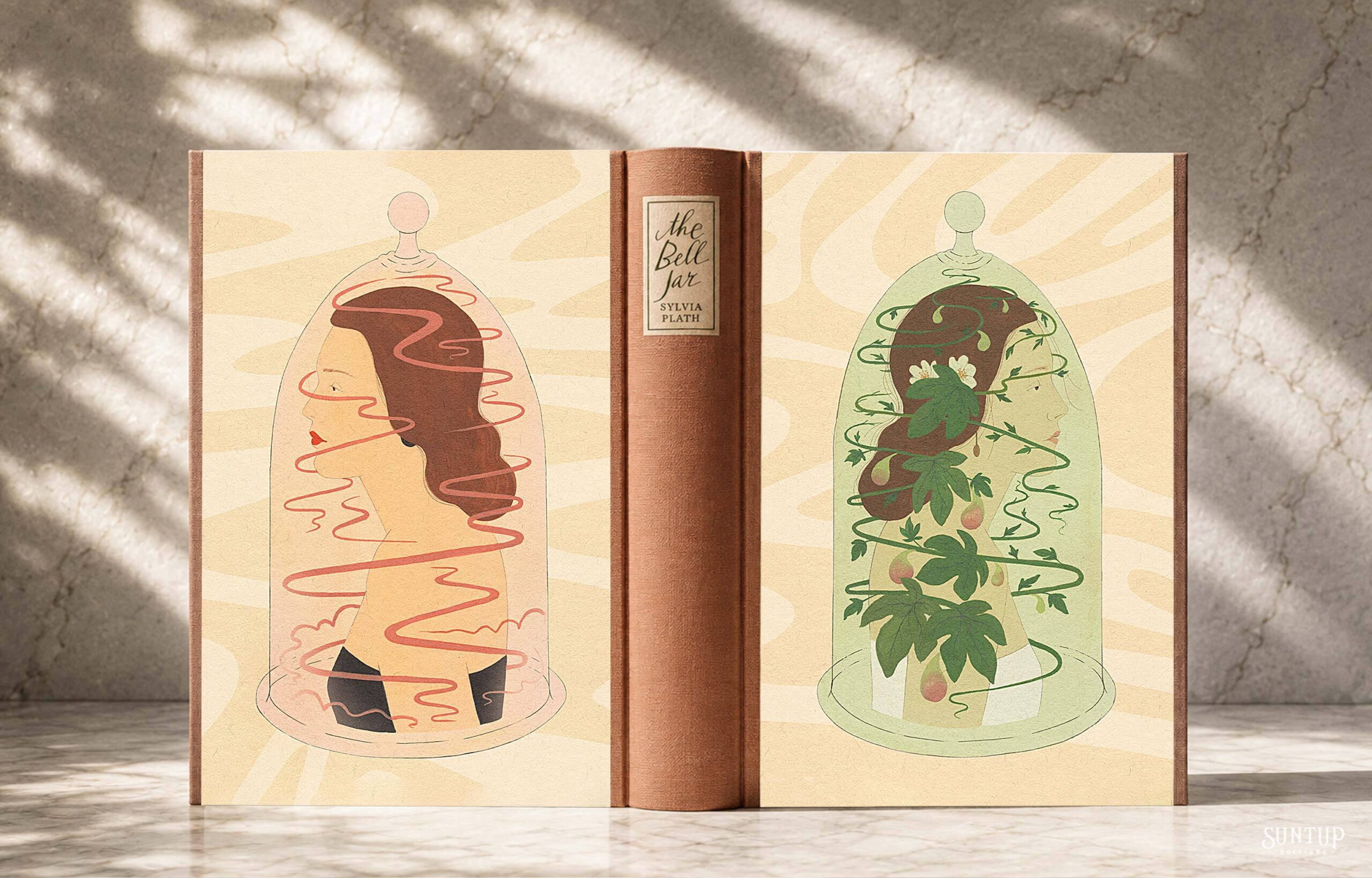
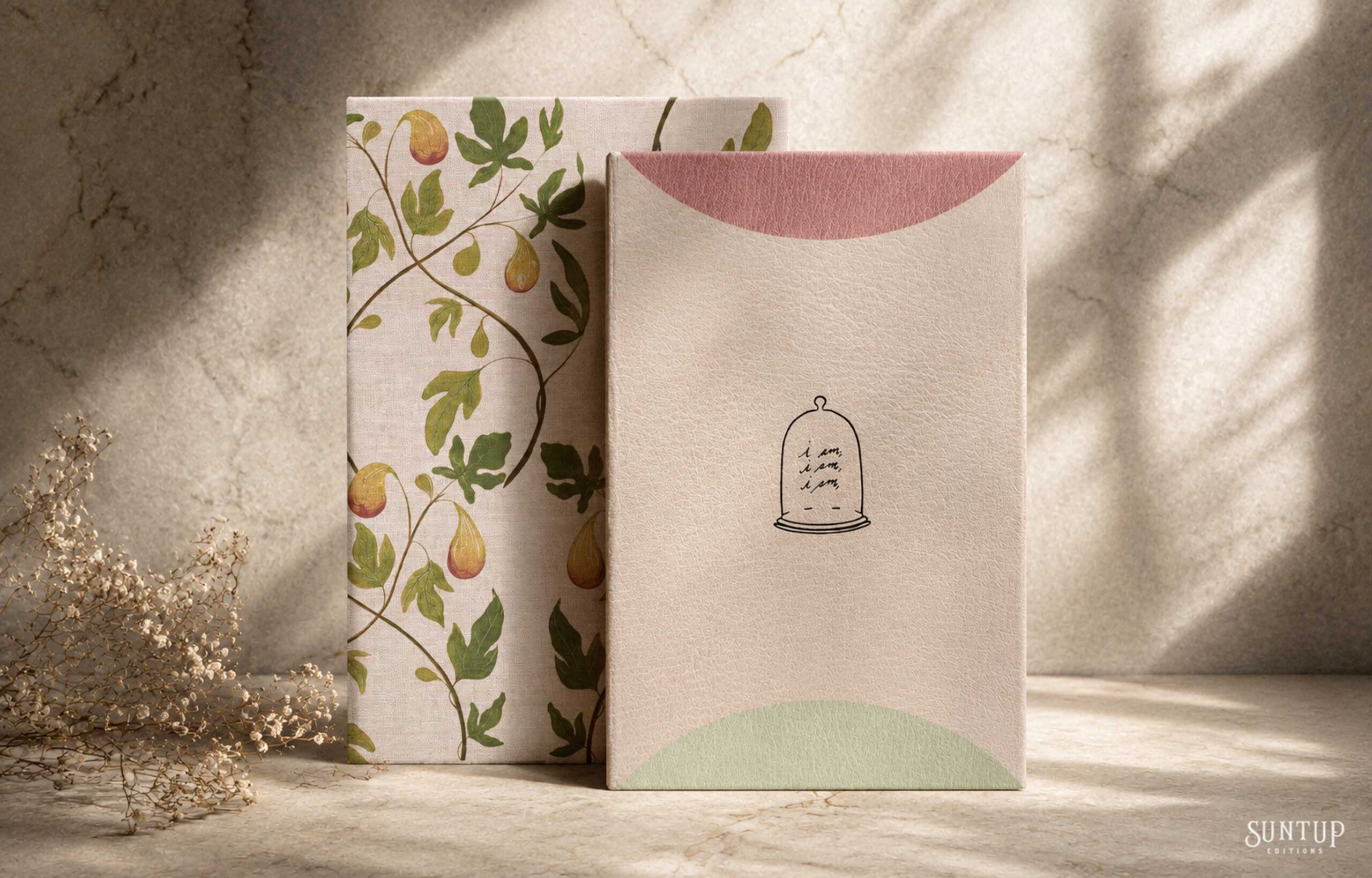
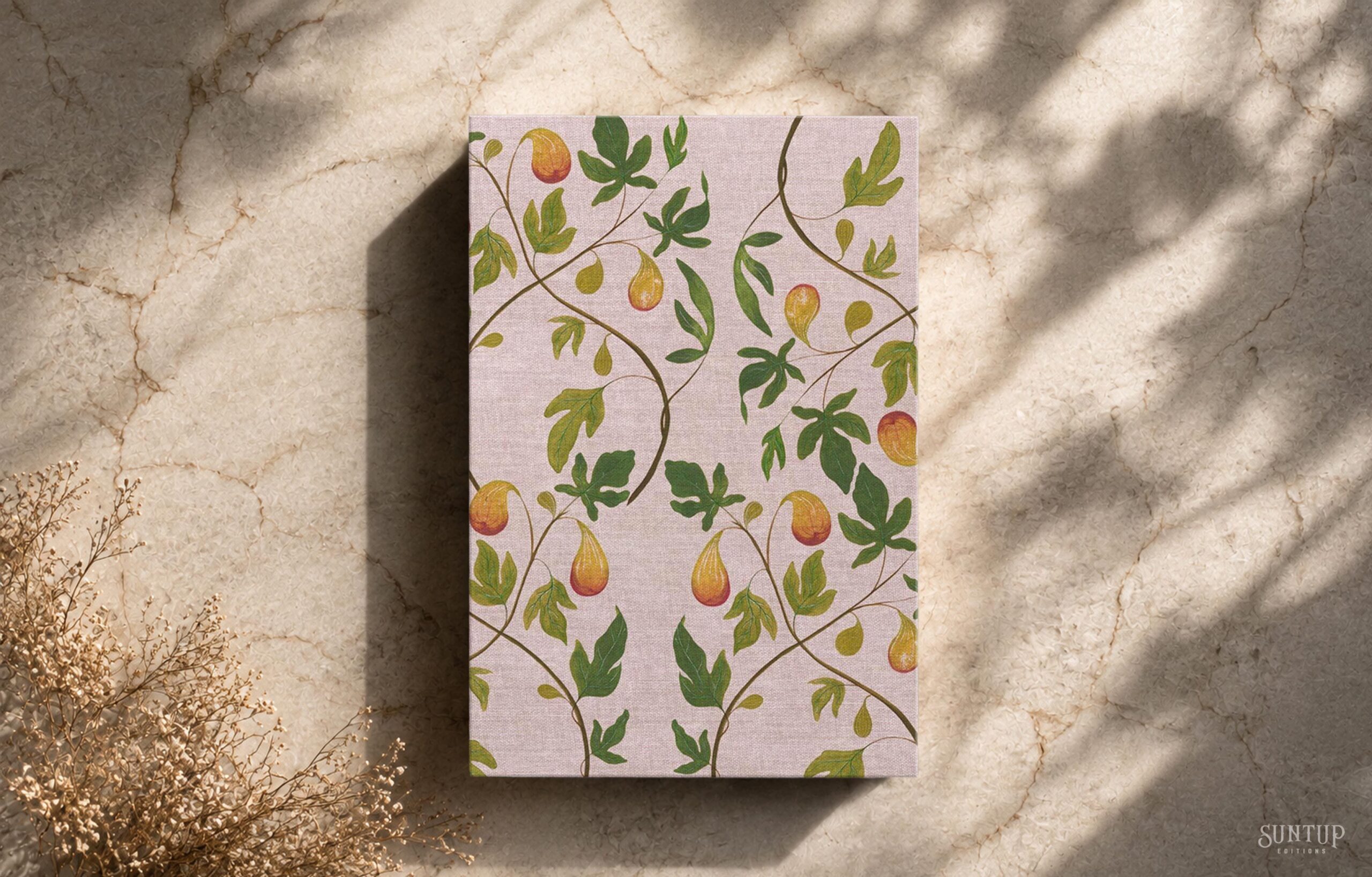
The Numbered edition of two hundred fifty copies is a millimeter-style binding, fully bound in cloth with printed-paper sides carrying a different illustration by the artist front and back; the cloth left exposed along the fore edge. Endsheets are Takeo Tant Select, a Japanese paper with a subtle double-sided emboss, and the endbands are handmade in cloth. The edition is printed letterpress on Mohawk Via Laid and is housed in a clamshell enclosure. A letterpress-printed paper label appears on the spine of the book and clamshell. It is signed by Peter K. Steinberg, Harriet Lee-Merrion, and Sonja Ahlers.
Lettered Edition
The Lettered edition is limited to twenty-six copies and is a full goatskin binding with leather onlays and a foil-blocked cover. The leather is sourced from Harmatan and Oakridge, which produce hand-finished goatskin by traditional methods. Endsheets are Hahnemühle Bugra, and the endbands are hand-sewn in two colors of thread. The edition is housed in a clamshell enclosure covered in cloth printed with a design from one of the book’s illustrations, and has a letterpress-printed paper label on the spine. A fold-out of the Numbered edition cover art is included. The book is printed letterpress on mouldmade Arches and is signed by Peter K. Steinberg, Harriet Lee-Merrion, and Sonja Ahlers. This state is bound by hand by Lorna McCurdy in Berkshire, United Kingdom.
The Designer’s Edition
Some of the finest bindings have been one-offs, made once and never repeated. The Designer’s Edition brings that tradition to our books: a single copy, hand bound by a master binder as a singular interpretation of the text.
The Designer’s Edition of The Bell Jar is bound by Kate Holland. A Fellow of Designer Bookbinders and a regular binder to the Booker Prize, with work held in the V&A, Bodleian, National Library of Congress and British Libraries, she is among the most accomplished binders working today. This edition of one will be offered by lottery as the book nears completion.
About the Author
About the Collaborators

Peter K. Steinberg
Peter K. Steinberg is the editor of The Collected Prose of Sylvia Plath (2024), the co-editor of the award-winning Collected Writings of Assia Wevill (2021), co-editor of the two-volume Letters of Sylvia Plath (2017, 2018), co-author of These Ghostly Archives: The Unearthing of Sylvia Plath (2017), and author of Sylvia Plath (2004). Steinberg has authored two dozen articles and introductions on Plath which have appeared in Notes & Queries and Fine Books & Collections, among others. He was recently interviewed for a BBC program, The Writing Life of Sylvia Plath.

Harriet Lee-Merrion
Harriet Lee-Merrion is an award-winning illustrator based in Bristol, in the South-West of England. Her hand-drawn work blends influences from botanical engravings, intaglio printmaking, and Surrealist painting. She works regularly on illustrated books, and has also worked with clients including Penguin Random House, Bloomsbury, The New Yorker, and The New York Times. She is the recipient of a 3×3 International Illustration Award for Editorial Illustration and a winner of eight American Illustration Awards.
Sonja Ahlers
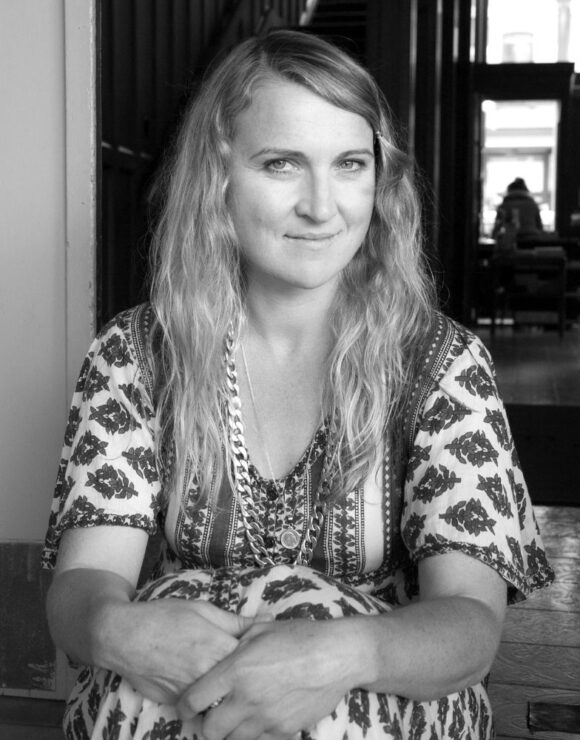
Sonja Ahlers is a visual artist and poet based in Victoria, Canada, on the unceded territories of the lək̓ʷəŋən (Lekwungen) speaking peoples, now known as the Songhees and Esquimalt Nations. Since the early ’90s, Ahlers has worked primarily in zines, book and book-adjacent formats, in a medium that she calls visual poetry. She is the author of Temper, Temper and Fatal Distraction (Insomniac Press, 1998 and 2004), The Selves (Drawn & Quarterly, 2010), Swan Song (Conundrum Press, 2021, and Growing Pains (flask publishing, 2026). She was a key contributor to Rookie from 2011 to 2015. In 2023, a major survey of her work, Classification Crisis, was co-published by Conundrum Press and the Richmond Art Gallery in conjunction with a 30-year retrospective of her work.
Matching Numbers & Letters
A Matching Pre-Order email is sent to owners of our previous publication (The Lathe of Heaven) at 9:00 A.M. PT on the day of announcement. If you did not receive the email, contact us here. If your order is not received before the deadline, your designated number or letter will be assigned to the new owner.
Illustrations by Harriet Lee-Merrion with integrated calligraphy by Sonja Ahlers.
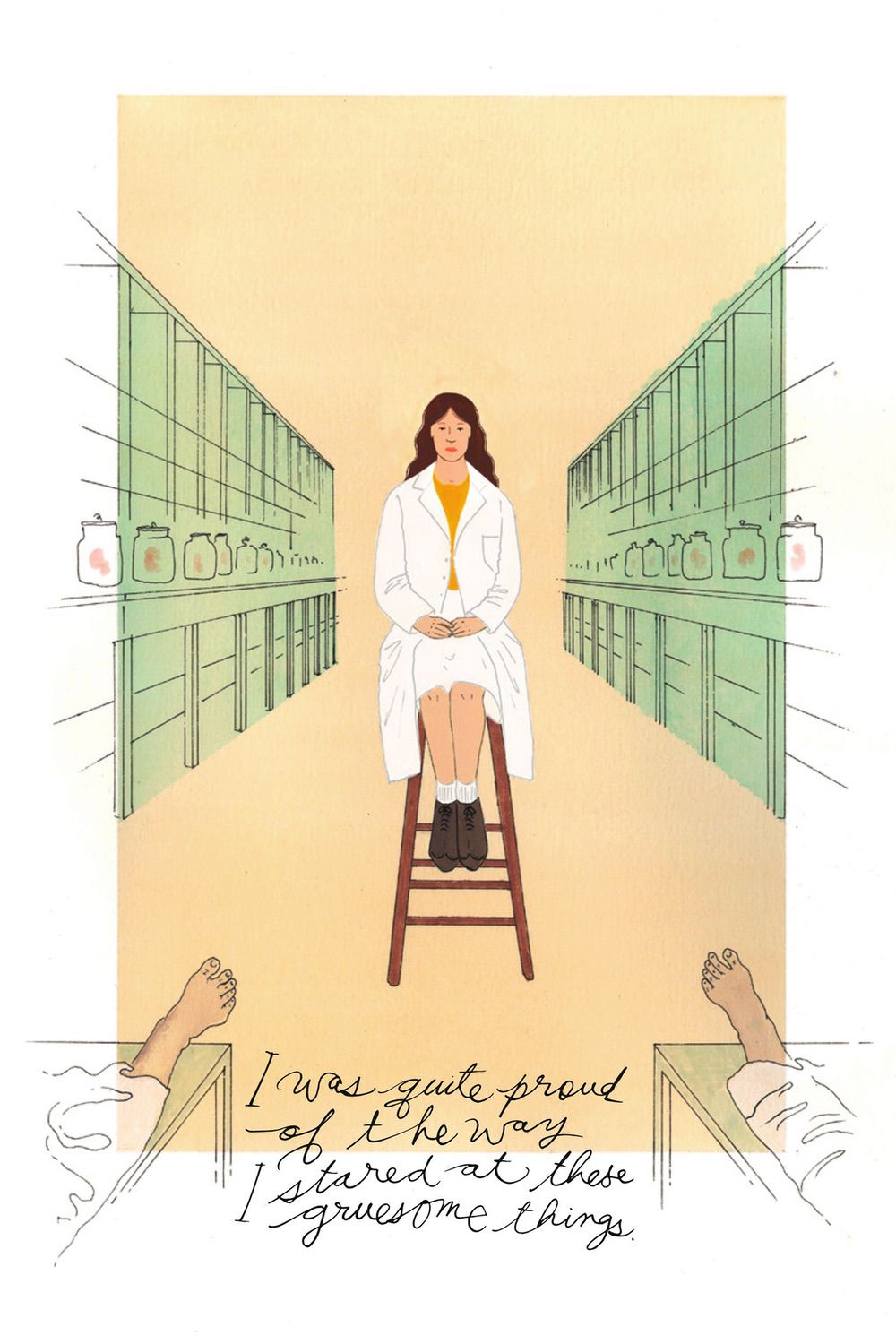
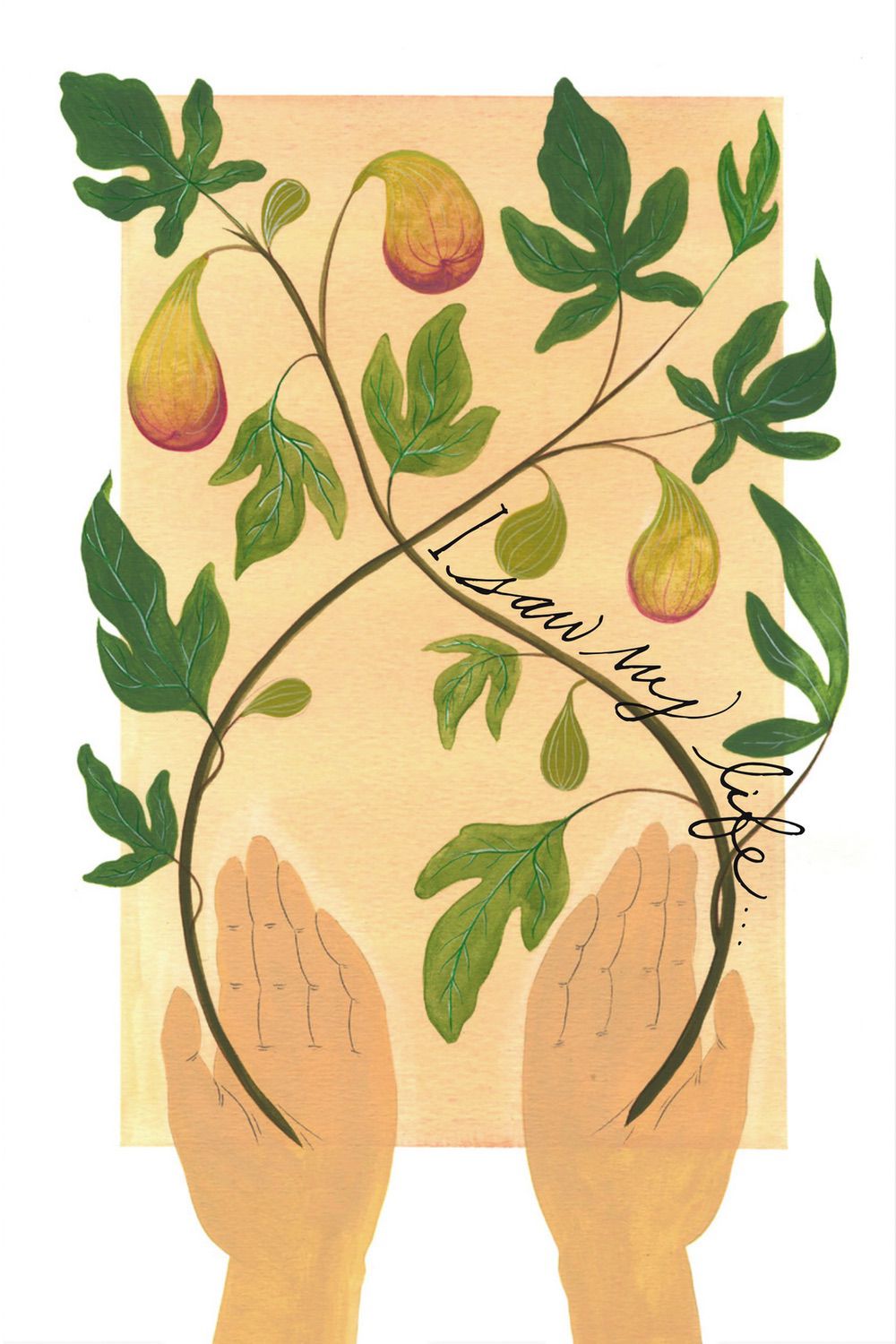
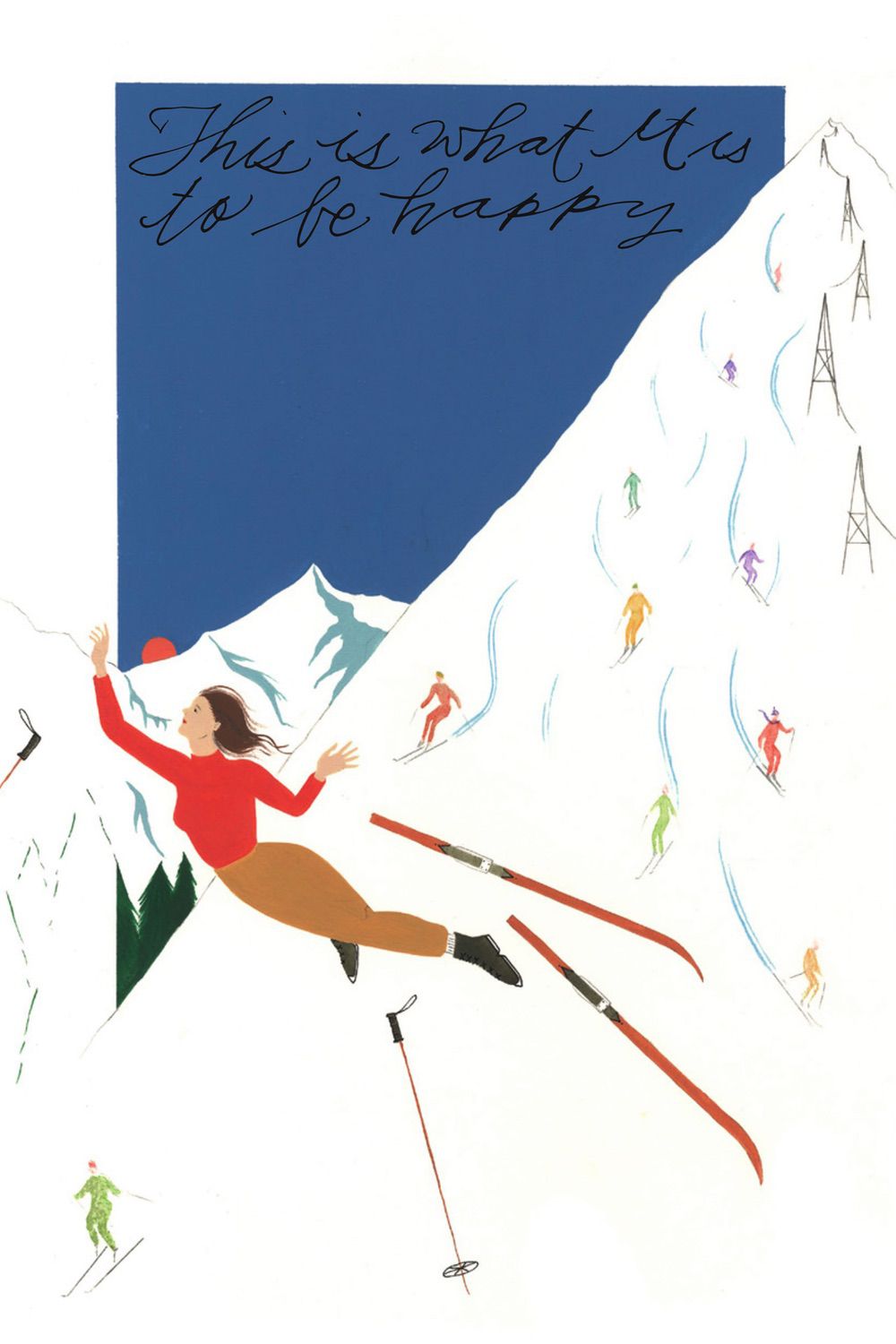
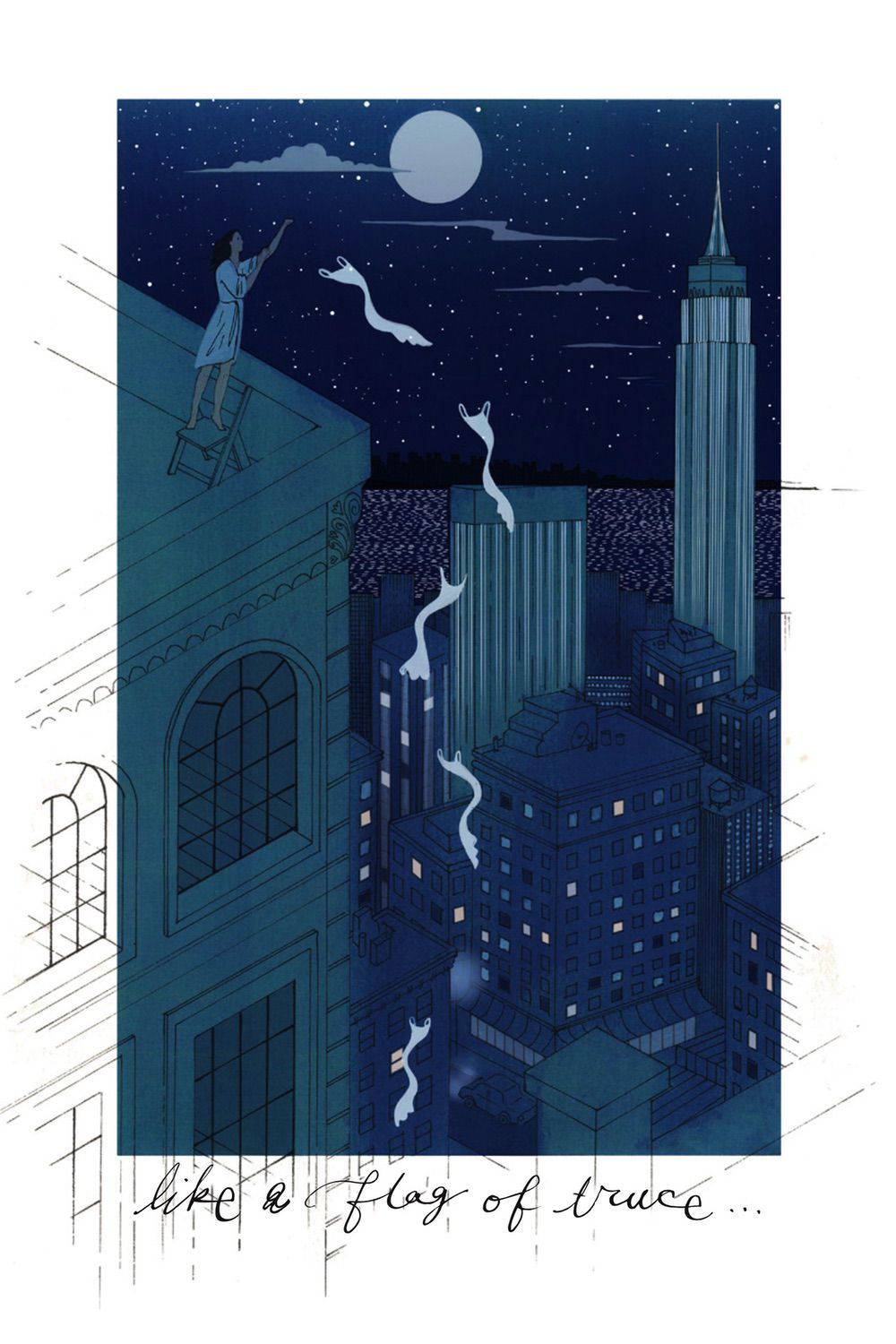
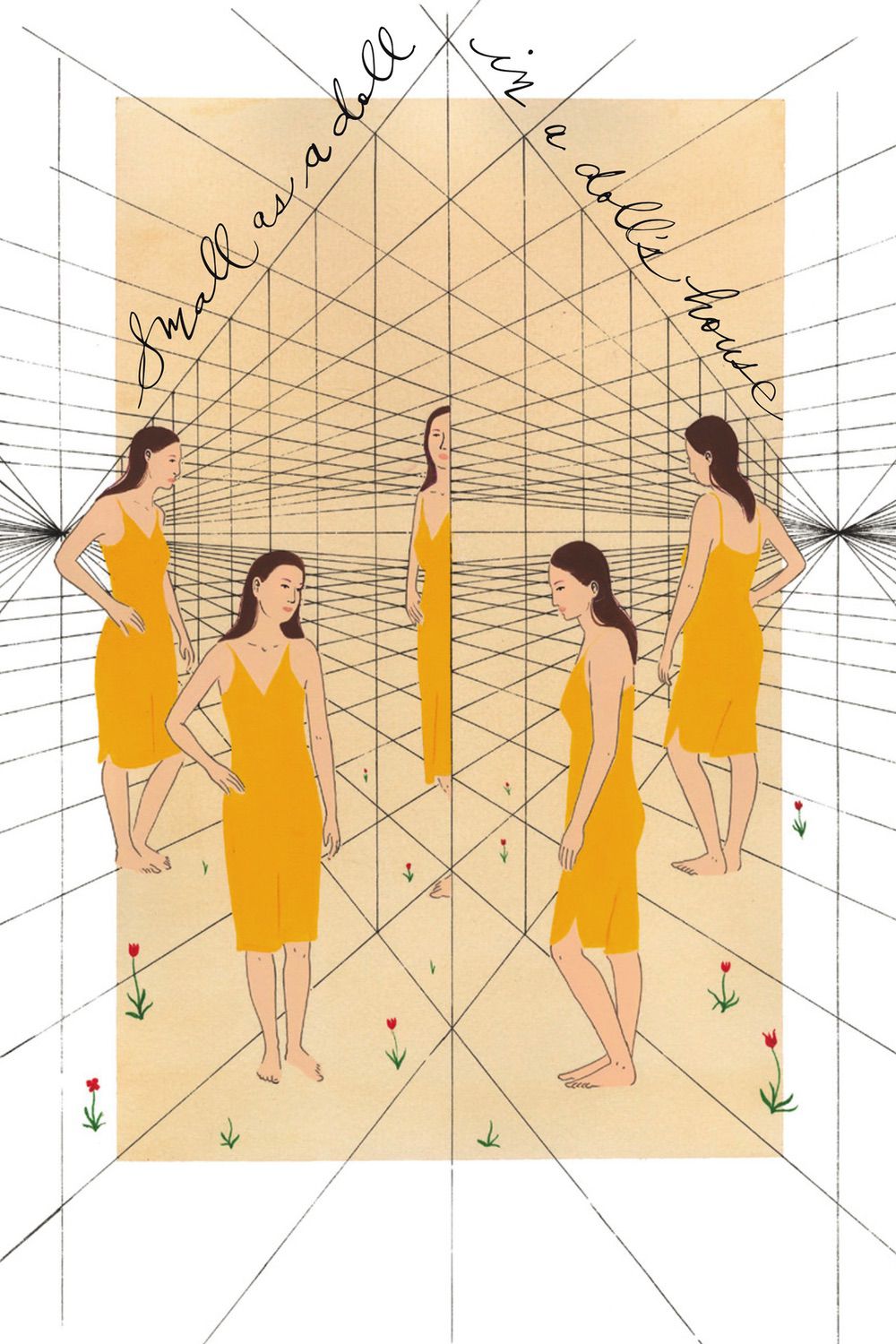
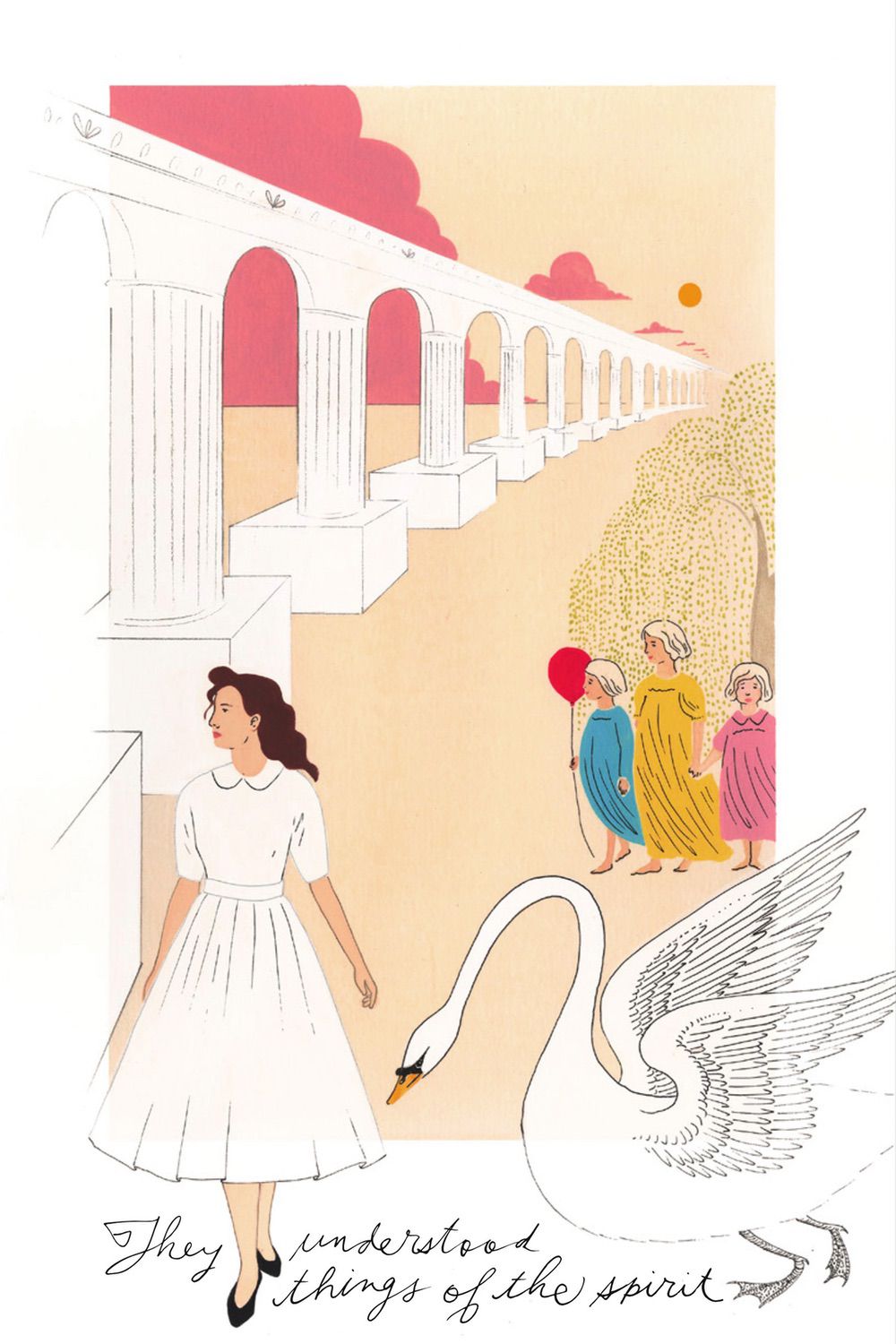
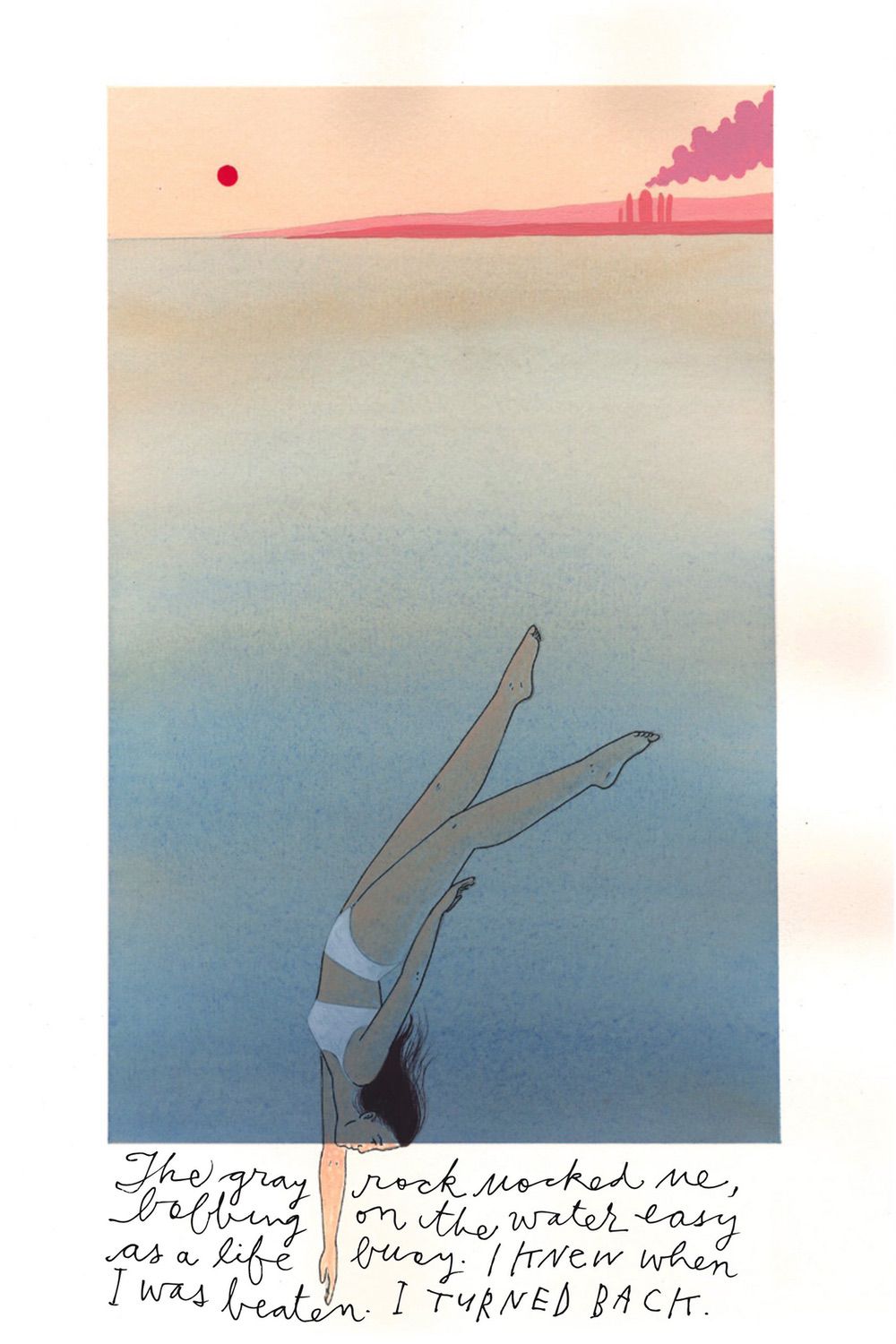
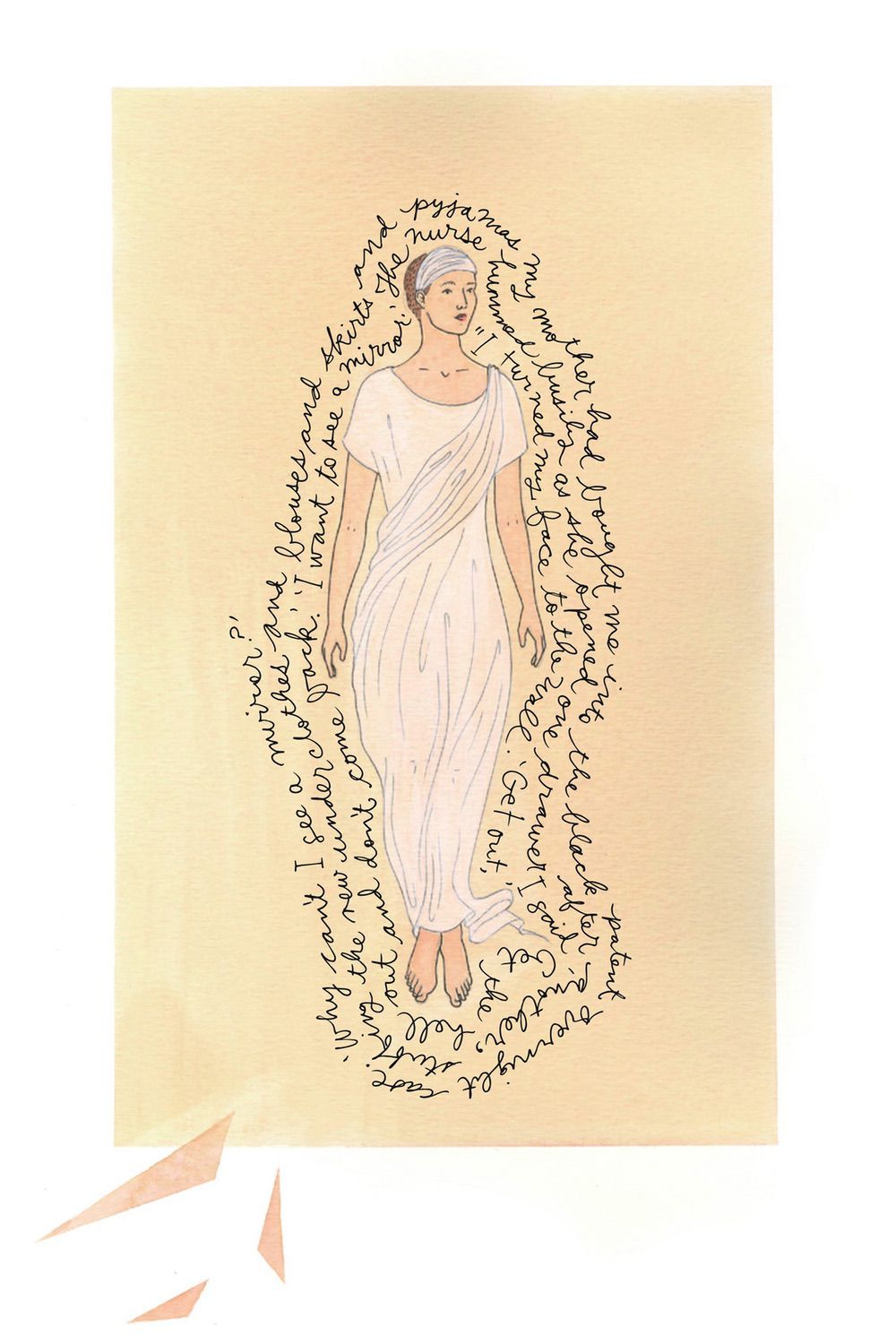
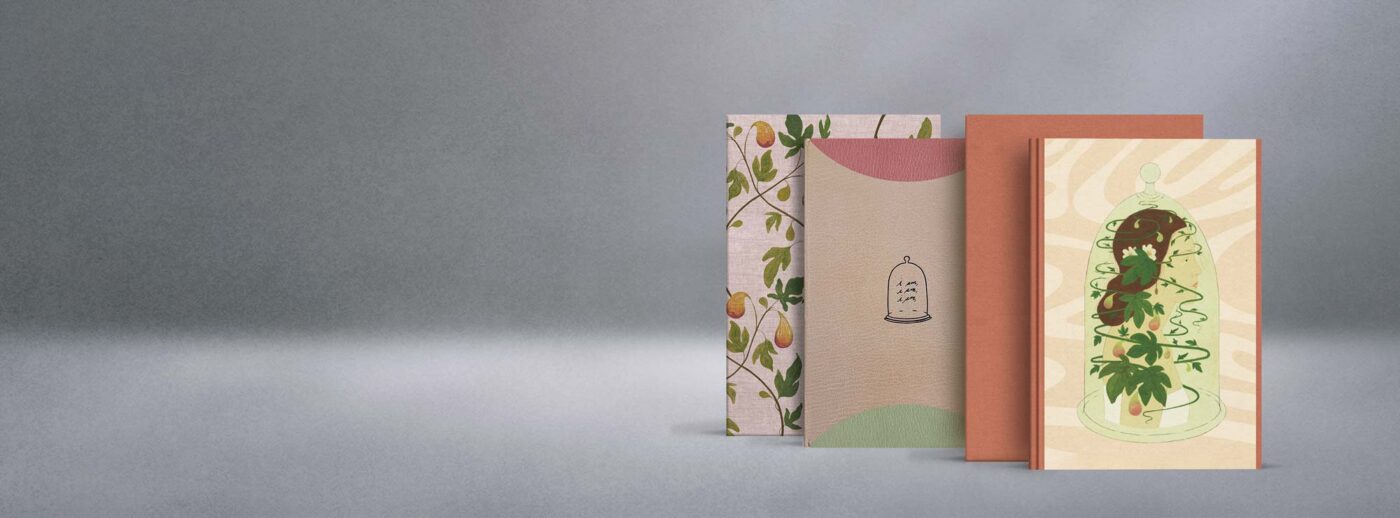
Published editions may differ slightly from mockups and prototype designs.
Illustrations © 2025 by Harriet Lee-Merrion
Calligraphy © 2025 by Sonja Ahlers